Defence Secretary Rajesh Kumar Singh has confirmed that the Advanced Medium Combat Aircraft (AMCA) prototype will fly in September 2028, marking a significant milestone for India's indigenous stealth fighter programme. Speaking at the NDTV Defence Summit on September 27, Singh also set a timeline for the Tejas Mk2 first flight between June and September 2027. This represents the first concrete date announced for the AMCA programme, which has been in development for over a decade. The AMCA will be built by a private-sector development-cum-production partner working with the Aeronautical Development Agency (ADA), with HAL excluded from the prototype phase due to failing technical criteria.
Indian private companies are capitalizing on the growing demand for small jet engines to power unmanned aerial vehicles, cruise missiles, and loitering munitions. According to reports from Business Standard, these firms are developing engines that can generate 0.40-0.45 kN to 4 kN of thrust, positioning themselves as original equipment manufacturers (OEMs) in the defense sector. The trend reflects a broader shift toward standoff strike capabilities, with companies like Bharat Forge and Azad Engineering leading the development of indigenous jet engine technologies. The sector benefits from relatively low capital requirements for small jet engines, with munitions and platforms being expendable systems that translate into high consumption rates.
The small jet engine segment powers unmanned aerial vehicles, loyal wingmen, cruise missiles, and high-performance one-way attack drones, typically generating 0.05-5.0 kN of average thrust. As reported by Business Standard, these engines are designed to operate at 8-kilometer altitude and are increasingly being used in defense applications. Companies like D-Propulse have developed innovative technologies, including rotating detonation engines (RDE) that offer 15-25% higher thermodynamic efficiency than conventional air-breathing propulsion systems. The AMCA programme documents require first flight within 30 months of contract award, all five prototypes within 64 months, and 1,800 flight-test sorties within 84 months.
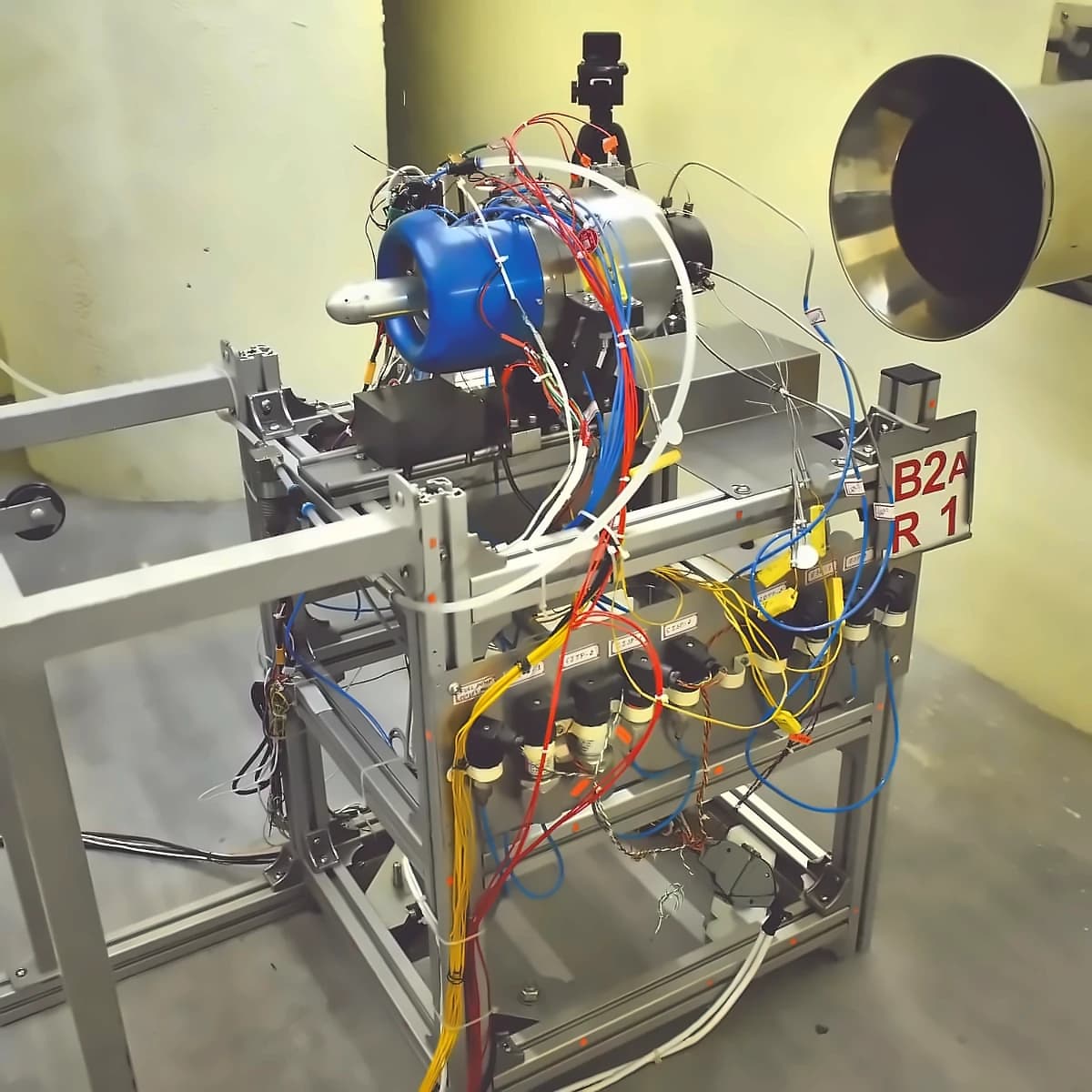
The development comes after Operation Sindoor in May 2025, which saw India and Pakistan engage in four days of conflict using air-launched cruise missiles, conventionally armed short-range ballistic missiles, and drone warfare. According to Business Standard, this operation demonstrated the importance of standoff strike capabilities in modern warfare, with India using indigenous Nagastra-1, ALS-50 and JM-1 loitering munitions during the conflict. The India's Defence Forces Vision 2047 roadmap subsequently made provisions for a dedicated drone force in March 2026. India currently operates no stealth aircraft, while China flies the J-20 in large numbers, prompting the government to rely on an AI layer in its Integrated Air Command and Control System to enhance existing fighter capabilities.
The AMCA prototype phase is funded by the government at an estimated ₹15,000 crore, with bids due by October 30, 2026. The Aircraft Integration and Flight Testing Centre that will host the test campaign is being built at Puttaparthi in Andhra Pradesh. HAL currently has 27 Tejas Mk1A airframes on the assembly line, with GE promising to deliver four F404 engines per month for the remainder of the year. The Indian Air Force expects to form its first operational Mk1A squadron before the end of the financial year. Industry experts note that speed is the new stealth in defense applications, with companies like D-Propulse targeting flight-ready engine development by December 2027.