India has made a significant strategic shift by deploying 12 nuclear weapons on missiles for the first time during peacetime, according to the SIPRI Yearbook 2026 released on June 8. This deployment marks India as the sixth country globally to follow this practice, joining the United States, Russia, the United Kingdom, France, and China. The Stockholm International Peace Research Institute reports that India's total nuclear arsenal has reached 190 warheads in 2026, up from 180 in 2025. Of these, 12 weapons are estimated to be deployed while the remaining 178 are kept in the arsenal. This deployment represents a fundamental change from India's previous policy of keeping nuclear warheads separate from missiles at distant locations for security reasons.
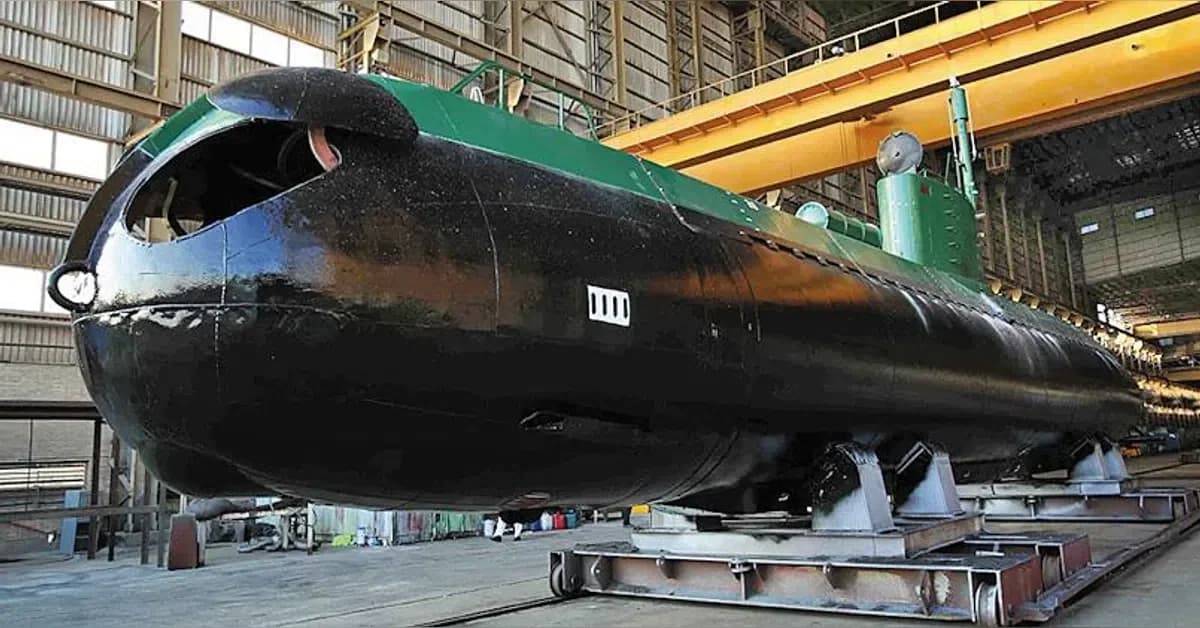
India is developing midget submarines to enhance its maritime capabilities, with Larsen & Toubro (L&T) leading the domestic initiative. According to reports from Business Standard, the company has been developing the SOV400, a diesel-electric powered mini-submarine specifically designed for Indian Navy requirements. Arun Ramchandani, senior vice-president and head of precision engineering and systems at L&T, stated that naval doctrines are moving beyond large blue-water ships as maritime competition intensifies across the Indian Ocean Region. The submarine is 54 metres long with a pressure hull diameter of 4.8 metres, capable of operating at 150 metres depth with a crew capacity of 13 personnel plus 12 MARCOS commandos.
India achieved Nuclear Triad completion on November 5, 2018, when its nuclear-powered ballistic missile submarine INS Arihant completed its first deterrence patrol. According to SIPRI, India currently maintains 152 launchers: 88 land-based, 48 air-based and 16 sea-based. The submarine INS Arighaat, which joined the Indian Navy in August 2024, can carry four K-4 ballistic missiles with a range of 3,500 km, enabling it to target both Pakistan and large parts of China. The third submarine, INS Aridhaman, is expected to carry twice as many missiles as Arihant and Arighaat, with a fourth nuclear-powered submarine expected to enter service by 2027. Submarines are considered the most reliable component of a Nuclear Triad because they are difficult to detect underwater, strengthening second-strike capability.
According to SIPRI, India's nuclear arsenal increase is driven by Minimum Credible Deterrence principles and the need to counter China's rapid expansion. China has been adding roughly 100 nuclear weapons every year since 2023, reaching an estimated 620 warheads compared to India's 190. India possesses roughly one-tenth the number of nuclear weapons estimated to be held by China. Defence expert Manoj Joshi from the Observer Research Foundation explains that India is focusing on long-range missile systems capable of reaching any part of China, with the Agni-6 expected to have a range of 6,000 to 8,000 km. The deployment addresses concerns over China's missile base in Golmud, Qinghai province, believed capable of housing 24 to 36 missile launchers equipped with DF-26 nuclear-capable missiles with ranges of around 4,000 km.
The L&T SOV400 is equipped with twin torpedo tubes, modern sonar systems, and advanced radio-electronic sensors for detection, surveillance, and communication. The submarine features low acoustic signatures for enhanced stealth during covert missions and offers manoeuvrability in shallow and congested littoral waters at lower operational costs compared to conventional submarines. According to the company, the platform's functional design has been completed and cleared by DNV, an international maritime certification body. Ramchandani emphasized that these mini-submarines serve as an intermediate capability between conventional submarines and future unmanned underwater systems. The submarines can conduct reconnaissance, anti-infiltration patrols, mine-laying, and seabed monitoring in India's 11,098.81-kilometre coastline.
The L&T SOV400 has achieved Technology Readiness Level (TRL) 5-6, indicating the platform has moved beyond design and undergone validation and testing in operational conditions. Ramchandani indicated that the Indian Navy is at an advanced stage of tender issuance and is expected to obtain Acceptance of Necessity from the Ministry of Defence within the next six months. He emphasized that these submarines can strengthen India's deterrence against both Pakistan and China. The requirement for mini-submarines has existed for years, with current conventional strength remaining unchanged since the late 1990s, affecting underwater readiness in the Indian Ocean Region.