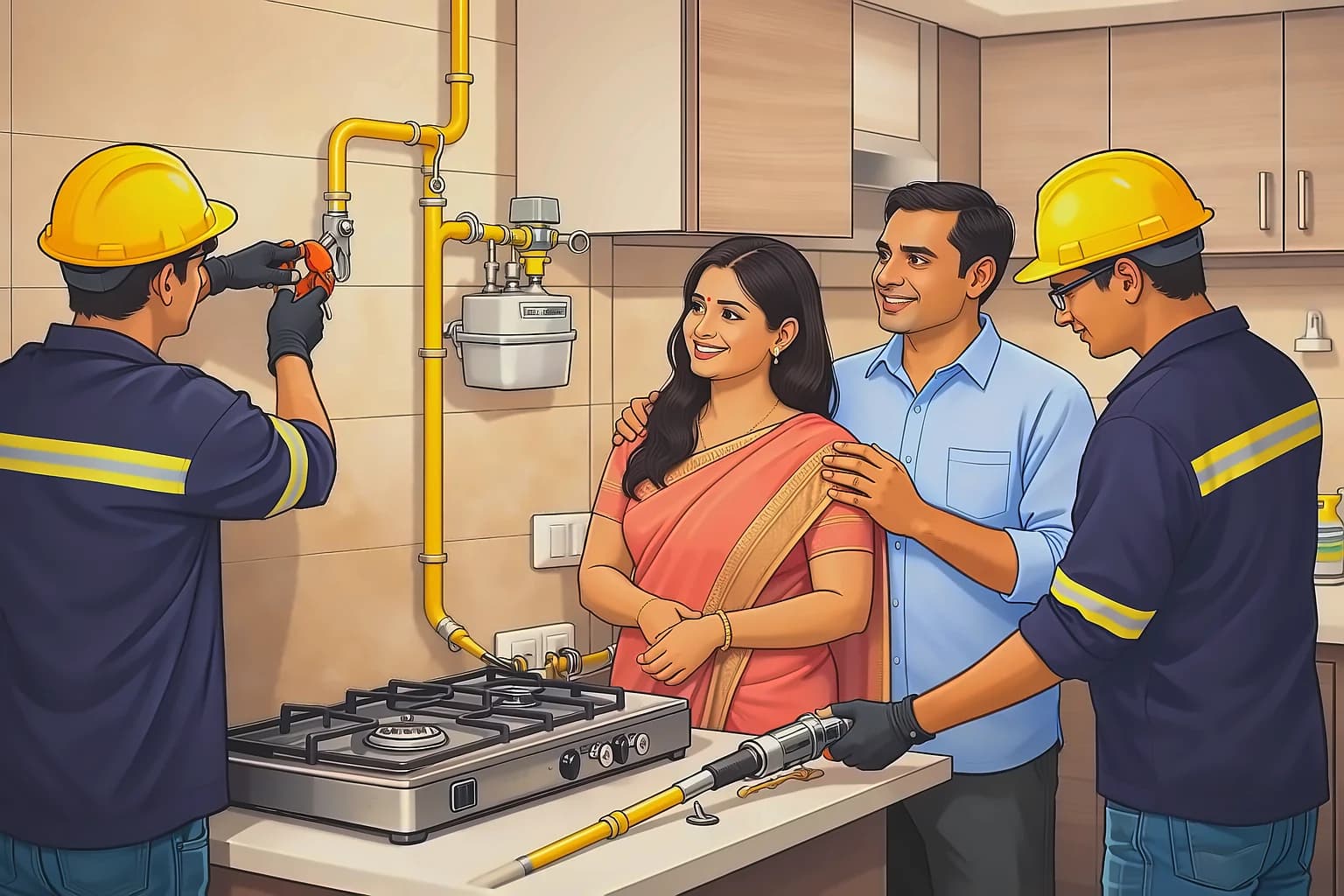
Indraprastha Gas Ltd (IGL) has signed an agreement with the Delhi Division of Northern Railway to supply piped natural gas (PNG) to 22 railway establishments across Delhi-NCR. According to reports from ANI, the agreement was signed on Saturday in the presence of senior officials from both organisations as part of the government's PNG Drive 3.0 initiative. The MoU was signed by Kumar Shanker, Managing Director of IGL, and Mohit Bhatia, Director (Commercial), IGL, alongside senior officials from Northern Railway. The partnership represents a significant step in expanding natural gas adoption among institutional users while reducing reliance on imported fuels. IGL Chairman Subhankar Sen emphasized that Indian Railways has chosen IGL as its collaborative partner to replace LPG with PNG, helping reduce import dependence and associated subsidy burden.
The agreement will initially facilitate the supply of around 3,000 standard cubic metres of gas per day (SCMD), replacing consumption of approximately 500 kg of liquefied petroleum gas (LPG) and 2,500 litres of diesel daily. As reported by ANI, the proposed conversion will cover railway mechanised laundries, officers' rest houses, base kitchens, running rooms, subordinate rest houses and guard and ticket examiner lobbies across Delhi, Ghaziabad and Gautam Buddha Nagar. IGL expects consumption under the initiative to increase to 8,000-10,000 SCMD in the coming years as pipeline infrastructure and connectivity expand across its authorised geographical areas, including Ajmer, Banda, Rewari and Muzaffarnagar. The mechanised laundries at Delhi Sarai Rohilla, Old Delhi, Anand Vihar Terminal, Hazrat Nizamuddin and New Delhi will use PNG for boiler operations, with the fuel being supplied to 22 designated locations under the first phase.
Delhi Division Railway Manager Pushpesh Raman Tripathi stated that the agreement would help reduce energy costs for the national transporter and that PNG connectivity could subsequently be extended to railway hospitals and residential colonies. According to ANI, he added that the MoU will help reduce substantial energy costs for Indian Railways and they plan to extend PNG connectivity to railway hospitals and residential colonies in the future. The collaboration is expected to simplify fuel handling, improve supply reliability and support the transition towards cleaner energy sources across railway establishments. The partnership could pave the way for a wider transition from LPG to PNG across the Indian Railways network, extending its impact beyond Delhi. The initiative comes as IGL intensifies efforts to expand household PNG connections under the government's National PNG Drive 3.0, with structured outreach and partnerships with residential associations helping speed up household connectivity.
The railway agreement is part of IGL's broader efforts to expand natural gas consumption among institutional and commercial users. On October 28, the company launched promotional incentives offering a ₹2,000 discount on standard domestic PNG registration charges and ₹500 worth of free gas after activation of a connection. As reported by Rediff Moneynews, the twin initiatives reflect the government's broader effort to expand natural gas use in transport, industry, commercial establishments and households, with IGL operating city gas distribution networks across 34 districts in 11 geographical areas spanning Delhi, Uttar Pradesh, Haryana and Rajasthan. Its infrastructure includes more than 30,000 km of pipelines and over 1,000 CNG stations, serving more than 2.5 million CNG vehicles and nearly 3.5 million PNG-connected households.
The railway agreement offers a potential institutional template for expanding PNG adoption across public-sector establishments, while the household incentives seek to build demand at the consumer level. A wider rollout across railway facilities could provide a sizable additional market for city gas distributors and help advance India's efforts to diversify its fuel mix and reduce dependence on imported energy. The initiative seeks to accelerate registrations and gas-in conversions across Delhi-NCR and other authorised areas through outreach programmes and partnerships with resident welfare associations and apartment owners' bodies. Replacing LPG and diesel with pipeline gas can reduce the need for cylinder handling and fuel storage while providing a continuous supply, although the actual cost and emissions benefits would depend on procurement prices, end-use efficiency and the fuels displaced.