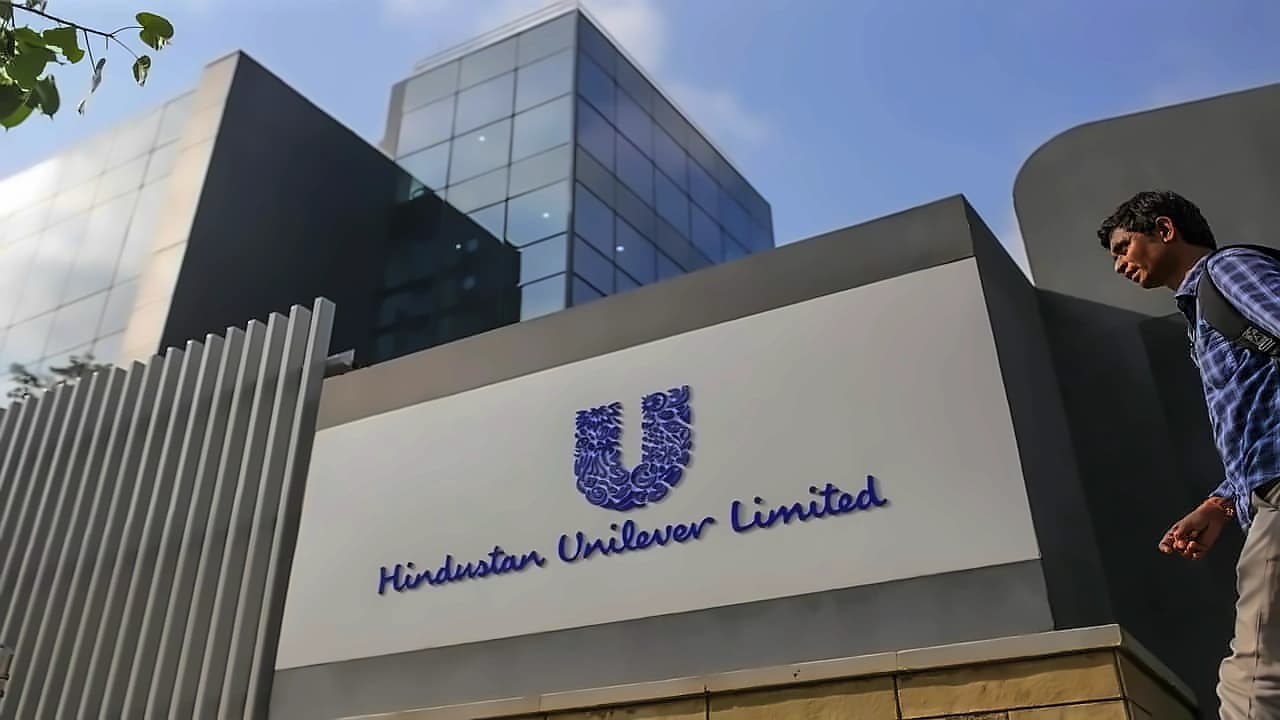
Hindustan Unilever Limited (HUL) has experienced a dramatic decline in its market value dominance over its parent company. According to CNBC TV18, the Indian consumer goods giant's market value has fallen to approximately $48 billion, representing 35% of parent Unilever's $135 billion market capitalisation. This represents a sharp decline from four years ago when HUL was valued at as much as 70% of Unilever Plc's market capitalisation. The current valuation reflects a prolonged period of underperformance, with HUL shares falling 21% in dollar terms so far this year, putting the stock on track for a third straight annual decline - its longest losing streak on record.
Despite the broader market challenges, HUL shares have shown signs of recovery, currently trading at ₹1,951.40 with a 0.92% rise in today's session. According to latest market data, the stock has moved away from its five-year lows reached in recent months, indicating some investor confidence return. The recovery comes after the consumer goods giant experienced significant challenges due to unfavourable macroeconomic conditions and a weak consumption environment that had weighed down overall performance.
Despite the challenging market conditions, HUL continues to demonstrate positive results from its premiumisation strategy. As reported by Moneycontrol, the company's focus on premium products is delivering measurable improvements in its product portfolio performance. These gains are helping to support the stock's recent recovery from multi-year lows, though the premiumisation strategy alone cannot fully offset the impact of broader economic challenges facing the consumer goods sector.
The current performance challenges stem from multiple headwinds affecting the consumer goods sector. According to CNBC TV18, underlying volume growth, a key measure of demand for FMCG companies, slowed to 5% in the June quarter from 6% in the preceding quarter. The weakness is highlighted by rivals including Tata Consumer Products Ltd. and Nestlé India Ltd. appearing to grow faster, adding to concerns over HUL's ability to sustain its market leadership. These factors are creating a challenging operating environment where elevated commodity costs squeeze margins amid heightened geopolitical tensions in the Middle East.
HUL generated revenue of $7.2 billion in FY26, compared with $57.1 billion reported by Unilever Plc for the 12 months ended December 2025. The parent company posted net profit of $10.7 billion for the year, while HUL reported profit of $1.7 billion for FY26. Despite the recent challenges, analyst sentiment remains broadly constructive with 30 out of 42 analysts covering HUL on Bloomberg having a Buy recommendation, while nine rate the stock Hold and three recommend Sell. HUL currently trades at 39.1 times one-year forward earnings, compared with 16.3 times for Unilever - a premium of nearly 140%, though this is well below the 275% recorded in September 2021.