According to reports from The Financial Express, Gujarat Pipavav Port delivered impressive financial results for FY26 despite facing challenges in its container segment. The company reported revenue growth of 17% to ₹1,158 crore from ₹988 crore in the previous year, while operating profit margins expanded from 58.5% to 61.1%. The March quarter showed even stronger performance with revenue increasing 26% year-on-year to ₹317 crore and operating profit margins touching 70% compared to 62% in the corresponding quarter last year. For the first nine months of FY26, Earnings Before Interest and Tax increased 18% year-on-year, with the improvement in profitability even stronger than the revenue growth suggests due to the company's operating leverage.
As reported by The Financial Express, the company's diversification strategy is showing strong results across multiple cargo segments. Vehicle exports through Roll-on Roll-off business surged 39% to 229,326 units during FY26, with the March quarter alone handling more than 67,000 vehicles - up 39% over the previous year. Dry bulk cargo volumes increased 35% to nearly 3 million metric tonnes due to strong fertilizer imports, while liquid cargo volumes also grew 8%. The company handled more than 67,000 vehicles in the March quarter alone, with management confident enough to expand vehicle handling capacity from 250,000-300,000 vehicles annually to around 400,000-450,000 vehicles through a new 60,000 square metre staging area. This diversification strategy has been a key driver of the company's record financial performance, with growth becoming more diversified across all business segments.
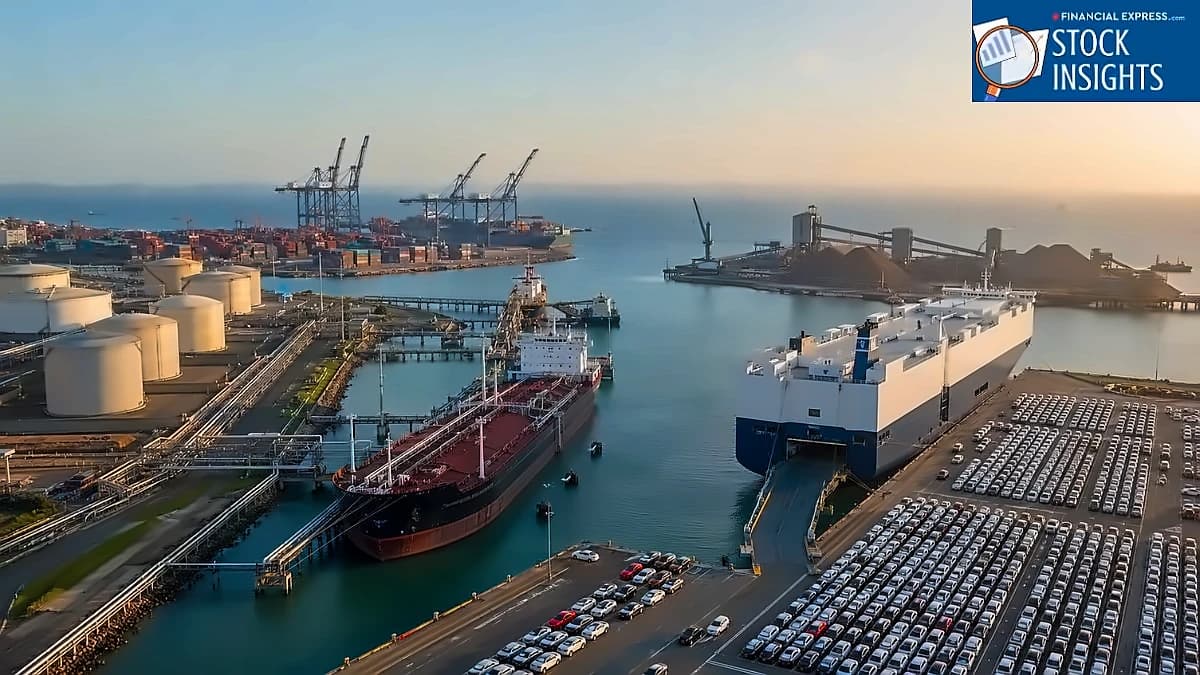
According to The Financial Express, Gujarat Pipavav Port is undertaking significant expansion projects to capitalize on growing demand. The company is constructing a new liquid cargo jetty that will become operational by December 2026, which will add capacity of around 3.2 million metric tonnes to the current 1.6-1.75 million metric tonnes annually. Once operational, total liquid cargo capacity could approach 5 million metric tonnes. Management has indicated that the existing infrastructure is approaching practical capacity limits, with the expansion intended to accommodate higher volumes and handle larger vessels. The significance of this expansion goes beyond volume growth, as it suggests management believes automobile exports could remain an important growth engine for several years, with the new jetty alone adding capacity equivalent to the entire current liquid cargo operations.
As reported by The Financial Express, Gujarat Pipavav Port maintains one of the strongest balance sheets in the infrastructure sector. The company has a debt-to-equity ratio of just 0.02 and interest coverage of nearly 99 times, indicating minimal debt burden. The company's Return on Capital Employed stands at 28% while Return on Equity is 21.2%, with a dividend yield of 5.3%. These metrics are particularly impressive for a capital-intensive infrastructure business, with the company maintaining a shareholder-friendly approach to capital allocation. The strong balance sheet provides financial flexibility for ongoing expansion projects and positions the company well for future growth opportunities.
According to The Financial Express, at the current market price of around ₹154, the stock trades at about 14.9 times earnings and 3.1 times book value. The company's container segment faces ongoing challenges with 4% decline in FY26 due to Middle East conflict disruptions and shipping route changes, though there are signs of improvement with 7% sequential increase in container volumes during the December quarter. The concession agreement is scheduled to expire in 2028, with management indicating positive discussions with the Gujarat Maritime Board continue to move in the right direction. While investors focus on containers, there is another important issue that could shape the company's future - the current concession extension depends on formal resolution, which could unlock larger expansion opportunities and provide greater visibility for long-term investments.