

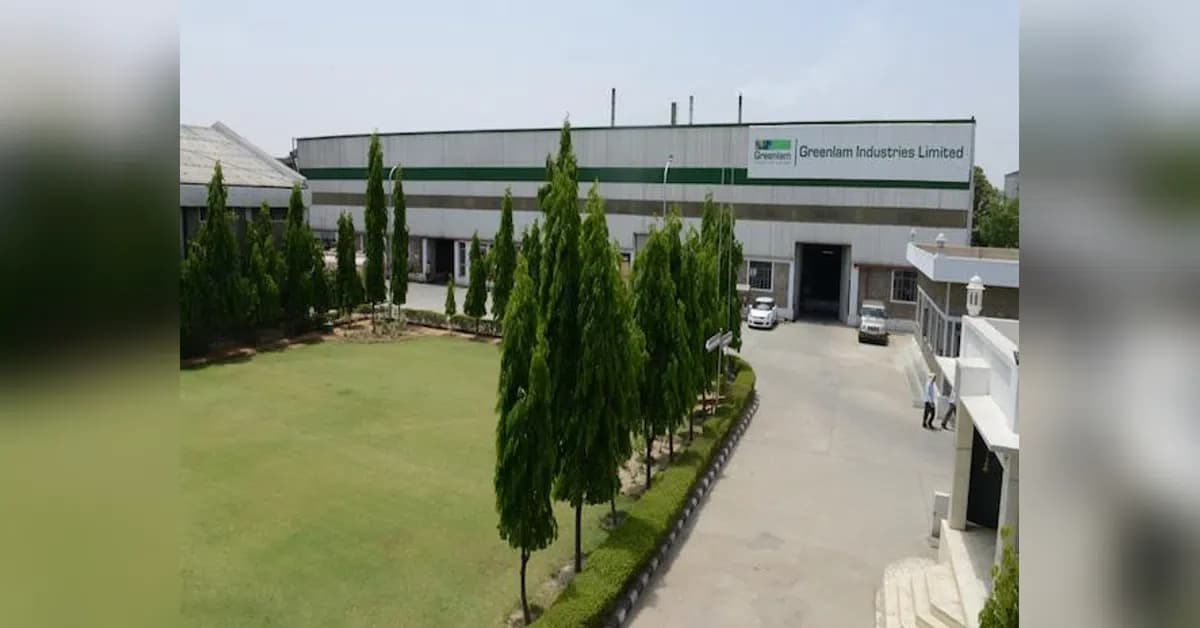
Greenpanel Industries Ltd reported robust financial results for the third quarter, with net profit rising 20% year-on-year to ₹10.2 crore compared with ₹8.5 crore in the same quarter last year. Revenue demonstrated healthy growth of 15.8% to ₹416.3 crore from ₹359.4 crore a year ago, reflecting continued traction across its product segments. The company's operating performance stood out during the quarter, with EBITDA jumping significantly to ₹41 crore from ₹17.3 crore in the year-ago period. This led to a sharp expansion in margins to 9.8% from 4.8% last year, underscoring better cost efficiencies and operating leverage.
The company's operating performance stood out during the quarter, with EBITDA jumping significantly to ₹41 crore from ₹17.3 crore in the year-ago period. This led to a sharp expansion in margins to 9.8% from 4.8% last year, underscoring better cost efficiencies and operating leverage. The improved margin structure contributed to the overall profitability growth, demonstrating the company's ability to leverage its operational scale effectively.
Shares of Greenpanel Industries touched an intraday high of ₹250, rising nearly 14%, before paring some gains. As of 3:05 pm, the stock was trading at ₹234 on the NSE, up ₹14.98, or 6.84%. The sharp rally in the stock reflects investor confidence in the company's operational performance and margin expansion during the quarter. The stock's strong performance contrasts sharply with peer Archidply Industries, which reported mixed signals with profitability challenges despite revenue growth.
A comparative analysis with sector peers reveals Greenpanel's competitive advantages in operational metrics. The company trades at a P/E ratio of 18.77 and P/BV of 2.03, with a strong ROE of 14.10% and minimal debt-to-equity ratio of 0.04. This compares favorably with peers like Stylam Industries (P/E: 25.69, ROE: 21.38%) and Greenply Industries (P/E: 33.52, ROE: 13.70%). Greenpanel's 6.66% operating margin in Q3 FY26, while improved, remains well above the 3.77% margin reported by Archidply Industries, highlighting the competitive gap in operational efficiency.
The residential construction sector, a key demand driver for plywood and laminates, has shown resilience in recent quarters, supported by government infrastructure spending and urban housing demand. However, the broader plywood and laminates sector has experienced mixed fortunes, with the industry declining 3.77% while Archidply Industries underperformed significantly with a 19.17% decline. This 15.40 percentage point underperformance reflects company-specific challenges beyond sectoral headwinds, with larger established players benefiting from brand recognition and economies of scale that smaller manufacturers struggle to replicate.