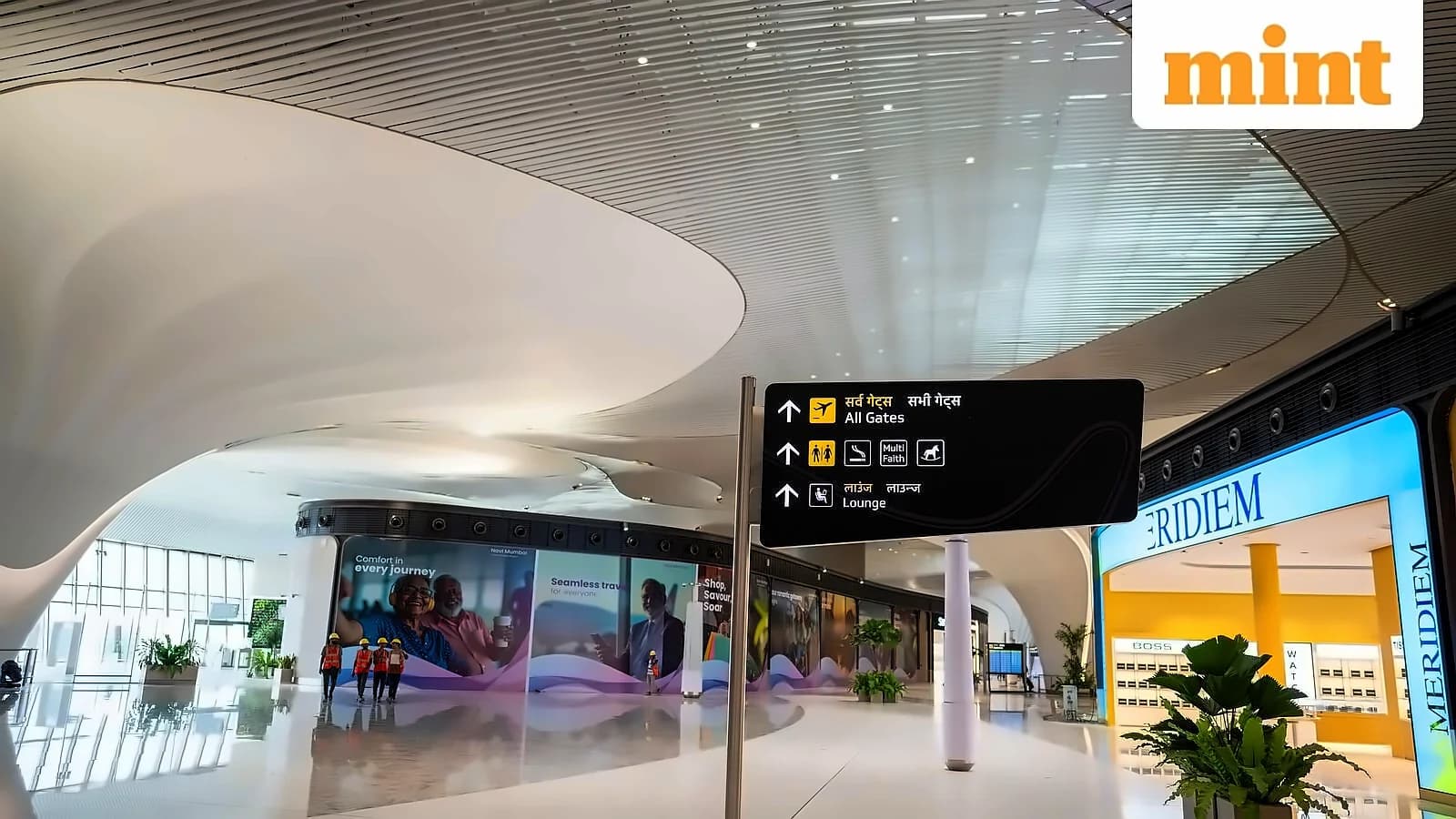
The Airline Operators Committee has escalated its demands ahead of the October 13 stakeholder meeting, asking Mumbai International Airport Ltd (MIAL) to share comprehensive technical evidence supporting the proposed terminal redevelopment. According to an email sent by the Airline Operators Committee-Mumbai (AOC-Mumbai) to the chief airport officer's office at Chhatrapati Shivaji Maharaj International Airport, airlines are seeking independent consultant reports on Terminal 1's structural condition and detailed redevelopment plans. The committee has proposed six agenda items for discussions, including clarification on the 5 million passengers per annum capacity expansion at Terminal 2 and monthly data on actual capacity utilization at both terminals in 2026. Airlines are also demanding explanations of alternatives considered, including temporary passenger-processing facilities, and formal reviews of compliance with civil aviation ministry slot-allocation guidelines in case of capacity reduction.
The civil aviation ministry has put on hold Adani-owned Mumbai city airport's plan to shift a third of international flights to the new facility outside the city. According to reports from Mint, the pause gives airlines and the operator more time to reach a consensus on managing traffic when the existing terminal undergoes rebuilding next year. Mumbai International Airport Ltd (MIAL), a joint venture between Adani Airport Holdings Ltd and the Airports Authority of India, had proposed that 46 airlines move 265 of their 770 weekly international flights to Navi Mumbai Airport starting 25 October. Civil Aviation Secretary Samir Kumar Sinha chaired a meeting with representatives of airlines, AAHL, FIA, global airlines' grouping IATA and AAI to discuss the transition plan. The dispute began in August when MIAL started discussions on moving around one-third of international services to Navi Mumbai as part of the redevelopment of Terminal 1 at the existing Mumbai airport.
Most airlines disagreed with the proposed relocation, with the Airline Operators Committee - Mumbai questioning the technical and practical reasons for the 33% reduction in international flights. As reported by Mint, airlines say their support for rebuilding Terminal 1 should not be seen as an agreement to remove or move international flight times already planned for the winter schedule. The committee has specifically asked for independent consultant reports that have established structural concerns about Terminal 1, stating that there have been references to the structural safety of T1 by MIAL at various forums. Airlines are seeking detailed studies on capacity, demand, and planned improvements at Terminal 2, with the ministry having asked Adani Airport to meet again with all parties involved and create a transition plan that everyone agrees on, with the operator required to revert to the ministry with a plan approved by all parties after 13 October.
IATA's intervention comes as the dispute unfolds amid established aviation guidelines that govern airport capacity reductions. Under WASG guidelines, if a capacity cut is unavoidable, airlines must be consulted, the reduction assessed and coordinated, and historic slots protected. A capacity cut that cannot accommodate historic slots, particularly after the submission deadline, should be avoided except in exceptional circumstances. MoCA guidelines state that a reduction in capacity from the previous equivalent season should be avoided wherever possible, and airlines operating at the airport must be consulted before any reduction in capacity takes place. The guidelines are particularly relevant as Adani Airport had asked airlines to identify the slots they wanted temporarily discontinued, failing which it said it would select them. IATA noted that airlines had also told the ministry that the earlier implementation schedule was unworkable, with the previously proposed timeframe being deemed not achievable.
MIAL plans to start rebuilding Terminal 1B in January 2027. According to Mint, domestic flights from Terminal 1 would move to Terminal 2, and some of Mumbai's international flights would move to NMIA, which is about 50 km away. The rebuilt Terminal 1 is expected to handle 20 million passengers a year, one third more than it does now. Mumbai airport handled about 38 million domestic and more than 16 million international passengers in FY26. The dispute is linked to Adani Airport's plan to redevelop Terminal 1B, with the operator stating that around 5 million passengers, or about 9% of Mumbai airport's roughly 55 million annual passengers, will be temporarily affected by the redevelopment. For airlines, moving international operations to Navi Mumbai involves more than shifting flight schedules, requiring changes to ground handling, crew deployment, passenger connections, cargo operations, and passenger cost issues as Navi Mumbai has a higher user development fee than Mumbai airport.
According to Amit Mittal, director of AeroIntellect Aviation, there is clear indication from the ministry to resolve the deadlock, with airlines' concerns having been heard. As reported by Mint, October to December is peak travel time, and some foreign airlines also increase their capacities during this period, making their concerns about splitting operations between two airports understandable. Mark D. Martin, founder and CEO of Martin Consulting, emphasized that the core issue is whether passengers would actually want to fly from Navi Mumbai, noting that "it's not just about IATA, Adani or airlines. It is whether moving to Navi Mumbai helps a passenger or not." Ankur Singhal, founder of BASPIN Consulting, stressed that the real issue is not Mumbai vs Navi Mumbai, but how the transition is managed, stating that such a large aviation transition needs strict service-level agreements, clear accountability and a defined compensation mechanism for losses arising from operational disruption by the airport operator.