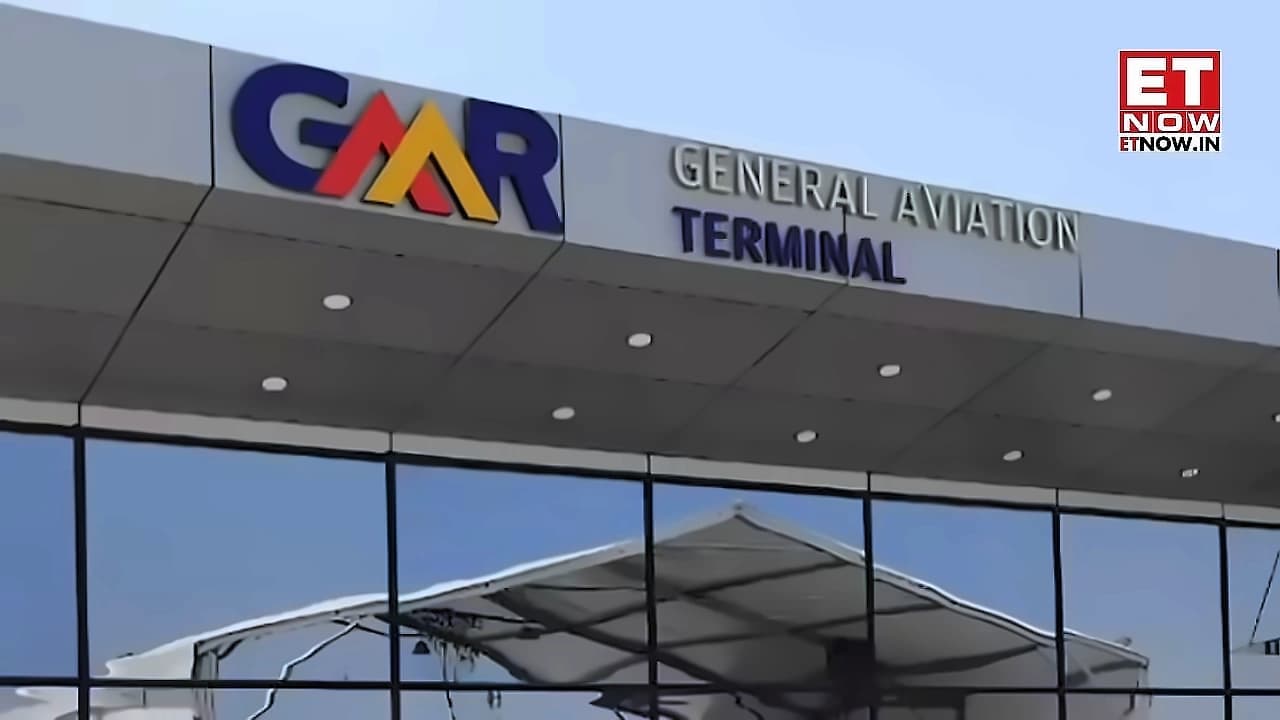
GMR Airports Ltd has formally taken over operations at Nagpur Airport under a 30-year concession agreement that officially commenced on June 25, 2026. The takeover strengthens GMR's position as India's largest private airport operator, with the company planning to scale annual passenger handling capacity from 3.5 million to 30 million through a multi-phase upgrade. The MIHAN project creates significant synergies where the airport serves as the logistics core for the surrounding special economic zone, boosting cargo and industrial freight demand. GMR will share 14.49% of gross revenue with MIHAN India Limited (MIL) while managing the facility for the full 30-year concession period, with the land lease extended co-terminus with this timeframe.
GMR Airports Ltd is exploring retailing, duty-free shopping and F&B opportunities in Europe, West Asia and North America to generate commercial revenue even at airports it does not operate. According to reports from Mint, the country's largest airport operator is evaluating prospects including opportunities in New Zealand, Europe, Finland, and the Middle East, with some conversations currently underway in the Middle East and an actual opportunity in North America. CFO Saurabh Chawla indicated that some of these opportunities could materialize over the next 12 months, as the company transitions from being limited to its own airports to becoming a platform play. The company recently completed a landmark merger between GAL and GIL, streamlining its corporate structure as a pure-play operator.
The three airports operated by GMR in India generated non-aeronautical revenue of ₹4,481 crore in FY26, up about 12% from ₹4,011 crore a year earlier, according to company data reported by Mint. This growth outpaced passenger traffic growth across the portfolio, which rose by about 1%, underscoring the increasing importance of commercial revenue. Aero revenue across the airports stood at ₹4,954.6 crore in FY26, up 63.6%, while consolidated revenue reached ₹15,200 crore, up 40%. GMR is the largest duty-free operator in India and South Asia, operating at Delhi, Hyderabad, Goa, and Kannur. The company recently reported a turnaround in its March quarter with a profit of ₹400.49 crore, reflecting strong operational performance.

India's aviation sector is grappling with softer passenger growth, with domestic passenger traffic growth slowing to 1.3% in FY26 as Air India and IndiGo had fewer planes in operation. According to Mint reports, Air India scaled back operations following a plane crash in June while IndiGo cut its schedule by 10% after operations were disrupted in December due to pilot duty and rest hour issues. Passenger traffic at Delhi airport grew 7% year-on-year during April and May to 13.82 million, while Hyderabad reported a 12% decline to 4.8 million passengers and Mopa remained little changed at about 820,000. The sector is shifting toward a 'hub-and-spoke' model where regional centers like Nagpur act as major transit points.
GMR management expects non-aeronautical revenue to grow at 16-17% annually, potentially reaching 18% growth, as reported by Mint. The company's consolidated non-aeronautical revenue, including platform businesses, subsidiaries and joint ventures, stood at ₹5,517 crore, accounting for about 36% of total revenue. Delhi accounted for more than 80% of GMR's standalone non-aeronautical revenue and remained the only airport where non-aeronautical revenue exceeded aeronautical revenue. GMR sees room to increase spending by existing passengers, with current duty-free spending at Delhi airport at about $11.5-12 per passenger, targeting to increase this to $13 and $15. The market views the Nagpur takeover as validation of GMR's pure-play airport model, with the addition of a cash-flow positive asset supporting long-term valuation re-rating.
According to a report by the Airports Council International in March, non-aeronautical revenue accounted for 36.7% of airport income globally, rising to 43.5% in Asia-Pacific and West Asia and 38.1% in Europe. The study found that non-aeronautical revenue offset 48% of total airport costs, exceeding 50% in Asia-Pacific, West Asia and Europe. Rival Adani Airport Holdings Ltd reported faster growth in commercial revenue, with non-aeronautical revenue increasing 32% to ₹6,401 crore, accounting for almost half of total revenue. As reported by Mint, growing contributions from real estate income and minimum-guarantee concession agreements are helping airports reduce dependence on traffic growth.