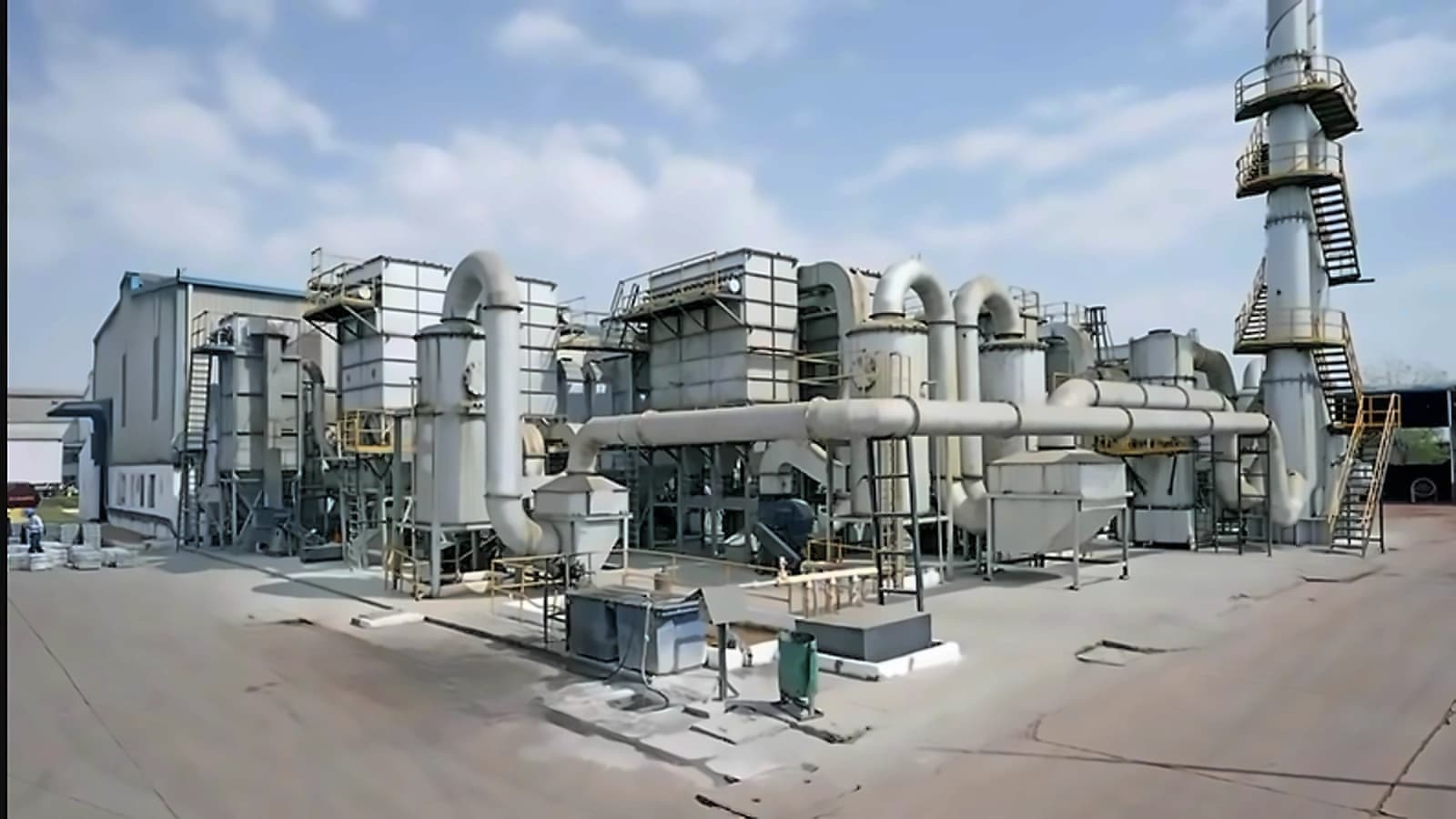
Shares of Gujarat Mineral Development Corporation (GMDC) jumped nearly 5% to ₹603 on the NSE following Finance Minister Nirmala Sitharaman's announcement of rare earth corridors in her Union Budget 2026 speech. According to The Economic Times, the rally reflects investor optimism about the government's strategic plan to build a complete critical minerals supply chain. The stock had previously gained nearly 5% to ₹603 on the NSE after the initial budget announcement, demonstrating sustained investor interest in the rare earth sector initiative. However, not all mining stocks responded positively, with Nalco and Hindustan Zinc shares trading up to 8.6% lower around 11:30 am on Sunday. As reported by Business Upturn, companies linked to mineral exploration and development, including GMDC, are being closely tracked by market participants as further details on the structure, incentives, and implementation framework of the rare earth magnets corridors are awaited.
The budget introduces comprehensive fiscal measures to accelerate domestic critical minerals processing and manufacturing. As reported by The Economic Times, the budget proposes customs duty exemptions on capital goods required for critical minerals processing, nuclear projects, lithium-ion cells, battery storage systems, and solar glass manufacturing. Additionally, the import duty on Monazite, a primary ore for rare-earth elements, has been reduced to zero from 2.5%, a move expected to significantly boost domestic mining and processing activities. These measures collectively advance India's strategic self-reliance in minerals and chemicals essential for key industries. The fiscal support is crucial for accelerating the development and deployment of technologies vital for electric vehicles, renewable energy, and advanced manufacturing sectors.
The government is rolling out a dedicated rare earths corridor, a strategic plan to build a full-fledged supply chain for critical minerals. As reported by The Economic Times, states like Odisha, Kerala, Andhra Pradesh, and Tamil Nadu are set to become hubs for mining, processing, and distributing these essential resources. Under this initiative, states such as Tamil Nadu will gain from a permanent rare earths development scheme, designed to streamline the entire value chain from extraction to market. The Finance Minister announced that the Centre launched a scheme for rare earth permanent magnets in November 2025, with the latest budget proposal supporting mineral-rich states to establish dedicated rare earth corridors for mining, processing, research and manufacturing. According to Business Upturn, the proposed corridors are expected to focus on improving extraction, processing, and value-chain integration of rare earth elements within India, aligning with the government's broader objective of reducing import dependence and building resilience in strategic supply chains amid global geopolitical and trade uncertainties.

The rare earth corridor announcement is part of a broader manufacturing strategy to scale up production in strategic sectors. As reported by The Economic Times, the government has announced multiple initiatives including India Semiconductor Mission (ISM) 2.0, Electronics Components Manufacturing Scheme, Three dedicated Chemical Parks, and a Scheme to revive 200 legacy industrial clusters. A central tenet of this policy is the enhanced manufacturing of Rare Earth Permanent Magnets (REPMs), indispensable for modern technologies like EVs, wind turbines, electronics, and defence applications. India's consumption of REPMs is projected to double by 2030, requiring significant domestic production capacity. To meet this demand, a Scheme to Promote Manufacturing of Sintered Rare Earth Permanent Magnets, approved in November 2025 with a ₹7,280 crore outlay, aims to establish 6,000 metric tons per annum (MTPA) of integrated REPM production capacity. This scheme supports the entire value chain from rare earth oxides to finished magnets, directly addressing India's current import dependence, which stands at nearly 95-98% for key elements like neodymium.
India is among a growing number of countries racing to capture a greater share of the rare earth magnet supply chain after China tightened exports in April. According to Live Mint, the restrictions, issued during Beijing's trade dispute with the US, curtailed access for automakers worldwide. This global shift has intensified the urgency for countries like India to develop domestic rare earth capabilities, positioning the government's corridor initiative as a strategic response to supply chain security concerns. India imports a significant majority of its rare earth magnets from China, leaving its supply chains vulnerable to geopolitical disruptions. By establishing these corridors and enhancing domestic processing, India aims to mitigate these risks, secure its supply chains, and position itself as a key player in the global REPM market. This push aligns with national goals of 'Atmanirbhar Bharat' (Self-reliant India) and 'Viksit Bharat' (Developed India), contributing to employment generation and the nation's commitment to achieving Net Zero by 2070.
While GMDC shares witnessed a sharp increase, rising over 5% post the announcement, the broader mining sector showed mixed reactions. As reported by The Economic Times, NMDC shares inched up about 1% following the budget announcement, while Nalco and Hindustan Zinc shares were trading 7.9% and 8.6% lower respectively. Hindustan Zinc shares had declined prior to the FM's Budget Speech, extending Friday's losses, in-line with the sell-off witnessed across its other metal peers. This divergent performance reflects the sector-specific impact of the rare earth corridor announcement, with companies positioned in the critical minerals value chain benefiting while traditional mining stocks faced pressure. The move is likely to strengthen the long-term growth prospects of companies in the rare earth sector, positioning India as a strategic player in the global supply chain amid surging global demand for critical minerals.