Shares of Gland Pharma surged as much as 15% on May 18, 2026, reaching a 52-week high of ₹2,170 in afternoon trade, significantly outperforming the benchmark BSE Sensex which fell 1.14% on the same day. According to reports from Moneycontrol, the stock had touched its 52-week low of ₹1,452.20 on May 19, 2025, making the current surge particularly significant for investors. The exceptional performance demonstrates the stock's 133% gains over three years and approximately 50% increase in the last year, reflecting sustained institutional accumulation rather than speculative spikes. However, the stock's volatility history, including declines in late 2025 and a dip on May 15, 2026, even after reporting record profits, indicates the market might be weighing longer-term sustainability concerns over immediate results.
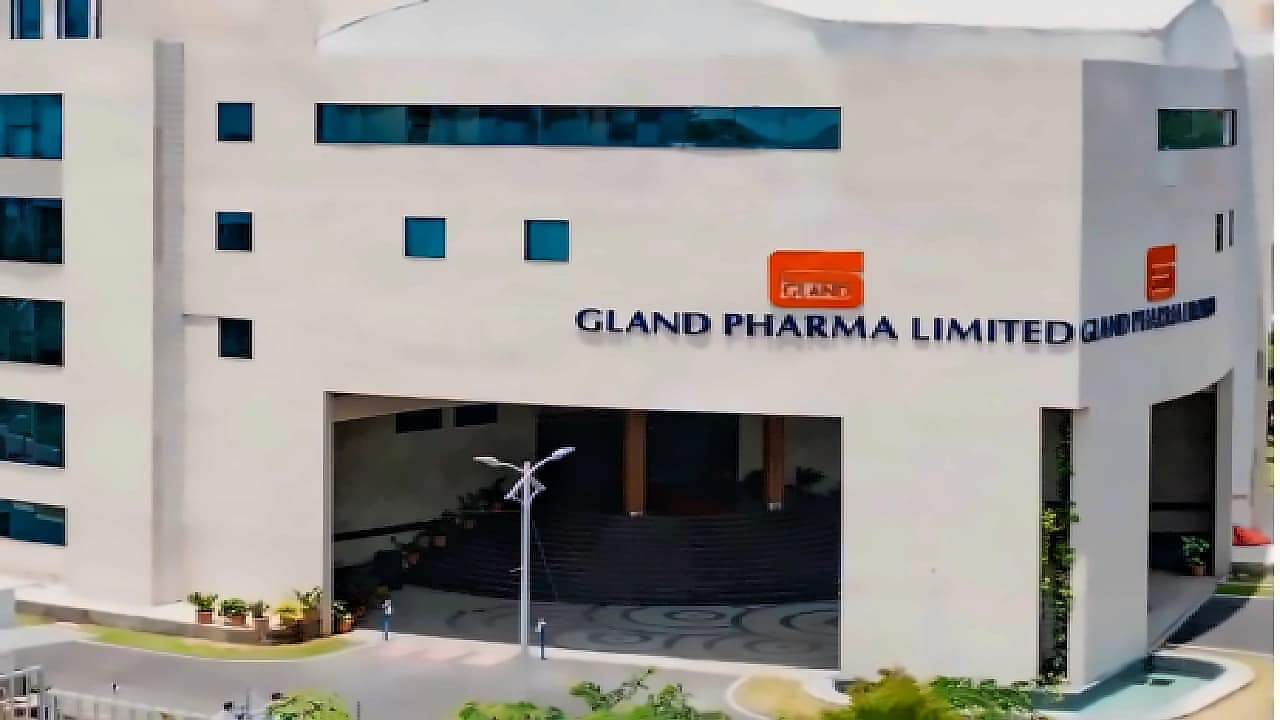
The 65% year-on-year growth in the Contract Development and Manufacturing Organisation (CDMO) segment emerged as the primary driver behind the stock's surge, contributing 25% of total Q4 FY26 revenues. As reported by Univest, CDMO contracts are typically multi-year, high-margin and sticky, suggesting the earnings quality of this quarter's results is superior to typical product sales beats. The segment benefits from global pharmaceutical companies restructuring supply chains away from Chinese manufacturers post-COVID, with Indian CDMO players like Gland Pharma winning long-term contracts that provide multi-year revenue visibility. Despite the strong performance, intense competition and potential pricing pressures could affect future margin expansion, with analysts noting that the 28% growth in CDMO business faces ongoing challenges in the competitive landscape.
For Q4FY26, Gland Pharma reported a 96.56% jump in consolidated profit after tax at ₹366.67 crore, compared with ₹186.54 crore in the corresponding quarter last year. Revenue from operations rose 22% year-on-year to ₹1,742.8 crore in the March quarter, significantly beating analyst expectations. The company's base injectable generics business achieved an adjusted EBITDA margin of 38%, which is among the highest in India's generic pharmaceutical space and reflects the premium pricing power of complex injectable formulations, operational efficiency, and favorable product mix shift toward higher-value molecules. However, the stock's trailing twelve-month price-to-earnings ratio of 36.19 places it at the higher end of its valuation range, with some estimates between 26.31 and 37.05, prompting analysts to label it 'very expensive' and suggesting future growth is largely factored into the current price. The company maintains low debt levels at ₹243 crore while operating with a market capitalization of approximately ₹30,781 crore.
The board recommended a final dividend of ₹20 per share for FY26, subject to shareholder approval at the upcoming AGM, with the record date fixed as August 11. For a stock trading at ₹2,170, the ₹20 dividend represents a 0.92% yield for the quarter alone. The dividend declaration reinforces management's confidence in cash flow generation and future earnings trajectory, with the payout confirming that strong Q4 earnings are genuine cash-backed profits rather than accounting adjustments. However, analysts at MarketsMOJO downgraded the stock to a 'Sell' rating in March 2026, citing weakening technical indicators, an 'expensive' valuation not supported by long-term growth, and moderate quality metrics, despite a strong institutional investor base holding 40.56% stake.
The Gland Pharma surge reflects the broader strength of the pharma sector, with the Nifty Pharma index hitting a 52-week high in May 2026. However, the broader Indian pharmaceutical sector faces upcoming challenges, with projections showing 7-9% growth in FY2026 but the key US market growth moderating to 3-5% for FY2026, down from nearly 10% in FY2025, due to global factors and regulatory issues. Industry reports suggest that EBITDA margins for the sector might decrease by 42 basis points year-on-year in Q1 FY26 due to US pricing pressures and increased research and development spending. While Gland Pharma's Q4 saw strong US market growth of 26% YoY, the overall sector slowdown could challenge its growth momentum. The company's negative five-year return contrasting with the Sensex's gains also raises questions about its capacity for sustained shareholder value over the long term, with analysts noting that a P/E ratio above 36.33 leaves little room for error.