Shares of GE Vernova T&D India Ltd. surged 5% to hit an intraday high of ₹4,225 on Monday, November 2, as investors reacted to the company's strong July-September quarter financial performance. According to reports from CNBC-TV18, the company delivered strong execution that led to revenue growth of 32% year-on-year during the September quarter. The company's profit after tax increased 44% to ₹431 crore from ₹299 crore last year, also beating the CNBC-TV18 poll estimate of ₹385.7 crore by 11.7%. The company has now formally published its unaudited financial results for the quarter and period ended September 30, 2026, in Financial Express and Jansatta newspapers, as disclosed to both BSE and NSE under SEBI's listing regulations.
The company's revenue for the quarter stood at ₹2,027 crore, marginally higher than the CNBC-TV18 poll of ₹1,970 crore. As reported by CNBC-TV18, EBITDA increased 38.8% to ₹549.7 crore from ₹396 crore, surpassing the projected figure of ₹501 crore. The EBITDA margin expanded to 27.1% from 25.7% in the year-ago period, higher than the 25.4% poll expectation. According to latest exchange filings, EBITDA margins improved 136 basis points to 27.12% in Q2 FY27, from 25.76% in Q2 FY26. The strong performance was primarily driven by gross margin expansion and operating leverage. The formal publication of these results in major newspapers reinforces the company's commitment to transparency and regulatory compliance in financial reporting.
According to CNBC-TV18, the company's order inflow during the quarter stood at ₹2,440 crore compared to ₹1,140 crore in the previous year and ₹1,610 crore in the same quarter last year, representing a 52% year-on-year increase. This took the company's order backlog to ₹21,440 crore, compared to ₹20,930 crore earlier. Key orders from transmission projects in Himachal Pradesh, Andhra Pradesh, and Maharashtra were the highlights in the quarter under review. The management maintained its FY27 EBITDA margin guidance of mid-20s and expects over 30% annual execution growth over the next three to four years. The company expects to book Power Grid's Barmer HVDC project in the third quarter of this fiscal. GE Vernova T&D India Limited operates in the power transmission and distribution equipment and solutions industry, providing grid infrastructure products and services to utilities and large power consumers across India.
Export momentum remains healthy with H1 export inflows of ₹10.4 billion already exceeding the ₹11.8 billion recorded in FY26, supported by broad-based demand across North America, Europe, the Middle East and Africa. The proposed US data-centre-related order of US$151 million (~₹13 billion) is expected to conclude in H2FY27, while two large RPT opportunities remain delayed. The company's export orders were at 21% of the total, with export revenues at 32% of the overall business mix. The company expects pickup in STATCOM orders, large data centre projects and upcoming 2-3 HVDC projects bidding next year to further strengthen order pipeline visibility. Progress on the ₹10 billion capex programme remains on track with focus on higher localisation of HVDC transformers, valves and controls, along with improved supply-chain integration following the Trench acquisition.
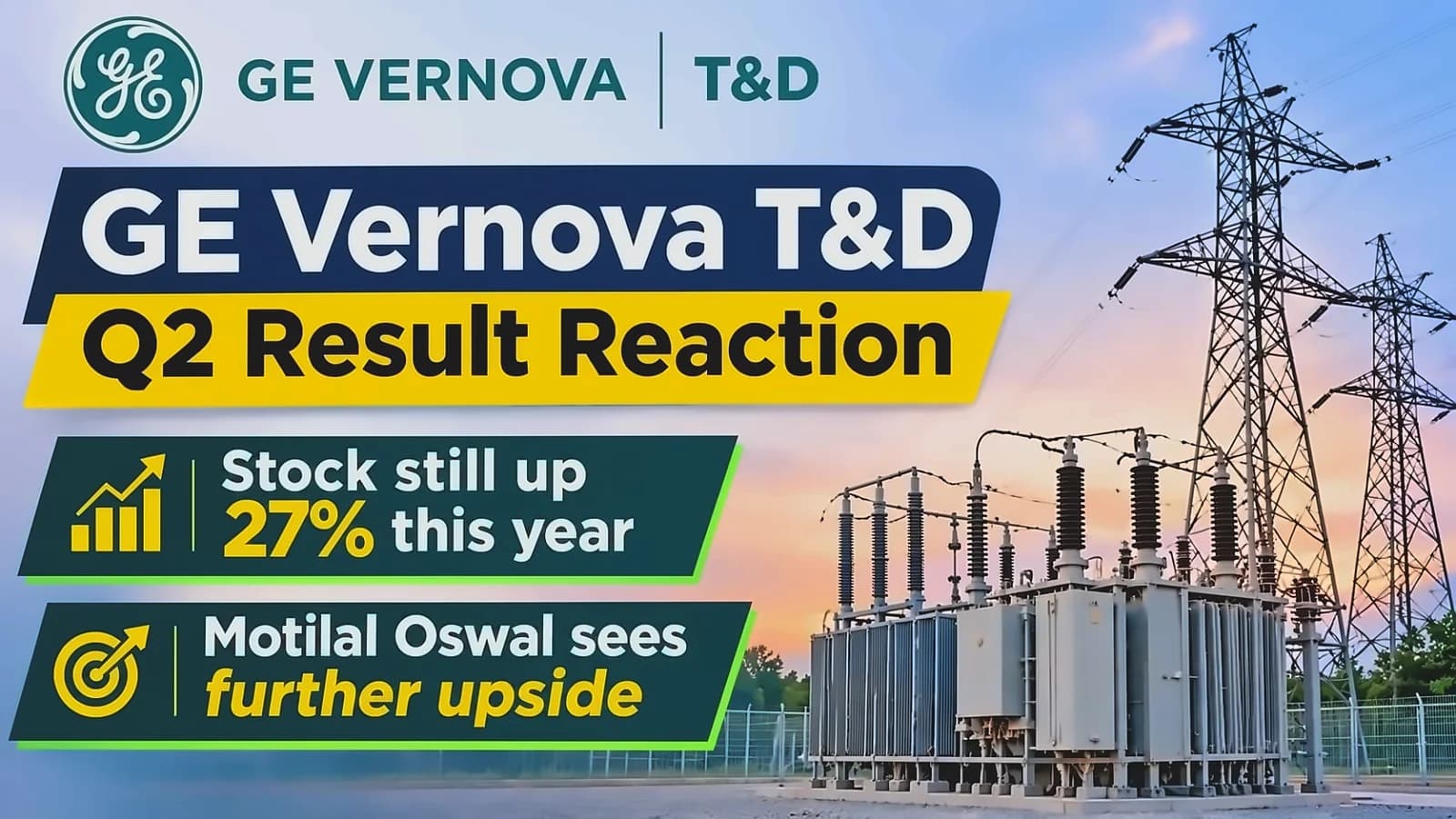
As reported by CNBC-TV18, Motilal Oswal has maintained its 'buy' rating on GE Vernova T&D with a price target of ₹5,100, indicating an upside potential of 27% from current levels. Prabhudas Lilladher has now joined with a 'buy' rating and target price of ₹5,928, maintaining the same target as earlier while valuing the stock at a PE of 65x Sep'28E. According to Antique Stock Broking, analysts remain positive on GE Vernova's growth outlook, with management expecting the export business to remain a key driver with potential upside from the US data-centre opportunities. The company's shares ended the previous session 1.7% lower at ₹4,020 and have declined 2% in the past month, though they are down 10.4% in the last six months and have gained 31% this year. The stock is trading at a P/E of 53.2x/37.6x on FY28/29E, with long-term growth supported by increasing adoption of digital grid solutions and localisation of critical HVDC components.