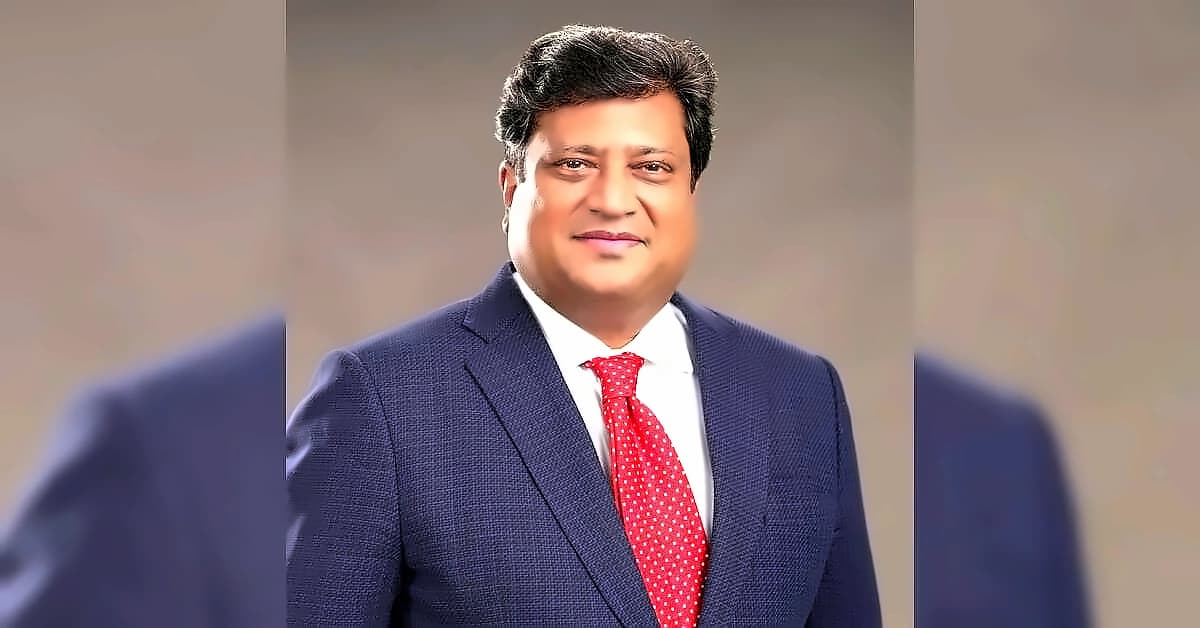
Gaja Capital is making significant bets at opposite ends of India's AI stack through strategic investments in Fractal Analytics and Sarvam AI. According to reports from Business Standard, CEO and managing director Gopal Jain described AI as a 'five-layer cake' and explained that Gaja has invested in two layers of that cake. The firm is now pivoting deliberately towards AI and deeptech while evaluating intelligent manufacturing, defence tech, and quantum computing. Jain has more than 30 years of experience in Indian capital markets and has led or co-led more than 25 private equity investments, building Gaja Capital over two decades on traditional bets including school chains, a small finance bank, and a staffing firm.
Gaja Capital participated in a $170 million secondary share sale in Fractal Analytics at a then-valuation of $2.44 billion in July 2025, alongside a consortium of about 22 investors. As reported by Business Standard, the transaction was a pre-IPO secondary sale in which Apax Partners partially exited. Additionally, the firm invested approximately ₹95 crore in Sarvam AI on August 4, 2026, as part of a $74 million Series B extension led by Nvidia, which invested about $25 million, with Glade Brook Capital investing about $20 million. The investment was part of a $74 million (approximately ~700 crore) Series B extension led by Nvidia.
According to Business Standard, Jain positioned Fractal as representing the application layer of the AI stack, while Sarvam AI represents the foundational layer. He emphasized that Indian companies can compete globally in AI applications by leveraging the country's talent and domain expertise. The CEO noted that 'We need to have our own models' and highlighted that as a $4 trillion economy, India aspires to become an $8-10 trillion economy, making strategic autonomy important. Separately, he said Sarvam's India-trained models matter for strategic autonomy and Indian-language use cases, with building such technology requiring significant effort but reflecting a broader expansion of India's AI ambitions.
Regarding AI valuations, Jain told Business Standard that experienced investors should respond with 'discipline, not abstinence' rather than avoiding the sector. He noted that Indian growth-stage valuations have largely normalised from 2021-22 levels, with investors increasingly rewarding profitable growth and strong governance. The firm's focus on AI and deeptech will remain within Gaja's flagship Fund V alongside national services, consumer and education. Jain said the response to elevated AI valuations should be 'discipline, not abstinence'.
According to Business Standard, Gaja Capital recently took a significant step with the public listing of its fund management business, Gaja Alternative Asset Management Ltd, which became the first listed AIF or alternative-asset manager on Indian exchanges. The ₹550 crore IPO was subscribed 31.33 times and listed at a 15.6% premium to the issue price on August 26, 2026, with a market capitalisation of about $260 million. On next bets related to AI, Jain said the firm is most excited by areas where India's advantages are already proven, particularly intelligent software, applied AI and AI-first services. He pointed to India's deep pool of globally deployable software talent, decades of domain expertise and high quality digital public infrastructure, with these advantages 'compounding rapidly in software and AI services'.