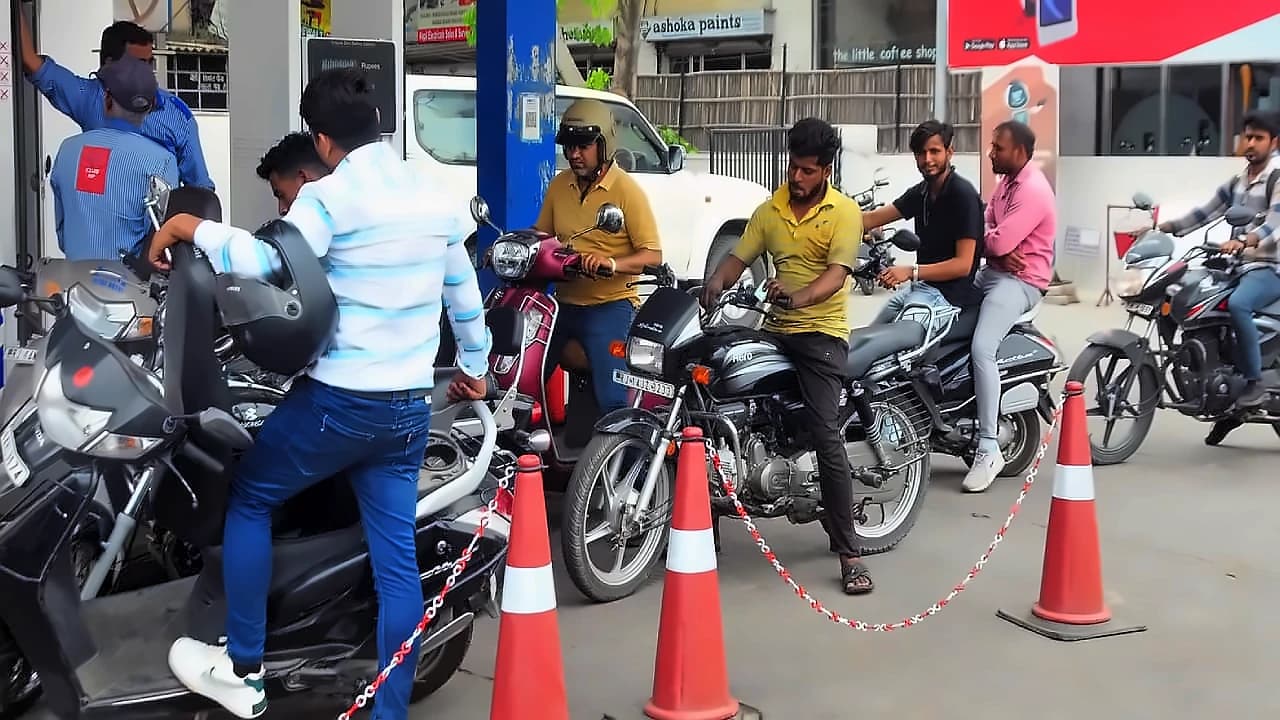
The Federation of Automobile Dealers Associations (FADA) is preparing to address significant profitability concerns facing two-wheeler dealers through direct engagement with original equipment manufacturers. According to reports from Business Standard, Pranav Shah, chairman of FADA's two-wheeler vertical, revealed that dealers are targeting ₹500 per vehicle from workshops to achieve profitability, compared to the current average of approximately ₹300. This gap is particularly concerning as workshops continue to incur costs for technicians' salaries, infrastructure, and operations while generating far lower revenue per vehicle. The central issue FADA plans to raise is the economics of two-wheeler workshops, where dealers are struggling to make the service business profitable despite the volume of vehicles.
The two-wheeler dealership network represents a significant portion of India's automotive ecosystem, comprising more than 5,000 authorised dealers and around 15,000 outlets, as reported by Shah. However, the profitability challenges are substantial, with Shah noting that if sales and service operations were assessed separately, around 70 per cent of two-wheeler workshops would not be profitable. A dealer from Rajasthan highlighted the competitive pressure, stating that some OEMs offer only ₹100 per vehicle which covers minimal costs while dealers must manage rent, labour, and other expenses. "Volume is there in two-wheelers, but considering the revenue, the workshop is not profitable," Shah said, adding that dealerships remain profitable only when vehicle sales and service operations are combined.
FADA plans to address the growing competition from unorganised multi-brand outlets (MBOs) that operate without being part of the OEM-authorised network. According to the report, these MBOs compete directly with authorised dealerships without OEM support, creating additional pressure on traditional dealer profitability. Shah emphasized that while OEMs don't encourage MBOs, they are not actively preventing their growth, which is significantly impacting dealer profits. "While OEMs don't encourage MBOs, they are not actively doing anything about it, and we want to change that as it is eating into our profits," a two-wheeler dealer from Rajasthan said, requesting anonymity.
FADA will approach all two-wheeler OEMs seeking one-on-one meetings between their representatives and dealers, with potential for joint meetings with multiple OEMs if required. As reported by Business Standard, the association is additionally seeking a more balanced dealer agreement model between OEMs and dealers, arguing that existing arrangements do not adequately account for dealer interests. The two-wheeler vertical, established two years ago, has seen its membership from two-wheeler dealerships double during this period. The association plans to engage OEMs to address the weak economics of after-sales service and other challenges affecting the financial health of authorised two-wheeler dealers.
FADA's dealer feedback survey reveals that profitability and margins emerged as the biggest area requiring attention, cited by 52 per cent of dealers. This was followed by product and EV transition concerns (42 per cent) and OEM relationships (37 per cent). For the two-wheeler and EV segment specifically, dealers identified margins, EV readiness, discipline around MBOs, and parallel dealer policies as key concerns. Dealers also flagged inventory and stock management (35 per cent) and dealer rights and policy-related issues (29 per cent). Despite these challenges, product range remained a bright spot, with 37 per cent of dealers commending OEMs on product and range. The comparison with car workshops is stark, where car workshops generate nearly ₹5,000 per vehicle compared to the two-wheeler average of approximately ₹300.