India's battery energy storage system market is positioned for explosive growth, with projections reaching ₹25,640 crore by 2035 from the current ₹3,420 crore according to Vantage Market Research. The market is experiencing a structural shift from policy framework development into large-scale commercial procurement, with SECI issuing India's largest single BESS tender to date — a 2 GW/8 GWh utility-scale grid storage procurement across five states including Rajasthan, Tamil Nadu, Gujarat, Karnataka, and Andhra Pradesh with a tariff ceiling of ₹3.80 per kWh. This represents the largest single BESS procurement event in Indian market history and signals that the government's 100 GWh by 2030 target will require accelerating procurement pace from 2026 onward.
The ₹18,100 crore PLI ACC scheme for Advanced Chemistry Cell battery manufacturing launched in 2021 has faced significant delays, with the government granting two-year extensions to Ola Electric and Reliance Industries to claim incentives for five years from FY27 to FY31. According to the Rajya Sabha department-related standing committee on industry, cell makers cited supply challenges for specialized machines and skilled manpower from China, leading to delays in capacity setup. The ministry reviewed progress and acknowledged that only Ola Electric has set up 1.4 GWh capacity, with Ola expected to increase to 6 GWh and Reliance to set up 5 GWh by December. The scheme originally allocated 20 GWh to Ola Electric, 5 GWh to Rajesh Exports, 5 GWh to Reliance New Energy, and 20 GWh to Hyundai Global Motors in 2022, though Hyundai's award was revoked due to affiliation issues.
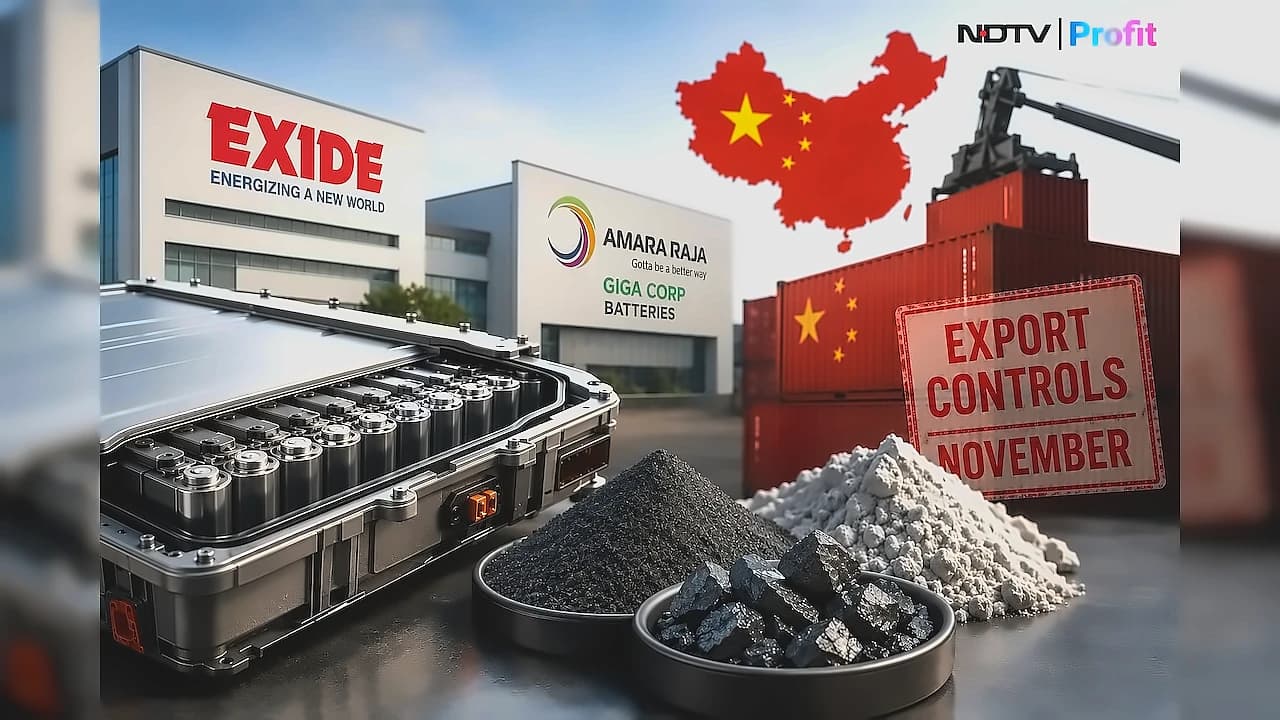
India's two biggest battery makers have successfully established domestic lithium-ion cell manufacturing capabilities over the past two years. According to reports from Essential Business Intelligence, Exide Industries has equipment installed and running across all four production lines at its Bangalore gigafactory, while Amara Raja Energy & Mobility has inaugurated a customer qualification plant and is preparing to start its research facility this quarter. Amara Raja has commenced commercial production of LFP battery cells at its 1 GWh Phase 1 facility in Divitipalli, Andhra Pradesh, marking the first PLI ACC scheme-compliant domestic lithium-ion cell production facility to achieve commercial scale output in India. This milestone marks a structural shift in India's BESS supply chain from 100% cell import dependency toward domestic production, reducing PLI-scheme BESS projects' exposure to Chinese supply chain risk.
Despite domestic manufacturing achievements, both companies remain heavily dependent on Chinese suppliers for raw materials. As reported by Essential Business Intelligence, Exide managing director Avik Kumar Roy confirmed on the company's August 3 earnings call that "right now, raw material is still from China" and acknowledged that India will need three to five years to develop its own raw material sourcing capabilities. The dependency extends across all critical components including cathode powder, electrolyte, and graphite materials. Both companies are actively pursuing domestic raw material sourcing despite the extended timeline. Exide is targeting 50-60% localization of battery bill of materials within 2-3 years, working with multiple Indian companies on cathode, negative electrode and electrolyte development. Roy indicated that electrolyte production may be the first component to be localized, with discussions underway with a listed domestic company described as a serious contender for this role.
Lithium iron phosphate (LFP) chemistry dominates the India BESS market with 64.8% of total market revenue in 2025, having supplanted nickel manganese cobalt (NMC) lithium-ion as the preferred chemistry for stationary storage applications due to its superior thermal stability, longer cycle life exceeding 4,000 charge-discharge cycles at 80% depth of discharge, lower cobalt content reducing supply chain ethical risk, and rapidly declining manufacturing cost driven by Chinese production scale. Lithium iron phosphate battery cell spot prices have declined from above ₹150/kWh in early 2022 to below ₹65/kWh in 2024, with projections continuing toward ₹50/kWh by 2027. Vanadium redox flow batteries represent the fastest-growing BESS chemistry category, driven by their suitability for long-duration storage applications exceeding eight hours that are critical for managing extended periods of intermittent renewable generation during India's monsoon season.