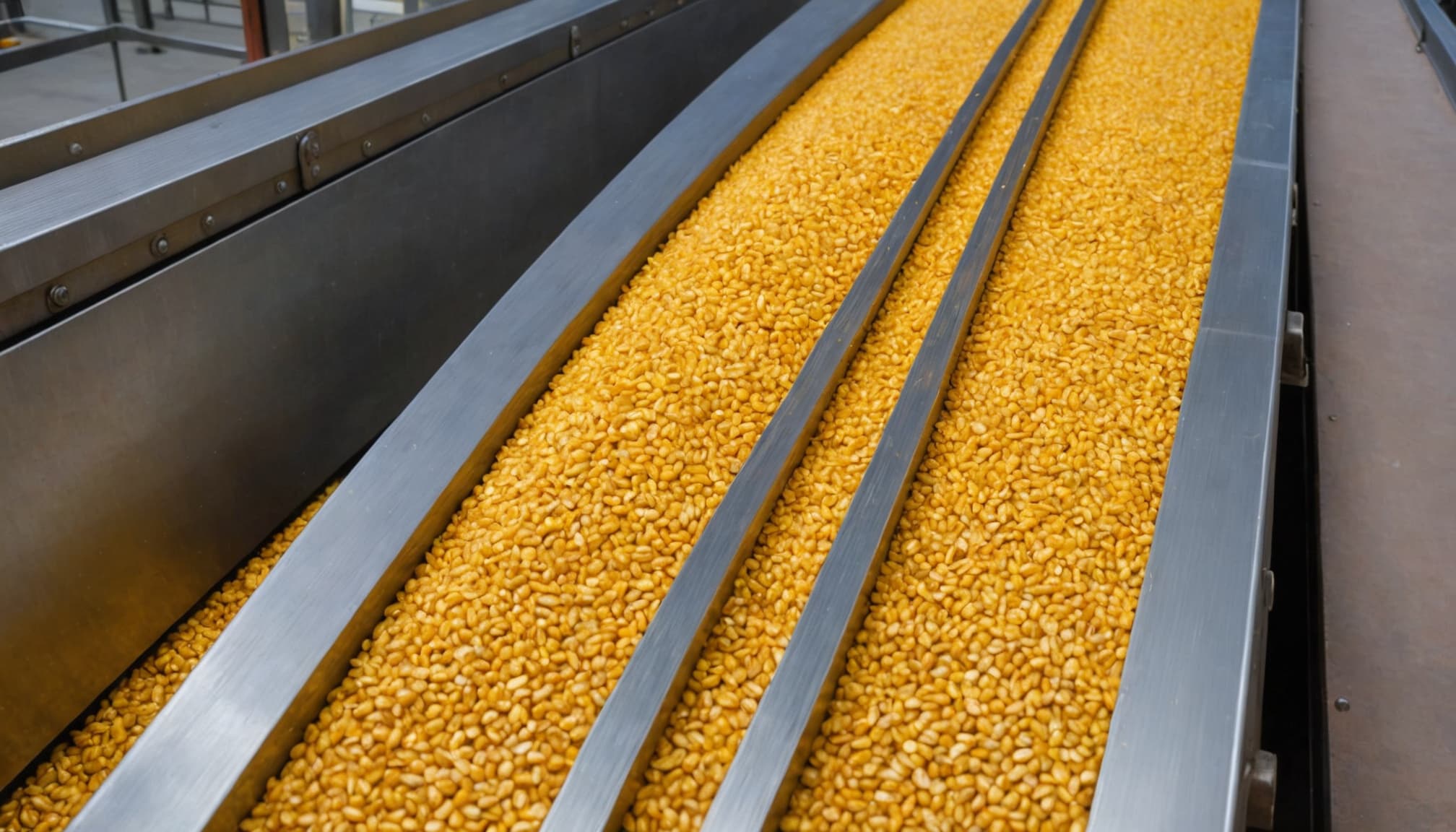
The government's decision to permit E100 fuel use in vehicles represents a significant milestone for India's ethanol economy, according to NDTV Profit reports. Union Minister Nitin Gadkari announced approval for E100 fuel, paving the way for automobile manufacturers to introduce flex-fuel vehicles capable of running on up to 100% ethanol. However, as reported by NDTV Profit, Atul Chaturvedi of Shree Renuka Sugars cautioned that while this development could accelerate India's ethanol economy, sugar producers will need higher ethanol prices before they can fully benefit from the opportunity. The industry faces a fundamental challenge where ethanol produced from sugar-based feedstocks is currently less remunerative than ethanol sourced from maize.
According to NDTV Profit reports, ethanol sourced from maize is priced at approximately ₹72, while ethanol from sugar-based feedstocks is around ₹65. As reported by NDTV Profit, Chaturvedi explained that "Ethanol being sourced from the maize sector is closer to about ₹72, and for the sugar sector, made from juice, it is around ₹65." This pricing disparity creates a significant economic barrier for sugar mills, as Chaturvedi noted that "If the returns from ethanol for the sugar sector are lower than sugar, then why would they make it?" The industry's biggest challenge remains the economics of ethanol production, despite recent policy support aimed at boosting ethanol adoption.
The industry faces significant underutilisation despite existing capacity. According to NDTV Profit reports, Shree Renuka Sugars' ethanol plants are currently operating at only around 40% capacity utilisation, assuming 350 working days annually. Deepak Ballani, Director General of the Indian Sugar and Bio-Energy Manufacturers Association, echoed these concerns, noting that sugar-based distilleries across the industry are running at just 35-40% utilisation levels. As reported by NDTV Profit, Ballani added that "Sugar industry has two basic problems. One is the ethanol pricing and another is the allocation." He highlighted that sugar-sector allocations accounted for only around 28% of ethanol supplies last year, limiting utilisation levels across the industry.
According to NDTV Profit reports, the central government issued notifications on Thursday exempting petrol blended with higher ethanol concentrations from excise duty. The notifications set nil rates of central excise duty, special additional excise duty, Road and Infrastructure Cess, and Agriculture Infrastructure and Development Cess on petrol blended with 22%, 25%, 27%, and 30% ethanol, respectively. Chaturvedi welcomed this policy as a "right step" by the government, stating that "India is moving towards Atma Nirbharta" through these measures. As reported by NDTV Profit, the government has extended excise duty waiver on ethanol-petrol blending beyond E20 to higher blends including E22, E25, E27 and E30, which aligns with updated BIS standards and is a step towards enabling higher ethanol blending levels.

According to market reports, Nifty 50 rose 0.30% to 23,285.60 after falling to 23,081 earlier, while Sensex gained 0.43% to 74,300.59, up over 800 points from its intraday low of 73,518.75. The recovery came after benchmark indices traded lower for the second consecutive day amid volatile market conditions. Sectoral performance remained mixed, with Nifty Pharma rising 1.14% and Bank and Financial Services indices up 0.67% and 0.55% respectively, while Nifty Defence fell 1.63% and Nifty IT declined around 1%. PSU bank stocks traded lower, with most names under pressure while State Bank of India moved higher, rising 0.29% and bucking the broader decline in PSU banks. The mixed market performance reflects ongoing investor uncertainty while policy developments continue to influence sector-specific movements.