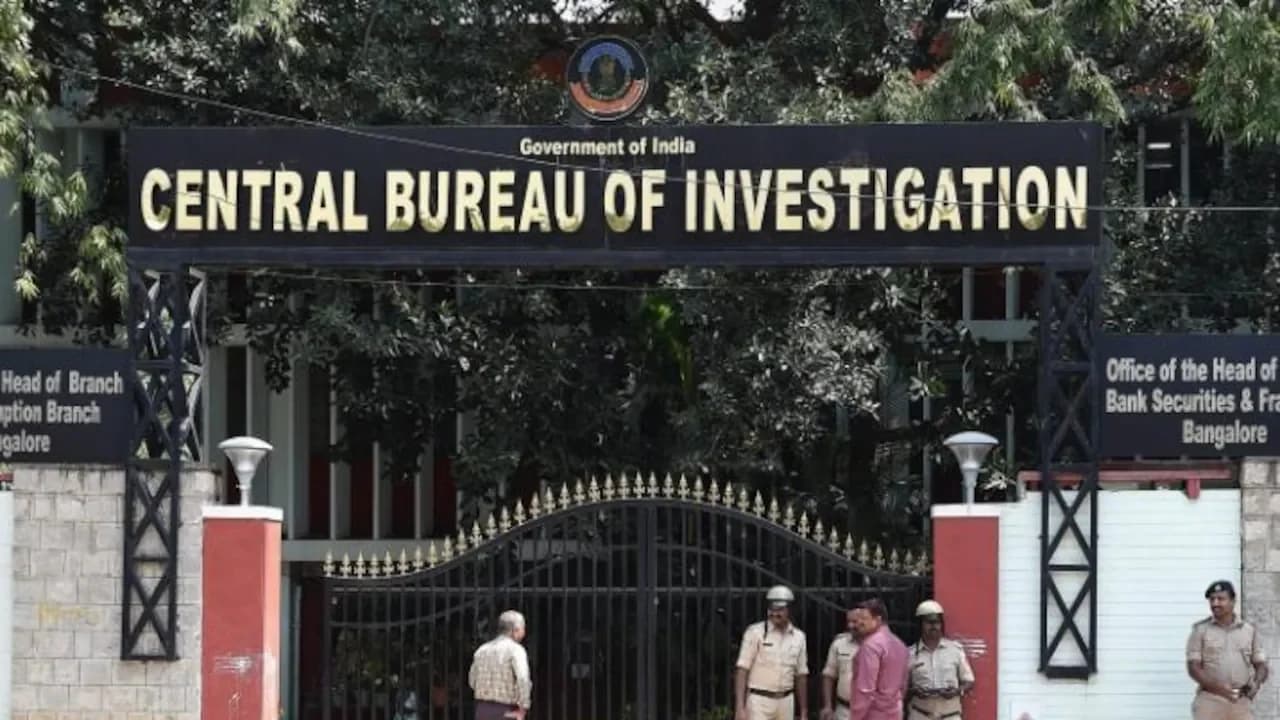
Delhi Police's Economic Offences Wing (EOW) arrested Aswath Reddy N., Managing Director of Electrical Energy Equipments India Pvt. Ltd. (EEE), on Thursday in connection with an alleged ₹9.31 crore payment diversion case arising from materials supplied for Bangalore Electricity Supply Company Ltd. (BESCOM) projects. According to reports from ZeeBiz, the arrest marks a major development after the Delhi High Court had on June 9, 2026 rejected Reddy's anticipatory bail application, citing the nature and gravity of the allegations. Following his arrest, Reddy was brought to Delhi on transit remand and produced before the Chief Judicial Magistrate, South-East District, Saket Courts on August 19. EOW sought six days of police custody for further investigation, which the court granted for two days. The case was registered by EOW on September 8, 2025 on a complaint filed by Visual Technologies India Pvt. Ltd. (VTI).
The dispute originates from materials allegedly supplied by Visual Technologies India Pvt. Ltd. (VTI) for execution of BESCOM projects in Karnataka. As reported by ZeeBiz, EEE had entered into a memorandum of understanding (MoU) with VTI on August 8, 2024, under which VTI was to supply material for BESCOM projects. VTI alleged that it supplied materials worth approximately ₹9.31 crore after being assured that payments received from BESCOM would be routed through an escrow account. The complainant alleged that the supplies were made on the assurance that payments from BESCOM would be routed through an Escrow Account that was never operationalised, and that payments received from BESCOM were instead routed to another account. During proceedings before the Delhi High Court, BESCOM informed investigators that no payment had been released into an Escrow Account, no invoices raised by EEE remained pending with BESCOM, and no outstanding amount remained payable by BESCOM.
According to material placed before the Saket court following the arrest, investigators are examining the money trail of payments received from BESCOM, the accounts into which those funds were credited, subsequent transfers and the ultimate beneficiaries. As reported by ZeeBiz, the investigation has also raised questions relating to the escrow arrangement, GST records, invoices and different versions of a purchase order dated August 21, 2024. The High Court had earlier also taken note of the dispute surrounding the authenticity of the Purchase Order relied upon in the proceedings. It observed that while the MoU provided for Delhi jurisdiction, the Purchase Order relied upon by Reddy contained a Bengaluru jurisdiction clause, and held that the discrepancy could not be overlooked while considering anticipatory bail. During proceedings before the Delhi High Court, BESCOM informed investigators that no payment had been released into an Escrow Account, no invoices raised by EEE remained pending with BESCOM, and no outstanding amount remained payable by BESCOM.

The Delhi High Court observed that these facts, prima facie, did not support the stand taken by Reddy before the court and declined to grant him anticipatory bail. As reported by ZeeBiz, the court rejected the contention that the controversy should essentially be regarded as a civil or commercial dispute, with the judges observing that the existence of a civil dispute did not by itself dilute allegations of fraud or cheating where the ingredients of a criminal offence are prima facie made out. Considering the nature and gravity of the allegations, the High Court dismissed Reddy's anticipatory bail application. Separate proceedings relating to cheques issued in connection with transactions between the parties have also been taking place before courts in Karnataka. In one proceeding before the II Additional Civil Judge and JMFC, Tumakuru, an order dated June 10, 2026 records that the accused remained absent and that a non-bailable warrant was reissued. The court also recorded that despite opportunities being granted, PW-1 had not been cross-examined. Another cheque matter was subsequently sought to be closed after the complainant informed the court that the entire cheque amount had been received from the accused.