According to Business Standard reports, UP Pollution Control Board Chairman Ravindra Pratap Singh revealed that the state generates enormous quantities of biomass that was once treated merely as crop residue. As reported, on average, 1 tonne of foodgrain produces 1.7 tonnes of farm residue, creating a huge economic opportunity through the biofuel value chain. The biomass can be converted into industrial pellets, compressed biogas (CBG), and electricity through small biofuel power plants. Singh advocated for village-level farmer producer organisations (FPOs) to aggregate biomass from small farmers with fragmented landholdings, making collection, transportation, and marketing commercially viable.
As reported by Business Standard, Praveen Gupta, director at Balrampur Chini Mills, announced the company's investment of nearly ₹3,000 crore in a greenfield bioplastics plant in UP, expected to be commissioned by the end of this year. The company operates 10 sugar mills in UP with a combined crushing capacity of 80,000 tonnes per day and five distilleries producing ethanol for petrol blending. Gupta highlighted that recent global oil market volatility has reinforced the importance of ethanol as a cleaner fuel that lowers carbon emissions while raising farmers' incomes. The company has also commissioned a polylactic acid bioplastics plant under the brand name Bioyug to replace single-use plastics.
According to Business Standard reports, Padma Shri awardee farmer Chandrasekhar Singh emphasized that agriculture would undergo real transformation when farmers begin thinking like micro-entrepreneurs and shift towards commercial crops. He advocated for dedicated FPOs for organic farming to create a win-win model for farmers, consumers, and processors. Singh noted that farmers are keen to move beyond the wheat-rice cycle and adopt new crops but are discouraged by limited market access and inadequate policy support. He stressed that Purvanchal's characterised by small landholdings, and the solution lies in collectives and cooperatives.
As reported by Business Standard, Mithilesh Kumar, general manager at Bank of Baroda, highlighted agriculture's contribution to regional development, employment, and exports, accounting for about 18% of India's GDP and nearly 13% of exports. Kumar noted that direct agricultural lending across the 19 districts under his jurisdiction had grown by more than 15%, outpacing credit growth in the micro, small and medium enterprises sector. He emphasized that stronger investment in agriculture and allied sectors would create employment opportunities in food processing, logistics, and rural enterprises.
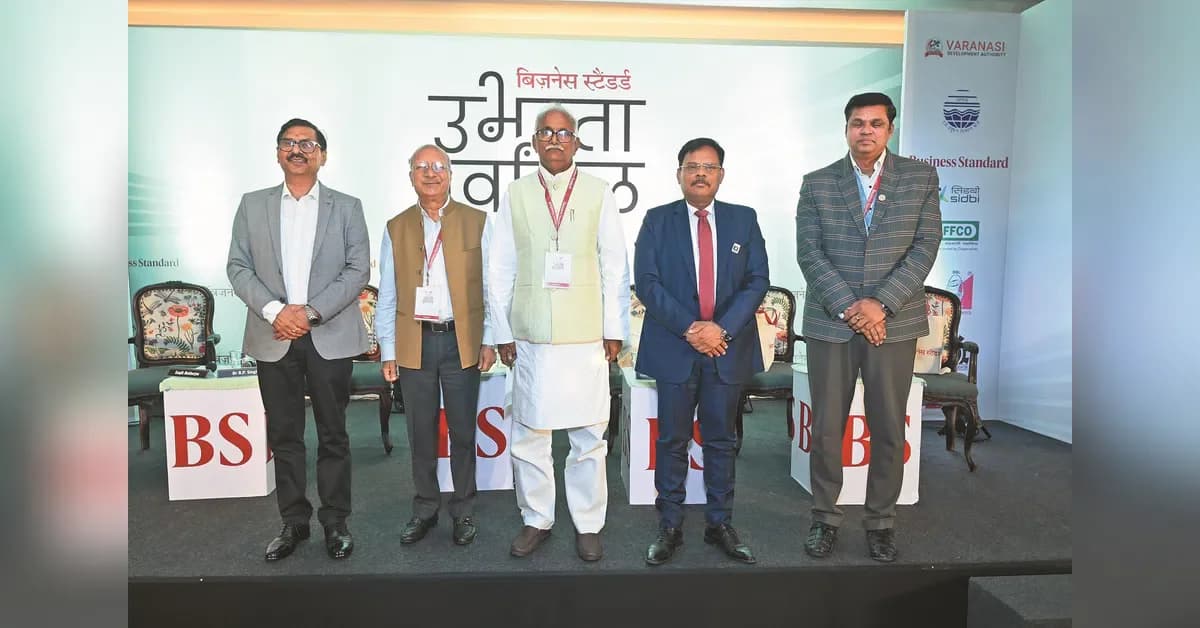
According to Business Standard reports, Ravindra Pratap Singh observed that with most farmers cultivating less than a hectare, investments in mechanisation, biomass utilisation, and processing often become uneconomical. He pointed to the Centre's ambitious FPO programme as a practical solution, with the government aiming to promote 10,000 FPOs across the country backed by financial assistance. The government's Sustainable Alternative Towards Affordable Transportation (SATAT) scheme aims to establish 5,000 CBG plants with a production target of 15 million tonnes annually by 2030, though current production stands at merely 920 tonnes per day, representing only 1% of the target. Analysis by the Council on Energy, Environment and Water (CEEW) projects that scaling CBG could generate over one lakh jobs in India by 2047.