Shares of Dassault Aviation surged as much as 8.1% to €311.20 following the French aircraft manufacturer's impressive first-half results. According to the company's latest financial release, adjusted net sales rose by 46% to €4.16 billion in the first half of 2026, driven mainly by the delivery of 6 additional Rafale export aircraft and additional development and support revenue linked to milestone achievements. The defence sector's strong performance comes as global military spending continues to rise, creating pressure for companies to clear existing order backlogs. Operating income surged by 83% to €330 million compared with the first half of 2025, while net income reached €496 million, up €110 million from the previous year (excluding a 74 million euro surcharge, net income would have been €570 million). The company achieved an operating margin of 7.9%, up from 6.3% in the prior year, demonstrating improved profitability despite supply chain pressures. Adjusted consolidated net margin stood at 11.9% for the first half of 2026, compared with 13.6% for the first half of 2025, while adjusted consolidated net income per share was €6.42 compared with €4.94 for the first half of 2025.
The company's biggest potential export opportunity remains the 140-aircraft deal with India, which CEO Éric Trappier described as a defining moment of the period. As reported by the company's latest financial release, the Defence Acquisition Council decided to enter into direct negotiations for the acquisition by India of 114 Rafale aircraft, with some jets to be built in India itself. CEO Eric Trappier described this contract as the company's 'major strategic objective' and the biggest defence export in the company's history. However, latest developments show that major Rafale opportunities in India and Ukraine are still under negotiation, so timing remains uncertain. The company is also working on future combat aircraft concepts and a VORTEX space program with European partners. Strategic developments include India entering direct negotiations for 140 Rafale and a roadmap signed for Ukraine to acquire 16 Rafale, while the FCAS/NGF program was halted with alternative demonstrator discussions underway. On July 13, 2026, France and Ukraine concluded a roadmap planning for Kyiv's acquisition of 16 Rafale, with Dassault Aviation and Harmattan AI announcing the successful execution of a collaborative in-flight engagement between a Rafale and an unmanned aerial system equipped with the "NAMIB" electronic warfare payload.
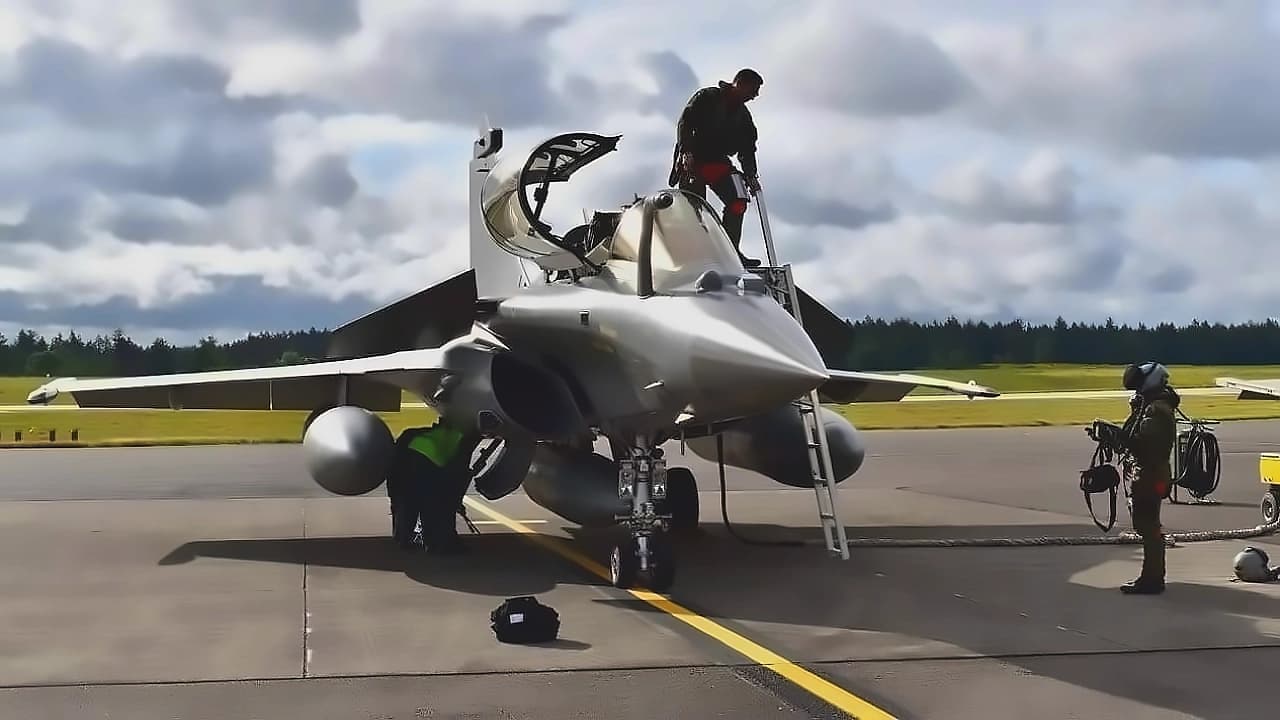
Latest earnings data reveals Dassault Aviation delivered 12 Rafale fighter jets, including 10 export aircraft, and 13 Falcon business jets during the period, compared with 7 Rafales and 12 Falcons a year earlier. The company generated new orders worth €2.9 billion, which was down from €8.08 billion a year earlier, with export order intake standing at 93%. Falcon orders increased to 23 aircraft from 8, while the backlog stood at €45.4 billion, including 208 Rafale and 83 Falcon aircraft. The company delivered 12 Rafale fighter jets and 13 Falcon business jets during the period, with export Rafale deliveries accounting for 79% of total sales. The order book is slightly lower than at December 30, 2025, because deliveries outpaced new orders in the period. Research and development expenses decreased to €131 million, mainly for the Falcon 10X program. Defence France sales totaled €7.47 billion as of June 30, 2026, compared with €8.08 billion as of December 31, 2025, while Falcon sales reached €5.43 billion compared with €4.75 billion as of December 31, 2025.
The company achieved significant product development milestones during the period. The Falcon 10X completed its maiden flight on June 19, 2026, marking the start of the flight test campaign and the rescheduling of the program. Chairman and CEO Éric Trappier said the Falcon 10X marks the start of a new chapter for the business jet line, calling it 'an aircraft that will be a game changer, a far bigger aircraft with a far longer range that will really be a flying apartment'. On the defence side, Dassault is pushing ahead with the Rafale F5 standard and working on future combat aircraft concepts. The Falcon 10X entry into service is scheduled for 2029, with certification expected to take about 2.5 years from the first flight, reflecting tighter certification rules introduced after Boeing-related safety concerns. The company also confirmed it is working on unmanned combat aircraft concepts with a possible operational timeline around 2035. Total equity stood at €6.56 billion as of June 30, 2026, compared with €6.66 billion as of December 31, 2025, while available cash increased to €10.1 billion, mainly due to advances on Rafale export contracts.
The positive market reaction extended beyond Dassault Aviation, with Thales and Indra Group stocks also rising by as much as 5 percent after reporting their half-year earnings early Thursday. As reported by Moneycontrol, the strong performance across the defence sector reflects the broader optimism around rising global military spending and companies' ability to clear existing order backlogs. Latest trading data shows Dassault Aviation shares were up 8.1% at €311.20 compared with a previous close, adding significant value to shareholders. The stock remains about 20.2% below its 52-week high of €361.8 and about 10.5% above its 52-week low of €260.6. The company maintains its 2026 full-year net sales guidance at 8.5 billion euros and reiterated delivery targets, with management remaining confident in meeting these targets despite geopolitical uncertainty and persistent supply chain problems. The 2026 guidance is unchanged: an increase in 2026 net sales compared with 2025, in the range of €8.5 billion (including the delivery of 40 Falcon and 28 Rafale).