Despite delivering strong Q1FY27 results with consolidated net profit of ₹591 crore, up 15% from ₹514 crore in the corresponding period last year, Dabur India shares fell nearly 2% on Thursday, trading around ₹425 on NSE in afternoon trade. The stock decline occurred as investors weighed the broadly in-line quarterly result against a backdrop of elevated input costs and lingering concerns about revenue momentum. According to The Hindu BusinessLine, the stock, which hit a 52-week low of ₹403.35 in April, has lost over 18% in the past year and underperformed the Nifty Midcap 50 index significantly. Buy-side interest is marginally ahead of selling pressure, 56% buy versus 44% sell on the NSE order book, but has not been enough to arrest the day's decline. The stock's current price-to-earnings ratio stands at around 39x trailing earnings on the NSE.
Dabur India delivered strong Q1FY27 results with consolidated net profit of ₹591 crore, up 15% from ₹514 crore in the corresponding period last year, comfortably beating the CNBC-TV18 poll estimate of ₹573 crore. Revenue from operations jumped 10.5% to ₹3,764 crore in the June quarter of FY27, from ₹3,405 crore in the year-ago period, despite high inflation of 8% in the business. Operating profit grew 11% during the quarter, while EBITDA increased 10.9% to ₹741 crore compared with ₹668 crore in the previous fiscal, though EBITDA margin contracted slightly to 19.7% from 19.6% in the same quarter last year. According to Global Chief Executive Officer Mohit Malhotra, disciplined cost management under Project Samriddhi, operational efficiencies and selective price increases helped protect profitability despite inflationary pressure, geopolitical uncertainty in the MENA region and volatile commodity prices. As per The Economic Times, this marks the third straight quarter of double-digit profit growth for Dabur, with the company reporting healthy profit growth despite a hyper-inflationary environment.
While the FMCG major reported a better-than-expected profit and its third consecutive quarter of double-digit earnings growth, domestic volume growth of 5% fell short of CNBC-TV18's expectation of 6-8% increase, with the company reporting 5% volume growth in the June quarter, down from 6% domestic volume growth in the March quarter which had marked its highest quarterly growth in 18 quarters. India's FMCG business grew 9.5% during the quarter, supported by the underlying domestic volume growth of 5%. The volume print missed Street estimates, suggesting consumption growth remained resilient but softer than anticipated. Management noted that rural demand continued to outpace urban consumption for the eighth consecutive quarter, though the gap between urban and rural demand growth has narrowed during the quarter. According to The Economic Times, rural demand grew 6.2% in the first quarter, 170 basis points ahead of urban demand growth of 4.6%. The company said urban growth was supported by modern trade, quick commerce and other emerging channels. Malhotra added that while the consumption landscape is becoming more balanced, rural demand needs to be watched especially in view of El-Nino, patchy monsoons and rising inflationary pressures. Analysts noted that unseasonal rainfall partially impacted the beverages portfolio, contributing to the softer volume performance. Unseasonal rainfall in April and early May weighed on beverages and glucose sales, though both recovered through May and June.
Growth remained broad-based across Dabur's three key business verticals. Home & Personal Care emerged as the strongest performer, expanding 12.3%, while the Food & Beverages business grew 7.2% and Healthcare reported 5.5% growth. Within the portfolio, shampoos led the charge with a 23% increase, followed by Hair Oils, which grew 17.6%. Oral Care advanced 9%, while the toothpowder business accelerated 13.1%. The Skin & Salon portfolio, led by brands such as Gulabari, Fem and OxyLife, grew 8.1%. The Healthcare segment continued to witness healthy momentum, with the Digestives portfolio growing 11.2% as Hajmola, Isabgol and Pudin Hara all recorded double-digit gains. OTC brand Honitus surged 28%, while health juices rose 24%. Dabur Honey, the company's flagship health supplement brand, grew 8%. The Foods category ended Q1 up 29.2% and the Badshah business grew by 13.2%. Despite a challenging start to the season due to rain-led demand disruptions, the Beverages business recovered strongly with mid-single-digit growth in Q1, while premium beverages continued to gain scale with Real Activ Juices growing 42% and Coconut Water growing 73%. The company noted that demand for ayurvedic oral care remained strong, helping it outperform the overall toothpaste market.
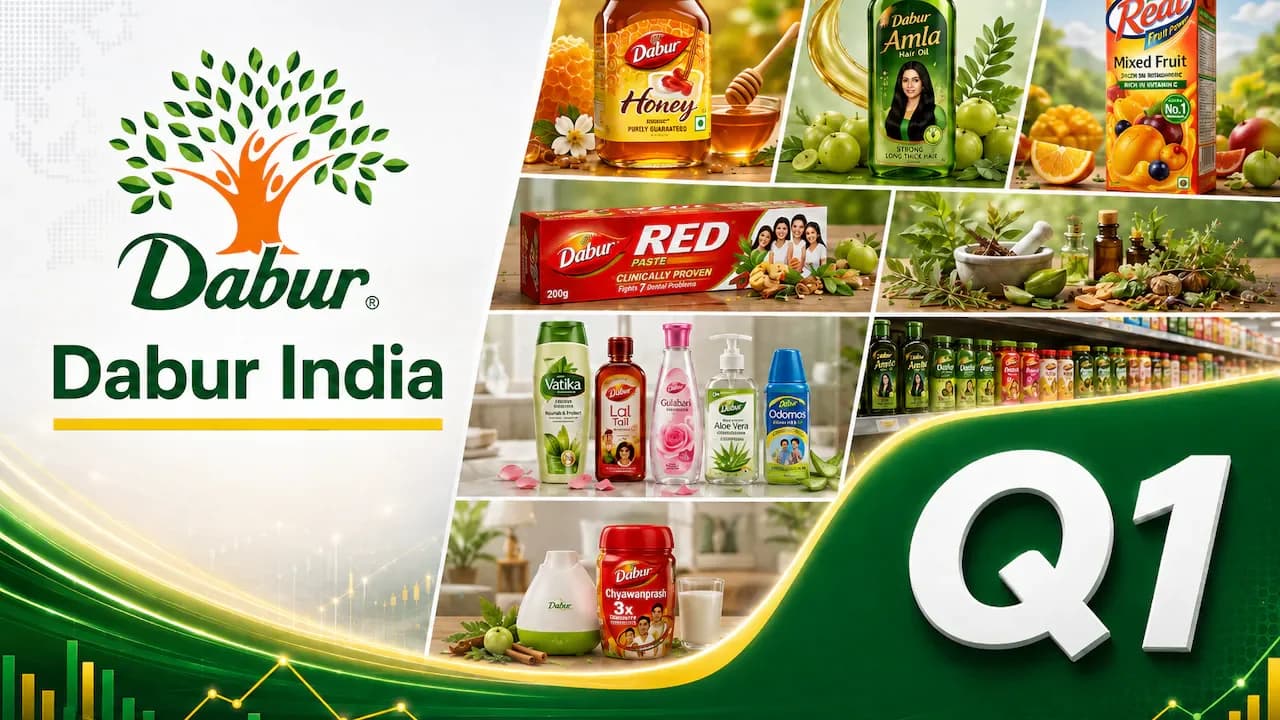
Dabur achieved significant market share gains during the quarter, with CEO Mohit Malhotra revealing the company gained 102 basis points in market share during Q1FY27. The company's premium brands grew at twice the pace of its regular portfolio, while new product launches such as Siens and Cheers contributed 2.6% of revenue, reinforcing the company's focus on innovation and premiumisation as key drivers of long-term growth. The honey business delivered high single-digit growth and gained 150 basis points in market share, while the food and beverages portfolio continued to register strong double-digit growth. The 100% juices category grew 45% during the quarter. The company's products reach eight out of every 10 Indian households, and its portfolio includes four Rs 1,000 crore-plus brands, four Rs 500 crore brands and 15 brands in the Rs 100-500 crore range. Management acknowledged that input cost pressures persisted due to elevated inflation and geopolitical uncertainties but said it remains confident of delivering sequential revenue growth. Analysts noted that resilient rural demand, coupled with signs of improving urban demand, bodes well for Dabur's growth outlook.
Despite reporting strong quarterly results, brokerage reactions have been largely measured with analysts expressing caution over input costs and revenue growth concerns. Anand Rathi maintained a Buy rating but trimmed its target price to ₹550 from ₹590, citing inflation-led pricing pressure likely to moderate near-term volume growth. The firm values Dabur at 42x FY28 estimated earnings and expects revenue to grow at an 8.5% CAGR through FY28. HDFC Securities held its ADD rating with a target of ₹465, applying a 20% discount to the stock's five-year average forward multiple, flagging weak execution over a four-year revenue CAGR of just 4%. Equirus Securities also maintained ADD with a target of ₹474, noting that elevated input cost inflation of around 8% is expected to keep margins under pressure despite the recent stock correction. JM Financial kept its ADD rating with a revised target of ₹490, pointing to inexpensive valuations at 37x FY27 earnings but cautioning that a re-rating would depend on more consistent revenue delivery relative to peers. Management guided for low double-digit consolidated revenue growth in FY27, supported by pricing, premiumisation, product innovation and its ongoing go-to-market overhaul under Project Saksham. The company's net cash position stands at approximately ₹90 billion, with capital allocation priorities including acquisitions, a greenfield unit in Tamil Nadu and maintaining near full dividend payout on India profits.