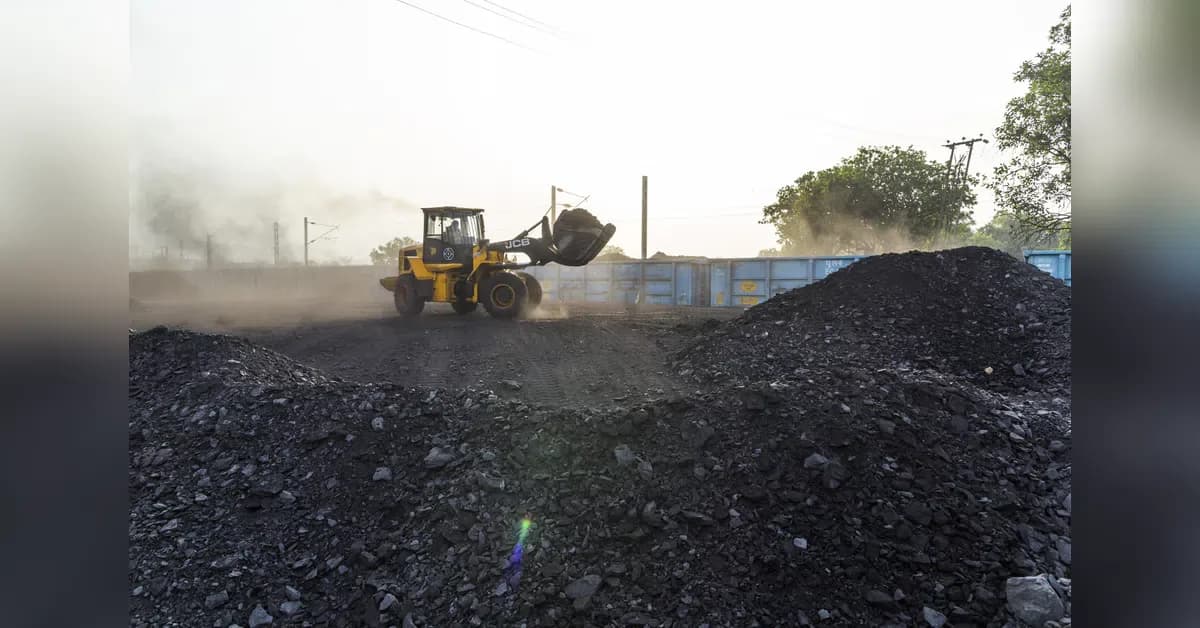
Coal India Ltd (CIL) announced a record 35 million tonnes of high Gross Calorific Value (GCV) coal under its linkage auction window scheduled for June 12, 2026, targeting high-grade coal consumers such as the sponge iron sector. According to the latest official statement, this move is expected to curb imports of high gross calorific value coal and boost coal availability for non-regulated sector (NRS) consumers. The state-run miner is implementing these measures as part of efforts to reduce import dependence and meet rising industrial demand, with the offer mainly targeted at the sponge iron sector which traditionally depends on imported high-grade coal. As per the press release filed under SEBI's Listing Regulations, these measures are expected to benefit industries such as sponge iron, steel, and emerging industrial projects while ensuring uninterrupted coal supplies to the power sector.
CIL has introduced significant flexibility for steel producers in the coking coal segment, allowing them to sell surplus coal middlings -- power-grade coal generated as by-product during coking coal washing -- in the open market if not used for captive power generation. As reported in the official statement, this provision has been enabled under the ongoing Tranche-X linkage auctions that commenced on June 3, 2026. Coal middlings are power-grade coal generated as a by-product during the washing of raw coking coal, and while some steel producers utilize these middlings for captive power generation, surplus quantities can now be commercially sold, improving operational efficiency and revenue opportunities. The company has offered 13.75 million tonnes of coal to the steel (coking) sub-sector in the current tranche and increased flexibility for consortium changes during contract periods to five times, up from two earlier. This move effectively increases the total available coal in the secondary market and improves the financial viability of private washeries.
In a significant operational change, non-regulated sector consumers setting up greenfield or brownfield projects will now be allowed to secure coal linkages prior to commissioning, with supply permitted within three years of allocation. According to the official statement, this move is aimed at easing project financing and improving fuel security. Under the revised framework, successful bidders can begin sourcing coal within three years of securing the linkage, helping developers obtain project financing and bank loans by demonstrating assured fuel availability. This development is expected to help companies secure financing more easily as fuel availability remains a key requirement for lenders, with the policy shift addressing historical supply volatility that the NRS sector has faced compared to the regulated power sector.
For the power sector, CIL continues to meet demand through multiple auction windows, with 57.8 million tonnes offered under short-term Window-II auctions and 69.2 million tonnes under medium- and long-term Window-I auctions between January and May of the current fiscal year. As reported in the official statement, the company addressed concerns over coal inventories at thermal power stations, stating that a marginal decline in stock levels during peak summer months is a normal occurrence and should not be viewed as a cause for concern. CIL emphasized that sustained coal production is ensuring regular replenishment of stocks at power plants. The company will also conduct the next round of short-term auctions under the SHAKTI policy on June 8, offering about 34 million tonnes of coal to power producers.
Coal India reported strong financial performance for the quarter ended March 2026, with consolidated net profit increasing 12.9% to ₹10,839.18 crore and revenue from operations rising 5.75% to ₹46,490.03 crore compared with the corresponding quarter of the previous year. However, the company's stock declined 1.96% to end at ₹472.30 on the BSE following the announcement. Coal India remains India's largest coal producer and a Maharatna public sector undertaking, primarily engaged in coal mining and production while supplying coal to power, steel, cement, fertilizer and other industrial sectors.