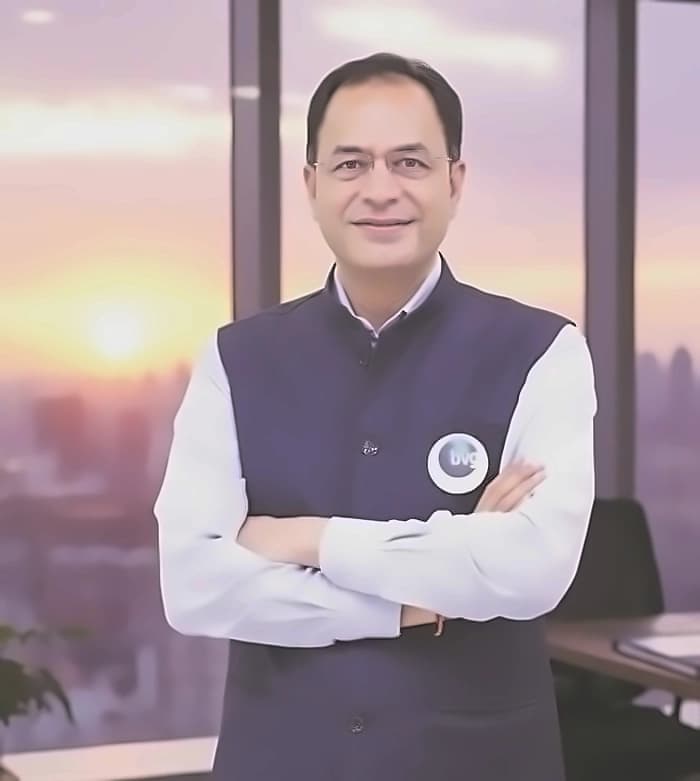
BVG India is strategically shifting its approach to focus on long-term contracts that offer better margins and faster cash collection, as reported by Business Standard. According to Chairman and Managing Director Hanmantrao Gaikwad, the company has reached a level where it can be more selective about the work it takes on. The integrated facility management company, which manages airports, railway stations, and operates bus fleets, is prioritizing contracts that provide good returns on investment and greater visibility on revenue and margins, rather than chasing growth through low-margin work. As Gaikwad explained, the company now has greater room to choose contracts based on their profitability and how quickly they generate cash, emphasizing that contracts should be long-term, high-margin, and EBITDA-accreting. The company is specifically avoiding manpower-only staffing contracts because their margins are low, with Gaikwad stating that "just increasing availability and top line doesn't make any sense."
The company's revenue composition shows integrated facility management contributing around 65%, emergency response services accounting for about 15%, and environment and sustainability services making up 20% of total revenue, as reported by Business Standard. In financial year 2026, BVG reported revenue from operations of ₹4,128 crore, up 25% from ₹3,302 crore in FY25. Its profit after tax from continuing operations rose 28% to ₹284 crore in FY26 from ₹222 crore in the previous year. CEO Rupal Sinha expects the broad revenue mix to remain similar over the next five to seven years, with IFM contributing 60-65% and the other two divisions making up the balance. The shares may fluctuate from year to year, particularly when the company wins a new emergency response contract, but will broadly remain at the same level, she said.
BVG India received approval from the Securities and Exchange Board of India (Sebi) for its initial public offering in September 2026, as reported by Business Standard. The proposed IPO comprises a fresh issue of shares worth ₹300 crore and an offer for sale of 2.85 crore shares by existing shareholders. The company plans to use ₹250 crore from the fresh issue to repay borrowings and the remaining ₹50 crore for general corporate purposes. CFO Manoj Jain explained that 3i Group, which has been associated with BVG since 2011, wants to exit and this was the primary reason for the IPO. The OFS will allow promoter Gaikwad and two investment vehicles affiliated with private equity investor 3i Group to sell their shares. The fresh funds will also help reduce working capital borrowings and borrowing limits, creating more room to finance future growth, he said.
The company has significantly improved its operational efficiency, with days sales outstanding declining from 180 days to 112 days as of March 2026, according to Business Standard. Government business contributed about 78% to BVG's total business in FY22, but its share has since fallen to around 40%. The shift in business mix and decision to exit some contracts affected operating margins over the past few years, but the company now has greater room to choose contracts based on their profitability and cash generation speed. BVG is not "shying" away from government contracts, CFO Jain said, but will pursue those that meet its requirements for margins, cash flow, and duration. Government contracts can offer good margins, but payments often take longer to arrive.
BVG is pursuing overseas expansion with operations underway in Saudi Arabia and a small part starting in Israel this month, as reported by Business Standard. CEO Rupal Sinha expects international business to contribute around 10% to total revenue once it reaches maturity, though no firm timeline was specified. The company is also looking to expand its work in electric mobility, operating and maintaining electric buses for clients including providing drivers and managing maintenance, depots, and charging infrastructure. CMD Hanmantrao Gaikwad emphasized the company's focus on long-term infrastructure contracts under which it manages facilities and earns revenue from multiple sources. The company is also pursuing quality-cum-cost-based selection (QCBS) system where technical factors can account for 70-80% of evaluation, with price making up the rest. Under this system, BVG won an education institution contract where it was the fourth-lowest bidder but won because it received the highest technical score, demonstrating how the company can win work on strength of experience and service quality rather than simply offering the lowest price.