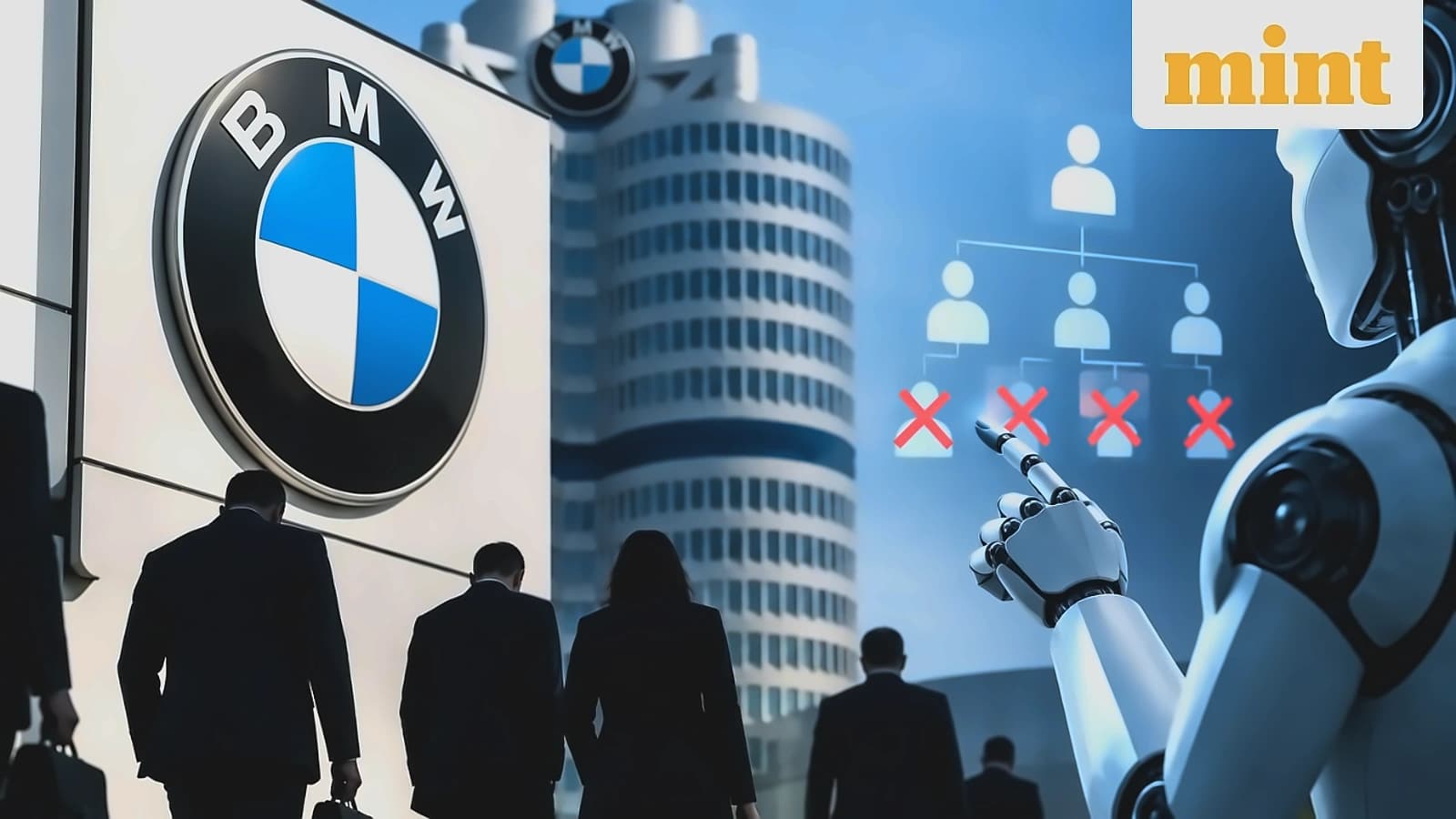
BMW AG plans to eliminate approximately 20% of its senior management positions by the middle of next year as the luxury carmaker steps up the use of artificial intelligence to reduce costs and improve profitability. According to reports from Bloomberg, the Munich-based automaker announced on Wednesday that it would streamline divisions and management positions as part of an agreed buyout programme. The restructuring is expected to affect lower levels of the organisation as BMW seeks to make its operations more agile through greater use of AI. As reported by Reuters, the cuts will come from reducing some divisions and management roles associated with them, with BMW being unusually open about AI's role in the job cuts - a departure from many companies that remain hesitant to give AI as a reason for cuts to avoid fear-mongering. The changes will also extend to lower management levels as the luxury carmaker seeks to become more agile "through the efficient use of artificial intelligence."
BMW currently has about 65 senior vice presidents reporting directly to the board, followed by roughly 400 senior positions. As reported by Bloomberg, the planned cuts could therefore affect about 100 high-level positions. Most of the affected positions are based in Munich, BMW Chief Executive Officer Milan Nedeljkovic said at a media briefing. The move comes after BMW agreed in July to reduce white-collar jobs in Germany, with plans to eliminate about 8,000 positions or roughly 5% of the company's global workforce through voluntary departures. According to Reuters, BMW said Wednesday it's aiming to be back within its long-term auto-margin target of 8% to 10% by the start of the next decade, with the company expecting returns of between 3% and 5% as an interim step in 2028.
BMW is facing pressure from weaker demand in China and the fallout from the conflict in the Middle East. The company warned in June that its automotive profit margin could fall to as low as 1% this year. According to Reuters, BMW Chief Financial Officer Walter Mertl said the consistent use of AI agents across the company would help create leaner structures, speed up decision-making and improve efficiency. "Consistent use of agentic AI applications across all areas of the company will be a game-changer for more agile and efficient development, leaner structures and faster decision-making," Mertl said. The company is targeting a return to its long-term automotive margin range of 8% to 10% by the beginning of the next decade, expecting an interim margin of 3% to 5% in 2028. By the early 2030s, BMW aims to return to a margin range of 8% to 10%, up from 2.3% in its latest results.
In response to market challenges, BMW has implemented several strategic measures beyond job cuts. The company pulled out of next month's Paris car show "due to a shift in priorities" and is reshaping its product lineup to better match customer preferences in different markets, including China, where consumers are increasingly buying local brands such as BYD Co. BMW also plans to target affluent buyers with more models positioned between its BMW and Rolls-Royce brands, potentially competing with vehicles such as Mercedes-Benz Group Co.'s Maybach sedan. The company will launch a new entry-level electric car for Europe and a high-end sport utility vehicle for the US, while stopping production of models such as the 2-Series Active Tourer and the diesel version of its 3-Series sedan to reduce complexity.
BMW's AI-led restructuring comes as other large companies also look to reduce management and administrative roles. As reported by Bloomberg, United Parcel Service has cut 12,000 managers, while German airline Deutsche Lufthansa has outlined plans to eliminate 4,000 administrative positions. According to Reuters, BMW announced the plans at its capital markets day, the first chance for CEO Milan Nedeljkovic to convince investors of steps to revive profits at the world's largest luxury automaker. The former BMW trainee became CEO in May and is also reshaping the company's product strategy, planning to adjust its lineup to local consumer preferences, particularly in China, where consumers are increasingly buying local brands such as BYD Co. As Europe's car industry struggles with weak demand, Chinese competition and US tariffs, BMW's reputation for stability took a hit in June when it issued its third profit warning linked to weak performance in China in just over three years.