Balaji Amines shares surged over 7% following the commissioning announcement, with the stock trading at ₹1,778.40 as of May 20, 2026, at 1:30 PM on NSE, representing a 7.29% gain from the previous closing price. The positive market reaction reflects investor confidence in the company's strategic pivot toward alternative fuel production and its position as a pioneer in India's specialty chemicals sector. The commissioning ceremony was attended by key company officials, highlighting the importance of this milestone achievement.
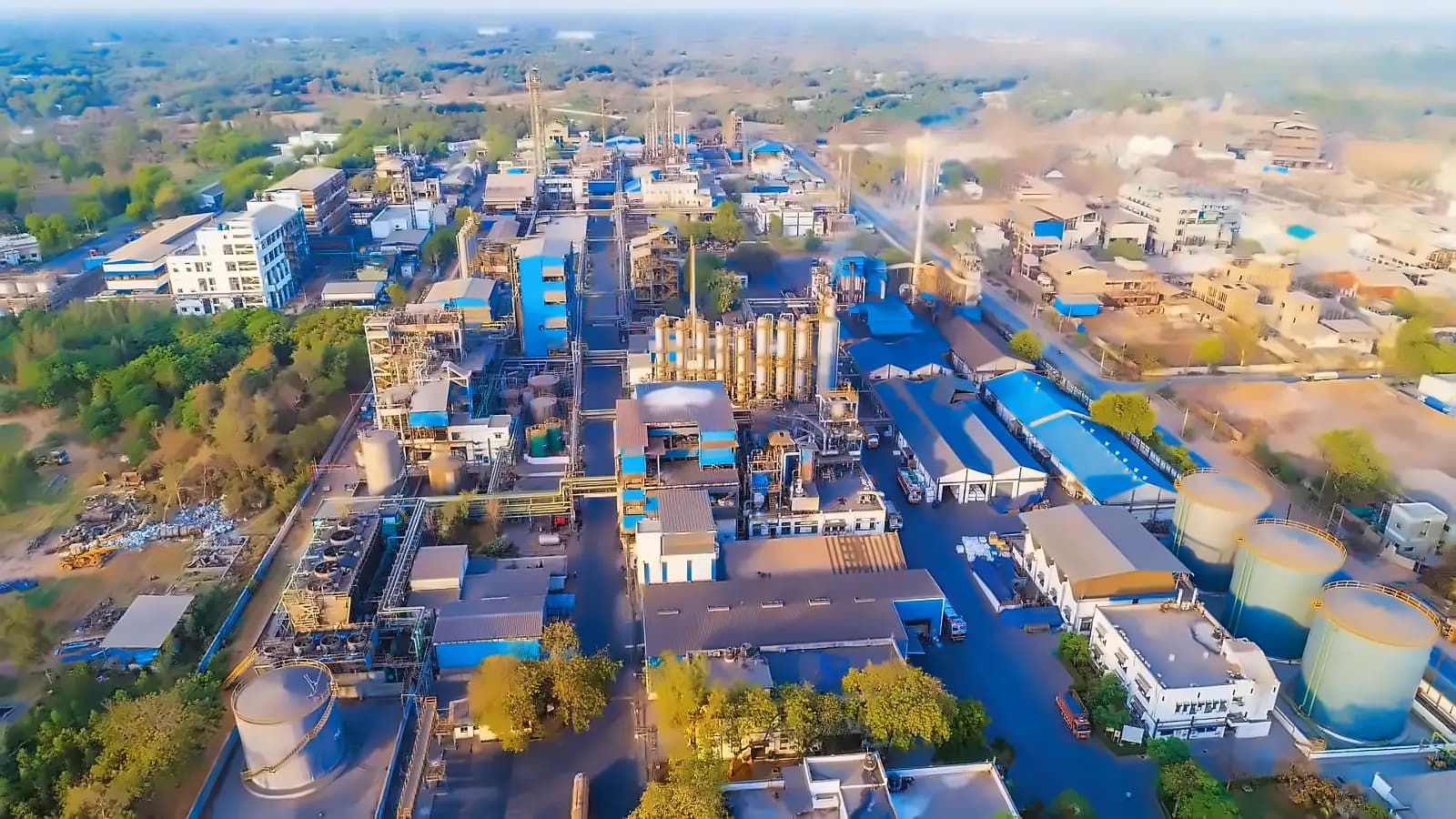
Balaji Amines has achieved a historic milestone by becoming India's first manufacturer of Dimethyl Ether (DME) on a commercial scale. The company successfully commissioned its DME plant at Unit-IV in Chincholi MIDC, Solapur on May 20, 2026, marking a significant breakthrough in India's specialty chemicals sector. According to latest reports, this development positions Balaji Amines as the pioneer in domestic DME manufacturing, with the facility utilizing advanced technology sourced from a foreign company for production. The operationalization represents a structural pivot for the company, creating a new category in India's fuel ecosystem and establishing a first-mover advantage in the Indian DME market.
The newly established facility has been established with a production capacity of 1,00,000 TPA (tonnes per annum) for DME manufacturing. As reported by Business Standard, this capacity represents the company's commitment to scaling up production of the alternative fuel and aerosol applications material. The facility's key parameters include Unit-IV location at Chincholi MIDC, Solapur and focuses on serving domestic markets including the aerosol industry and fuel applications. The 100,000 TPA capacity addition provides a clear revenue runway for FY27, with full capacity ramp-up expected to improve margins due to the value-added nature of DME compared to basic amines.
The commercial production has been implemented using Advanced Technology for DME manufacturing, with the company initially focusing on catering to the aerosol industry and other commercial applications for heating and fuel. According to Business Standard, DME serves as an alternate to LPG for fuel and aerosol applications, positioning it as a strategic addition to the company's product portfolio in the specialty chemicals sector. DME is recognised for its clean-burning properties and is widely used in Western and European countries, where it is blended with LPG up to 20%. In India, the Bureau of Indian Standards (BIS) has recently approved blending DME with LPG up to 8%, aligning with broader import substitution goals. DME can be blended with LPG up to 20%, making it a key candidate for the clean energy transition in industrial and transport sectors.
The company faced challenges in obtaining statutory approvals, including PESO permissions, due to the absence of adequate Indian Standards, which required the adoption of international standards for storage, handling, and transportation. However, the BIS permitting only 8% DME blending in LPG currently presents opportunities for future capacity utilization. The BIS approval is expected to encourage public sector Oil Marketing Companies to adopt DME blending initiatives, potentially accelerating market adoption. Beyond DME, Balaji Amines is expanding its footprint in the EV battery chemicals space, specifically targeting Dimethyl Carbonate (DMC) and N-Methyl Pyrrolidone (NMP), where it holds the position of a sole manufacturer in India. The Solapur facility integration provides logistical advantages for distribution across West and South India, while the move is expected to attract institutional interest due to the ESG-friendly nature of DME as a cleaner fuel.