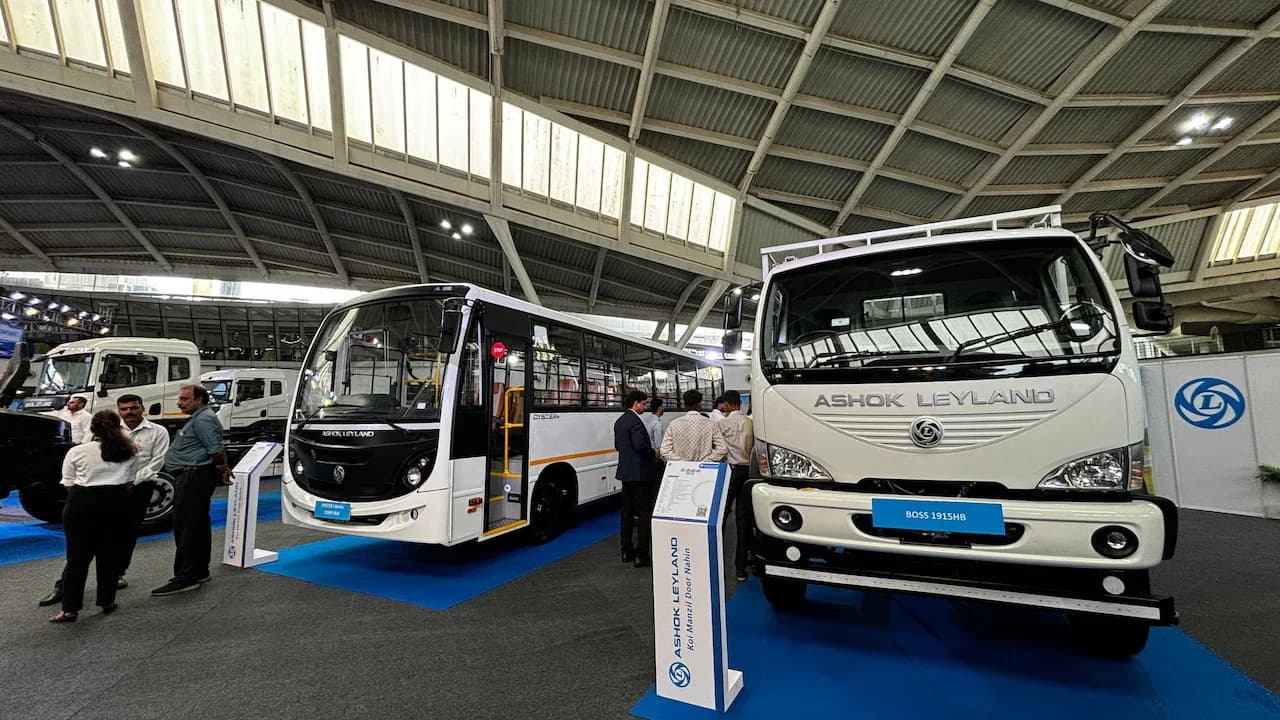
Ashok Leyland and its electric mobility arm, Switch Mobility, have become the first original equipment manufacturers (OEMs) to sign an agreement under the Centre's vehicle replacement scheme for Delhi-NCR. According to the latest reports, the Ministry of Road Transport and Highways (MoRTH) signed the first memorandum of understanding (MoU) with the companies on Monday, marking the operational rollout of the recently approved programme aimed at replacing ageing commercial vehicles across the National Capital Region. This historic partnership positions both companies at the forefront of India's commercial vehicle modernization initiative. Tata Motors has now joined the initiative, signing an MoU with MoRTH on Thursday (June 18), bringing together the three major players in India's commercial vehicle market to participate in the comprehensive replacement programme.
The vehicle replacement scheme for Delhi-NCR has received significant government backing with additional financial incentives beyond the 8% discount offered by participating OEMs. According to the latest reports, the Central Government will provide 5% interest subvention and fixed monthly fuel vouchers for a period of five years to eligible beneficiaries. This comprehensive support package aims to make the transition to cleaner commercial vehicles more financially viable for fleet operators across the National Capital Region, with the two-year programme funded through the National Capital Region Planning Board (NCRPB) under the Ministry of Housing and Urban Affairs and implemented jointly by multiple ministries. Participating state governments will provide up to 100% concession on motor vehicle tax for a period of ten years and waiver of registration fees for eligible beneficiaries under the scheme.
Under the agreement, Ashok Leyland, Switch Mobility and Tata Motors will provide an 8% discount on the ex-showroom price of trucks and buses purchased under the scheme. For electric vehicles, the discount will be capped at the level applicable to an equivalent internal combustion engine (ICE) vehicle within the same gross vehicle weight category. This structured approach ensures fair pricing while promoting cleaner transportation alternatives, with the latest reports confirming the 8% discount offered by participating OEMs as part of the comprehensive support package. The initiative seeks to encourage owners of trucks and buses registered in Delhi-NCR and complying with Bharat Stage-IV (BS-IV) or earlier emission norms to replace them with BS-VI or stricter emission-compliant vehicles, or electric vehicles.
The scheme offers substantial financial benefits beyond the OEM discounts, with participating state governments providing up to 100% concession on motor vehicle tax for a period of ten years and waiver of registration fees for eligible beneficiaries under the scheme. As per the latest official release, these comprehensive incentives are designed to make the transition to cleaner commercial vehicles more attractive for fleet operators. The government's commitment to supporting the scheme through multiple financial mechanisms demonstrates its seriousness in accelerating the transition from older, polluting vehicles to cleaner alternatives, with the Union Cabinet approving a ₹5,041-crore scheme to phase out over 2 lakh ageing trucks and buses in Delhi-NCR with cleaner Bharat Stage-VI (BS-VI) or electric vehicles (EVs). The scheme targets more than 1.9 lakh trucks and around 16,000 buses currently registered in Delhi-NCR that comply with Bharat Stage-IV (BS-IV) or older emission standards.
The scheme addresses critical environmental concerns in Delhi-NCR, with Information and Broadcasting Minister Ashwini Vaishnaw stating that analysis showed 40% of particulate emissions are because of the transportation sector, primarily due to diesel and petrol vehicles operating in the city. According to government studies by the Automotive Research Association of India (ARAI) and The Energy and Resources Institute (TERI), vehicles compliant with BS-I to BS-IV standards emit 67% more carbon monoxide and 97% more particulate matter than BS-VI vehicles. The ministry indicated that more automobile OEMs are expected to join the scheme in the coming days, enabling wider participation and greater adoption of cleaner transport technologies. This anticipated expansion suggests that the programme is gaining industry traction and could significantly impact the commercial vehicle market in Delhi-NCR, with the initiative forming part of the government's broader strategy to tackle air pollution through measures including plantation drives, electric mobility and charging infrastructure development.