Indian logistics companies demonstrated robust performance in May 2026, with Adani Ports handling 48.3 million metric tonnes of cargo, up 16% year-on-year, driven by strong growth in liquid cargo (33% increase) and containers (17% increase). According to CNBC TV18, year-to-date cargo volumes for April-May stood at 91.4 MMT, up 15% from a year ago, reflecting sustained momentum across the sector. Indian Railways also showed resilience, loading 145 million tonnes of freight with a 1.3% year-on-year increase despite global logistical disruptions linked to the West Asia conflict. The growth was led by strong performance in iron ore, steel, fertilisers and other goods traffic, with the 'Balance Other Goods' category recording a robust 16% increase compared to the corresponding month last year.
Indian aluminium manufacturers are positioned for unprecedented profitability as the West Asia conflict has pushed London Metal Exchange (LME) aluminium prices above USD 3,500 per tonne - the highest level in ten years. According to Crisil Ratings, EBITDA of domestic producers is expected to surge to over USD 1,450 per tonne in fiscal 2027, representing a significant jump from the decadal average of about USD 560 per tonne. The global aluminium supply deficit, triggered by 40-50% production curtailment in the GCC region, could widen to 1.5-2 million tonnes this year - the highest in a decade. As Crisil Ratings Director Ankit Hakhu noted, with global smelting capacities operating above 90% utilisation and China's primary output near its 45 MT cap, there is limited room to offset the GCC shortfall.
While overall logistics showed strength, Adani Ports' logistics rail volumes during May 2026 stood at 48,170 TEUs, down 19% year-on-year, according to CNBC TV18. Year-to-date logistics rail volumes stood at 96,660 TEUs, a decline of 18% from the corresponding period last year. However, this decline was offset by strong performance in other segments, with logistics revenue jumping 55% driven by growth in trucking and international freight networks. The company's diversified business model continued to demonstrate strength across multiple segments, with marine revenue rising 134% with fleet expansion and domestic ports revenue increasing 13% supported by market share gains.
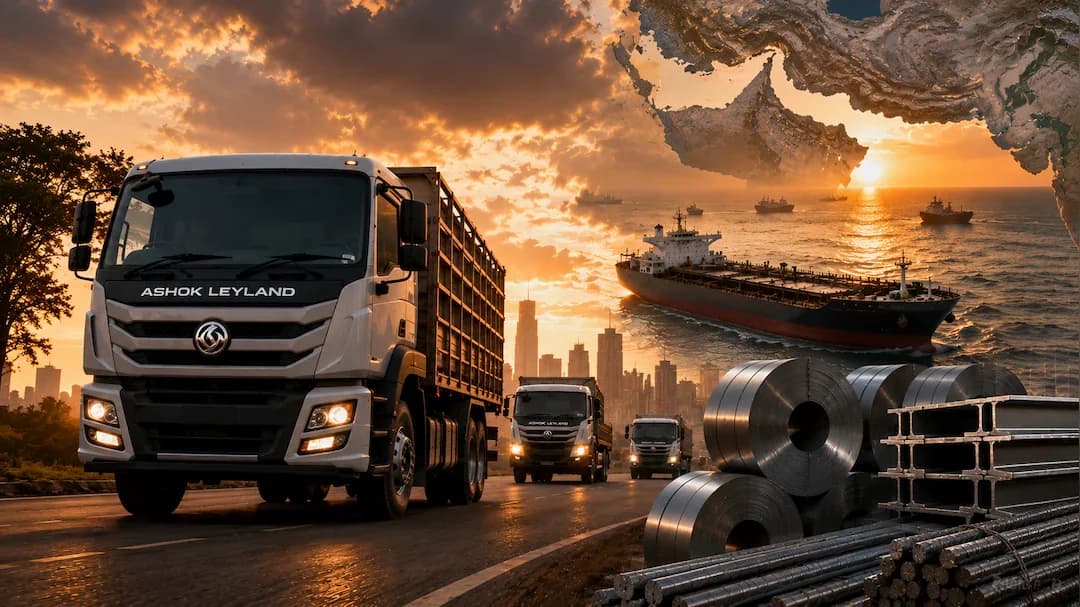
Multiple logistics companies reported robust financial results in recent quarters. Adani Ports reported net profit of ₹3,329 crore, up 10.4% year-on-year, while revenue increased 26.5% to ₹10,737 crore and EBITDA grew 31% to ₹6,559 crore with margins expanding to 61.1% from 59% a year earlier. The company had reported 10.44% jump in consolidated net profit to ₹3,328.96 crore on 26.5% increase in revenue from operations to ₹10,737.58 crore in Q4 FY26 over Q4 FY25. Ashok Leyland also showed strong performance with revenue crossing ₹1,200 crore and a strong order pipeline of over ₹1,500 crore in defence business. The company's defence segment has recorded steady growth with revenue crossing ₹1,200 crore and a strong order pipeline of over ₹1,500 crore, with growth momentum expected to continue over the next few years.
Adani Ports shares ended at ₹1,816.00, up by ₹32.75, or 1.84%, on the BSE following the strong results announcement, as reported by CNBC TV18. The company crossed a key milestone by becoming the first Indian integrated transport operator to handle over 500 million metric tonnes (MMT) of cargo in a single year. Allcargo Logistics continues to benefit from India's consumption and production trends remaining healthy, with the economic outlook for FY27 appearing reasonably positive based on April and May trends. The logistics sector continues to benefit from India's consumption and production trends remaining healthy, with the company working closely with trucking partners and selectively deploying electric vehicles where commercially viable, while the majority of the fleet continues to be diesel-based.