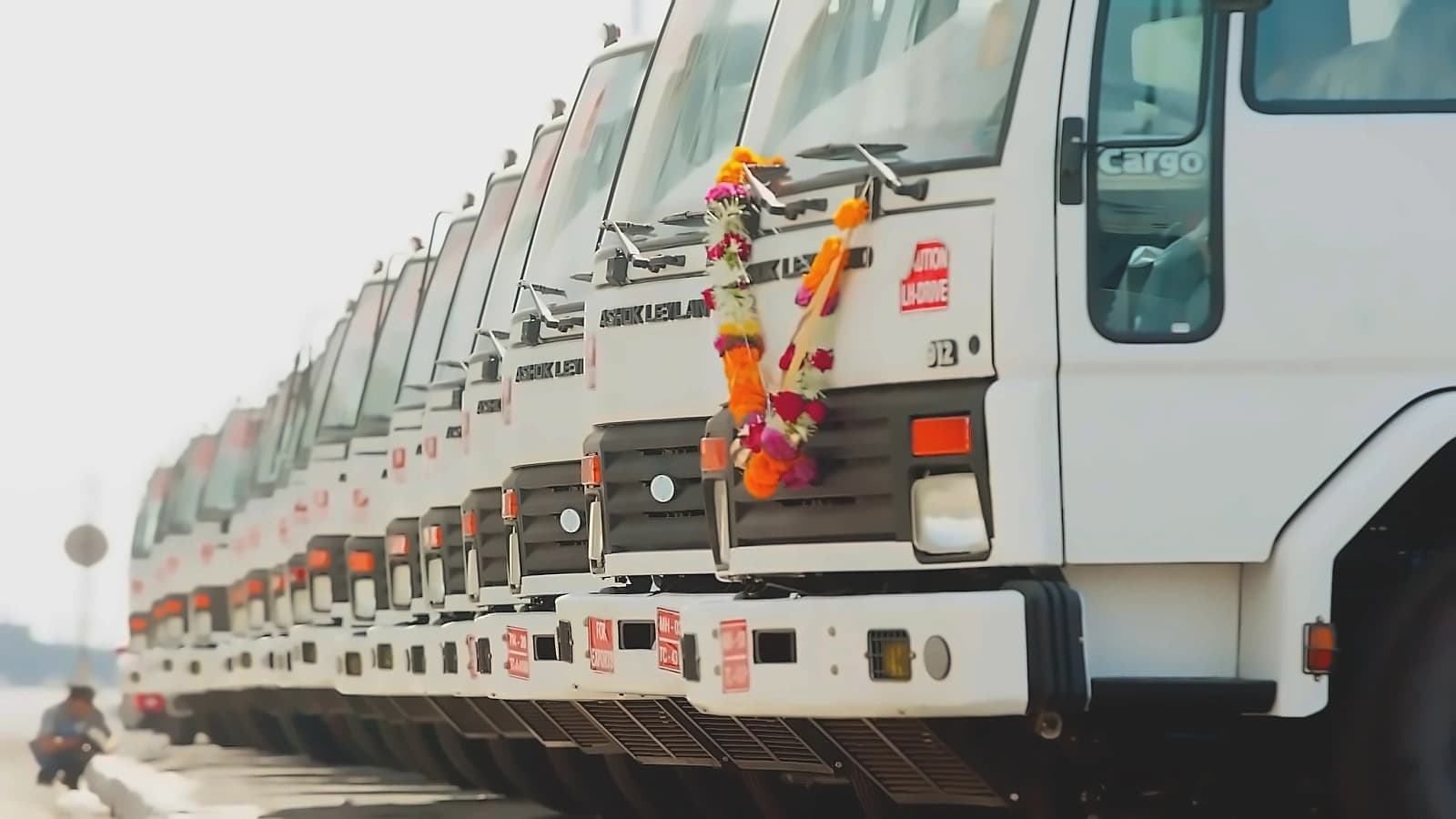
According to reports from CNBC TV18, Ashok Leyland's August sales rose 38% year-on-year to 21,038 units, beating the Nomura estimate of 20,000 units. The strong performance was led by robust medium and heavy commercial vehicle (M&HCV) demand, with M&HCV sales including exports jumping 46% year-on-year to 13,719 units from 9,381 units in August 2025. M&HCV trucks led the growth with sales rising 60% to 10,748 units, while M&HCV bus sales increased 12% to 2,971 units. Light commercial vehicle (LCV) sales also performed well, rising 25% to 7,319 units.
As reported by CNBC TV18, CEO Shenu Agarwal expects commercial vehicle demand to remain strong over the long term as an ageing fleet, rising infrastructure activity and expanding road and highway networks drive replacement demand. According to Agarwal, the existing fleet is ageing, with vehicles now getting older than 10 years, while infrastructure activity and expansion of roads and highways are adding to the need for transportation capacity. He emphasized that this is not a short-term phenomenon and is likely to continue for a long period as infrastructure development gathers pace and fleet replacement picks up. The strength of the market in the first quarter, despite challenges such as diesel availability and price hikes, showed that the current demand cycle has a fundamental element to it.
According to CNBC TV18, despite the strong sales numbers, shares of Ashok Leyland fell nearly 4% after the announcement. As of 2:24 pm, the stock was trading at ₹168.65 on the NSE, down ₹6.99, or 3.98%. The stock's weakness comes against a backdrop of continuing concerns around input costs and their impact on margins. Earlier this month, Agarwal said the company could face fresh margin pressure in the second quarter as natural rubber prices have climbed sharply, even as prices of some other raw materials have eased.
As reported by CNBC TV18, Agarwal described the sharp rise in commodity costs as one of the biggest challenges facing the industry, stating that such fast and high increases in commodity costs he has not seen in his 31 years in the industry. The increase in input costs is putting pressure on profitability, but Agarwal expects the situation to become more manageable over the next few quarters. He expects commodity prices to start neutralising around the third or fourth quarter of the year. To offset higher costs, the Chennai-based truck and bus maker has already raised prices during the current financial year, with M&HCV prices increased by around 2-3% since April and LCV prices rising by about 0.5%. The company is also running cost-saving initiatives and focusing on products that offer customers better mileage and reliability.
According to CNBC TV18, the August sales performance follows a largely in-line June quarter for Ashok Leyland, when the company reported record revenue and commercial vehicle volumes. Consolidated net profit rose 2.59% year-on-year to ₹609 crore in Q1 FY27 from ₹594 crore a year earlier, marking the company's highest-ever first-quarter profit. Commercial vehicle volumes also reached a record 48,763 units, compared with 44,238 units in the year-ago quarter. Exports stood at 2,461 units in Q1 FY27, while the Power Solutions, Aftermarket and Defence businesses also contributed to the company's overall performance.