FY26 marked a transformative year for Apple's iPhone production in India, with the country accounting for 36% of total iPhone production value - equivalent to ₹25 billion - during the five-year production-linked incentive scheme period. According to reports from Business Standard, Apple surpassed its production value target under the PLI scheme by an 180%, demonstrating the success of the manufacturing shift from China to India. The shift was particularly significant as 44% of US iPhone demand was shipped from India in the June quarter, with Cook ensuring nearly the entire US demand was met through 'make in India' phones.
India's iPhone exports reached a record ₹2 trillion ($21 billion) in FY26, representing a 33% increase over the previous year. As reported by Business Standard, exports to the US alone grew 86% from $10.5 billion in FY25 to $19.6 billion in FY26, with nearly 78% of iPhone value produced in India being shipped to the US market. Research agency SAG projects that India's share of iPhone production will increase to 28% by calendar year 2026, up from 23% in 2025, while Meity expects the share to exceed 30% in the coming years.
The sustainability of Apple's India strategy faces significant challenges following recent geopolitical developments. According to Business Standard, the US Supreme Court declared fentanyl tariffs illegal, bringing China and India to equal status at zero duty for US imports. This development, combined with Trump's recent visit to Beijing and discussions of $30 billion in reciprocal tariff cuts, suggests a thaw in US-China relations that could reduce the cost advantage India previously enjoyed. China continues to account for 75% of global iPhone production, while India handles the remaining 25%, making China a crucial market that generates nearly 18% of Apple's global revenue compared to India's 2%.
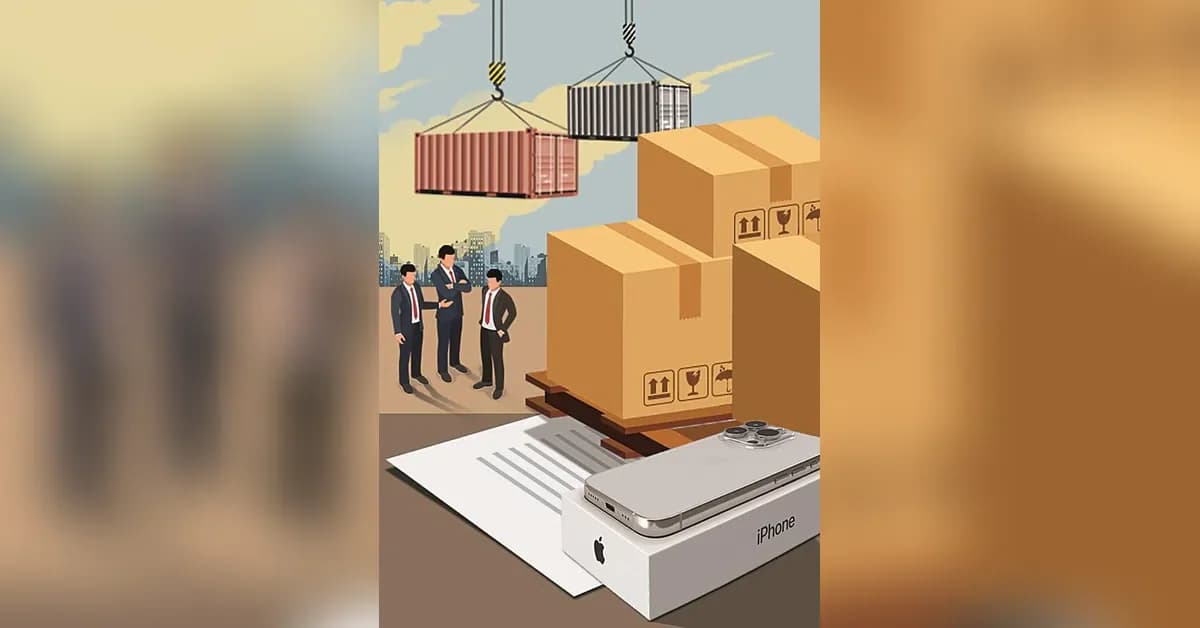
India faces significant challenges in building a competitive supply chain to maintain Apple's manufacturing presence. As reported by Business Standard, a senior executive noted that without duty arbitrage, there may be no logic to shift US exports en masse from China to India due to higher production costs. The new supply chain decree introduced in April makes it more difficult for established Chinese iPhone suppliers to operate in India, while India's 6-8% higher interest rates on capital goods and working capital compared to competing nations create additional cost disadvantages. The government must address these challenges through a new PLI scheme and policy stability to maintain Apple's manufacturing commitment.
Despite challenges, analysts suggest that even maintaining current FY26 production levels would double Apple's production value in less than three years, compared to the five years required to reach ₹70 billion. According to Business Standard, the government faces the task of developing a new PLI scheme to support smartphone exporters and addressing key areas of contention including higher interest rates and logistics costs. The government must also address policy flip-flops that impact ease of doing business, while India's new supply chain decree requires the development of a domestic supply chain with non-Chinese and homegrown players to ensure long-term sustainability of Apple's India operations.