Apple India has achieved a historic milestone by crossing the ₹1 trillion revenue mark in FY26, with revenue from operations rising 32% year-on-year to ₹1,04,607 crore, according to market intelligence firm Tofler. This represents a substantial increase from ₹79,060.5 crore in FY25, demonstrating strong growth momentum in the Indian market. The company's profitability showed even more impressive growth, with net profit climbing 66% to ₹5,311 crore in FY26 compared with ₹3,196 crore a year earlier, significantly outpacing the 16% profit growth recorded in FY25. The company's total expenses for the fiscal were reported at ₹96,224 crore, as per Tofler. This performance came even as the broader smartphone market slowed, reflecting continued strong demand for Apple's products, particularly iPhones.
Apple India has achieved a historic milestone by reaching 10% market share in FY26, up from just 4% in 2022, according to latest data from Counterpoint Research. This represents Apple's first double-digit market share in India's history, with the company expected to maintain this momentum throughout the full year. The iPhone 16 was the single best-selling phone model in India in Q3 2025, while the iPhone 17 took the top spot by volume in Q1 2026 with a 4% share on its own. Apple was the only major brand whose shipments grew by 0.7% in Q2 2026, when the entire market fell 11.1% to 33.2 million units. India's smartphone market expanded 2% in volume terms and 9% in value terms in FY26, with phones priced above ₹30,000 recording the strongest growth at 12%. According to Counterpoint Technology Market Research, Indian buyers are steadily moving towards premium smartphones, with strong brand aspiration, wider retail reach, deeper distribution across tier-2 and beyond markets, along with easy financing options making iPhones accessible to a much larger buyer base.
The iPhone 18 Pro, launched on September 18, 2026 at ₹1,64,900, demonstrates Apple's premium positioning strategy in India. This price point represents several months' salary for a typical urban professional and is ₹45,000 higher than the US price of $1,199 before tax, despite being assembled locally in Tamil Nadu or Karnataka. According to Counterpoint Technology Market Research, Apple's growth is being driven by the steady shift towards premium smartphones, with strong brand aspiration, wider retail reach, deeper distribution across tier-2 and beyond markets, along with easy financing options making iPhones accessible to a much larger buyer base. India's premium smartphone segment, comprising handsets priced above ₹30,000, grew 12% by volume in FY26, with Apple's volume growth more than doubling to 24% from 11% in FY25. The rising prices across brands have narrowed the gap between iPhones and premium Android phones, helping Apple thanks to its brand appeal and ecosystem integration.
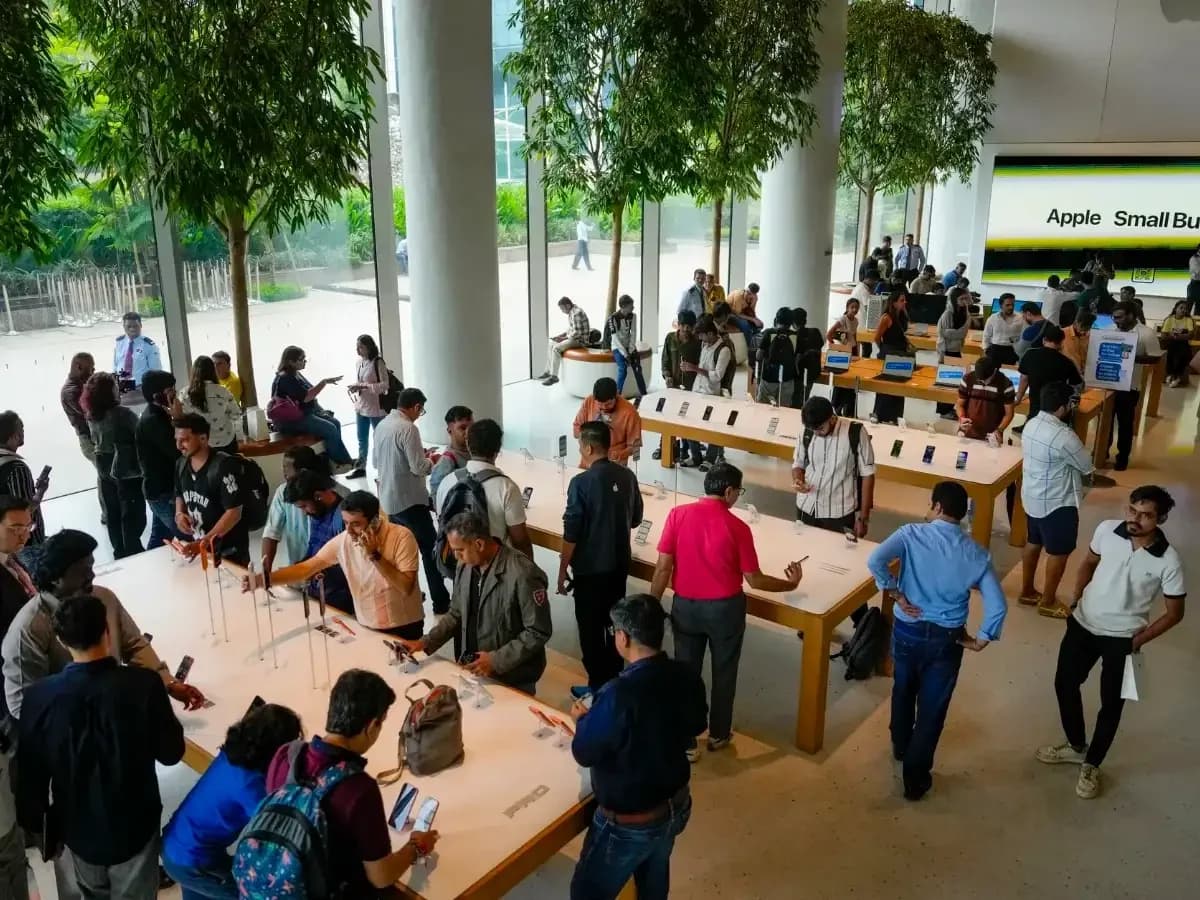
India has emerged as a key manufacturing hub for Apple, with the country assembling roughly a quarter of all iPhones, about 55 million units in 2025, according to latest reports. Apple's Indian operations are managed by Foxconn, Tata Electronics and Pegatron (now majority-owned by Tata). The country exported about ₹2 trillion (approximately $22 billion) of iPhones in the year to March 2026, representing a 33% increase from the previous year. This manufacturing success has enabled Apple to maintain competitive pricing despite premium positioning, with the company not discounting its way into the market but building stores, factories and financing, and letting scarcity do the marketing. However, Apple India's reported revenue does not reflect the entire scale of iPhone production and exports originating in India, as these exports are handled by Apple's contract manufacturers with resulting sales recorded through multiple overseas entities within the Apple group rather than being accounted for in Apple India's books.
The performance comes amid an intensifying contest between Apple and Samsung in India, with Samsung Electronics India reporting FY26 revenue of ₹1.12 lakh crore but extending beyond smartphones to include televisions, home appliances and telecom equipment. Despite its broader portfolio, Samsung's domestic smartphone business registered a slight decline, with the company reporting a 1.4% fall in mobile phone revenue to ₹81,472 crore in the last fiscal year, according to an ET report. The average selling price of smartphones in India hit a record $315 in the June quarter, up 14.4% in a year, with the premium segment growing while the budget segment collapsed under memory-chip inflation, positioning Apple well for continued market leadership. Apple's stronger brand appeal and tightly integrated ecosystem are helping it capitalize on the trend of shrinking price differences between premium smartphones, with the company's Indian unit now on a similar revenue footing to Samsung despite covering very different business segments.