Apollo Micro Systems shares settled at ₹406 per share on the NSE, up 3.96% on Wednesday, following the announcement of a significant defence contract. According to Moneycontrol, the positive market reaction reflects investor confidence in the company's entry into advanced defence technology development. As per CNBC TV18, the shares have gained about 47.07% so far this year, and close to 120.77% over the last 12 months, demonstrating strong long-term investor interest in the defence sector expansion. Shares are likely to attract investors' attention in Thursday's trade (23 July) after the company announced the Make-II PSO award, as reported by Live Mint.
As reported by Business Standard, Apollo Micro Systems Limited has been shortlisted and awarded a Make-II Prototype Sanction Order (PSO) by the Indian Navy for the development of the SAVIOR-ASW (Semi-Submersible Autonomous Vessel for Intelligence, Operations and Reconnaissance). According to the company's regulatory filing, the Prototype Sanction Order is the formal approval to begin development of the system, backed by the Indian Navy's procurement intent. Under the Make-II category of the Defence Acquisition Procedure (DAP), Indian companies are invited to develop indigenous prototypes of advanced military systems, with the government committing to procure successful prototypes at scale. The contract involves the design, development, and prototype demonstration of the Semi-Submersible Autonomous Vessel for Intelligence, Operations and Reconnaissance (SAVIOR-ASW) under the Make-II category, with no cost obligation on the government during the prototype development phase.
According to Business Standard, SAVIOR-ASW is an unmanned, semi-submersible maritime platform designed for persistent anti-submarine warfare (ASW) surveillance, capable of autonomous operations for extended durations using advanced acoustic sensors, AI/ML-based target classification, and encrypted multi-channel communication systems. As reported by Live Mint, SAVIOR-ASW is India's first indigenously developed semi-submersible autonomous vessel designed specifically for anti-submarine warfare (ASW) surveillance. The vessel will use advanced sensors to analyse threats and send information back to command centres without requiring personnel physically on board, making it more cost-effective than traditional warships. The platform is unmanned and self-powered, capable of independently patrolling the ocean for extended periods, operating silently beneath the sea surface using a sophisticated hydrophone array to detect submarines and other underwater threats while continuously transmitting intelligence to naval command centres ashore and aboard ships without any human presence onboard.
According to Live Mint, the Indian Ocean Region (IOR) is one of the world's most strategically important maritime corridors and a vital artery of global commerce, with nearly 100,000 merchant vessels transiting its waters annually, carrying around 30% of global containerised cargo and 42% of the world's crude oil traded from and within the region. For India, the stakes are particularly high, with about 95% of the country's trade by volume and nearly 68% by value transported by sea. As reported by Moneycontrol, the estimated total value of the global market for autonomous maritime systems by the year 2032 would stand at $10 billion, highlighting the significant growth potential in this sector. The company emphasized that the technologies being developed under this programme are state-of-the-art, highly futuristic, and fully aligned with the Government of India's Atmanirbhar Bharat initiative for self-reliance in defence manufacturing. With submarine deployments and undersea threats continuing to increase in the region, persistent underwater surveillance and anti-submarine warfare capabilities have become essential for safeguarding India's maritime interests and ensuring the security of critical shipping routes and chokepoints.
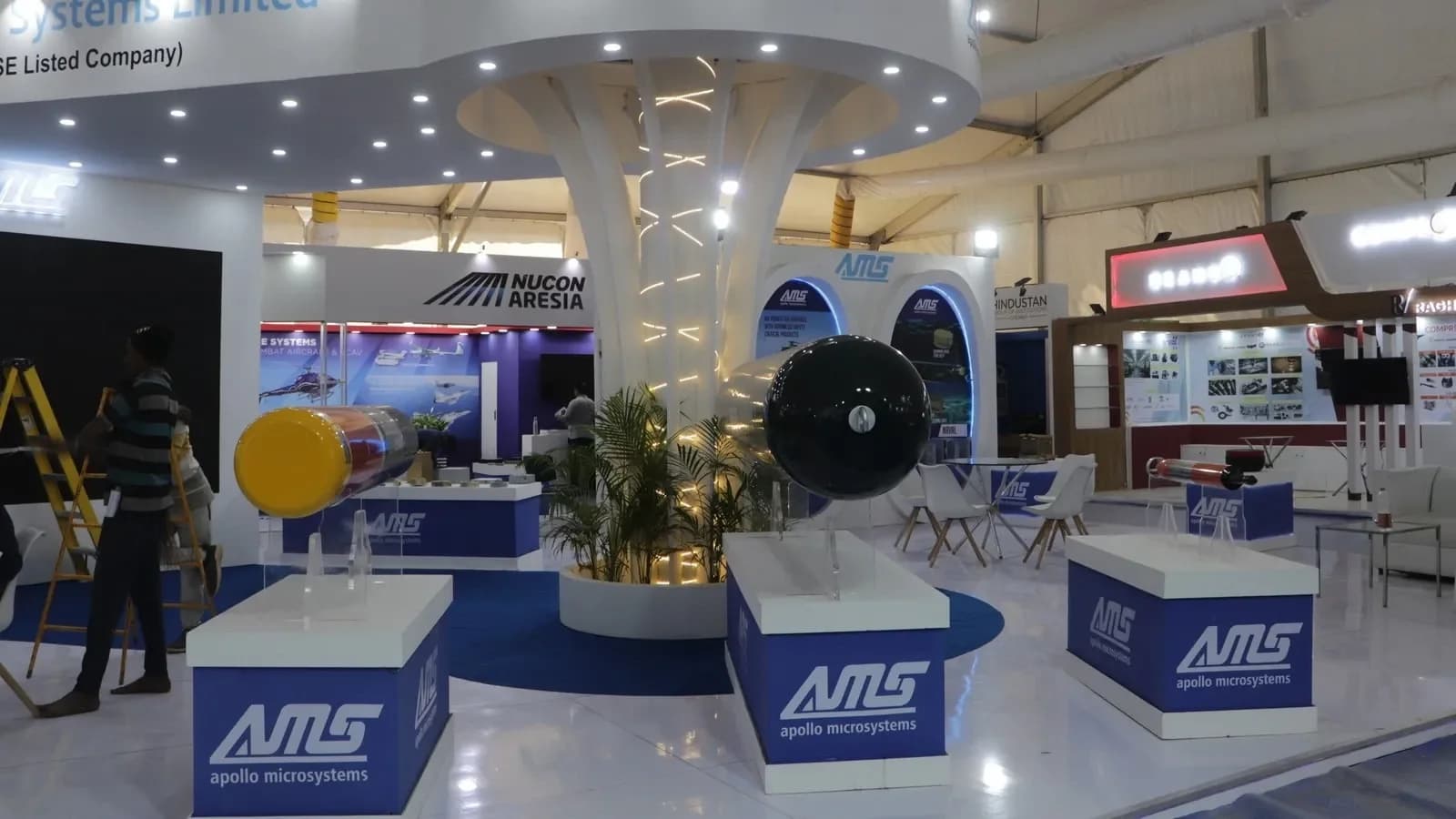
According to Moneycontrol, Baddam Karunakar Reddy, Managing Director at Apollo Micro Systems, stated that the company has spent years building deep capability in indigenous defence electronics and mission-critical systems. Reddy emphasized that the SAVIOR-ASW programme is the culmination of that journey and a statement of their conviction that India must own the technologies that protect its maritime boundaries. He added that at Apollo, they firmly believe the next frontier of warfare will be autonomous, intelligent, and networked and are committed to ensuring India leads that transformation from the front. Reddy also thanked DRDO for giving the company the knowledge and spirit to aspire to build such complex systems.