Air India will resume its annual salary increment cycle from October 1, CEO and Managing Director Campbell Wilson announced during a townhall on Thursday, according to Business Standard. The recently revised pay structure for pilots will also be effective from the same date, as reported by Moneycontrol. The airline had deferred the salary revision cycle amid the impact of the Middle East crisis, which has put pressure on its operations and finances. Wilson said Air India continues to face challenges from elevated fuel prices, airspace disruptions and the depreciation of the rupee. Despite these pressures, the CEO said the airline's fleet transformation remains on schedule, while profitability continues to be a key priority.
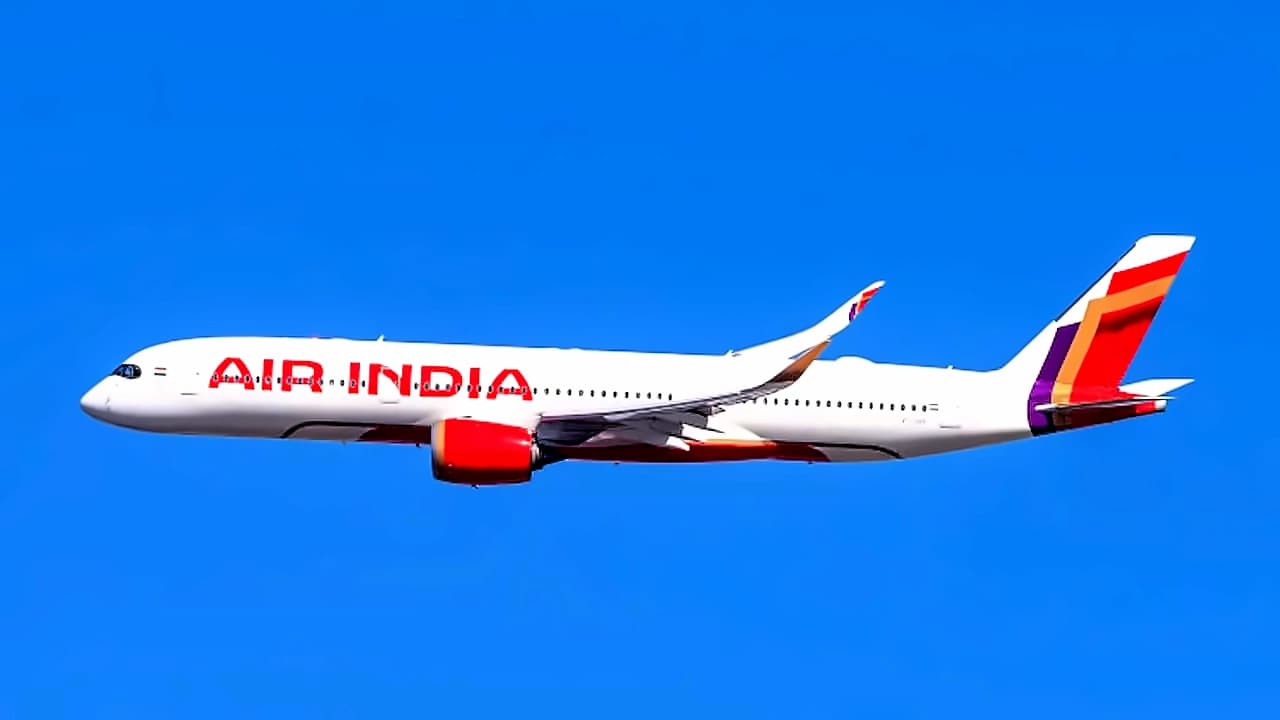
Air India Group plans to induct more than 100 new aircraft across 2027 and 2028, as it continues its fleet renewal programme. The airline has already added three Boeing 787-9 aircraft in 2026, with two Airbus A350-1000 aircraft expected to join the fleet later this year. Air India's legacy narrow-body fleet has completed its retrofit programme, while on the wide-body side, three retrofitted Boeing 787-8 aircraft have entered service this year, with four more expected to be operational by the end of 2026. The airline plans to retrofit 16 Boeing 787-8 aircraft in 2027, taking the fleet's overall retrofit programme close to completion by the end of that year. Currently, Air India Group, comprising Air India and Air India Express, has nearly 300 planes.
Wilson highlighted significant gains in Air India's operational performance. The airline recorded its highest-ever DGCA on-time performance of 91.6% in June, while its year-to-date on-time performance has reached 85%, compared with 76% in FY26. Air India also ranked among the top four airlines globally for punctuality in June, according to Cirium, recording an 86.85% on-time arrival rate across 15,135 tracked flights and a 99.7% completion factor. The carrier has reduced long delays by nearly 60% and maintained more than 90% of its planned network despite airspace disruptions linked to the Middle East crisis. Wide-body technical dispatch reliability has meanwhile improved to 97.4%, another indicator of the airline's focus on operational stability.
Air India currently operates more than 185 aircraft, including 35 Boeing 787s, 19 Boeing 777-300 ERs and six A350-900s. Of these wide-body aircraft, 26 Boeing 787-8s are legacy planes, while three are brand new and were inducted this year. In 2026, the airline is scheduled to induct two new Airbus A350-1000 aircraft. Wilson noted that during temporary network curtailments resulting from airspace restrictions, fleet improvement initiatives were carried out, demonstrating the airline's adaptive approach to operational challenges.
A leadership transition is underway at Air India, with former Ethiopian Airlines Group chief Tewolde Gebremariam set to take over as CEO and MD from Wilson, who is likely to leave the airline next month. The townhall was held at a time when the airline is facing regulatory scrutiny over the Phuket-Delhi flight incident on August 4, in which the aircraft suddenly lost 300 feet in altitude and the pilot-in-command tested positive for a psychoactive substance. The Aircraft Accident Investigation Bureau (AAIB) is probing the incident, though it could not be immediately ascertained whether Wilson discussed the flight incident at the townhall. Wilson told employees that the airline continues to make steady progress on its transformation journey despite a challenging operating environment marked by geopolitical uncertainty, airspace disruptions, fuel price volatility and macroeconomic pressures.