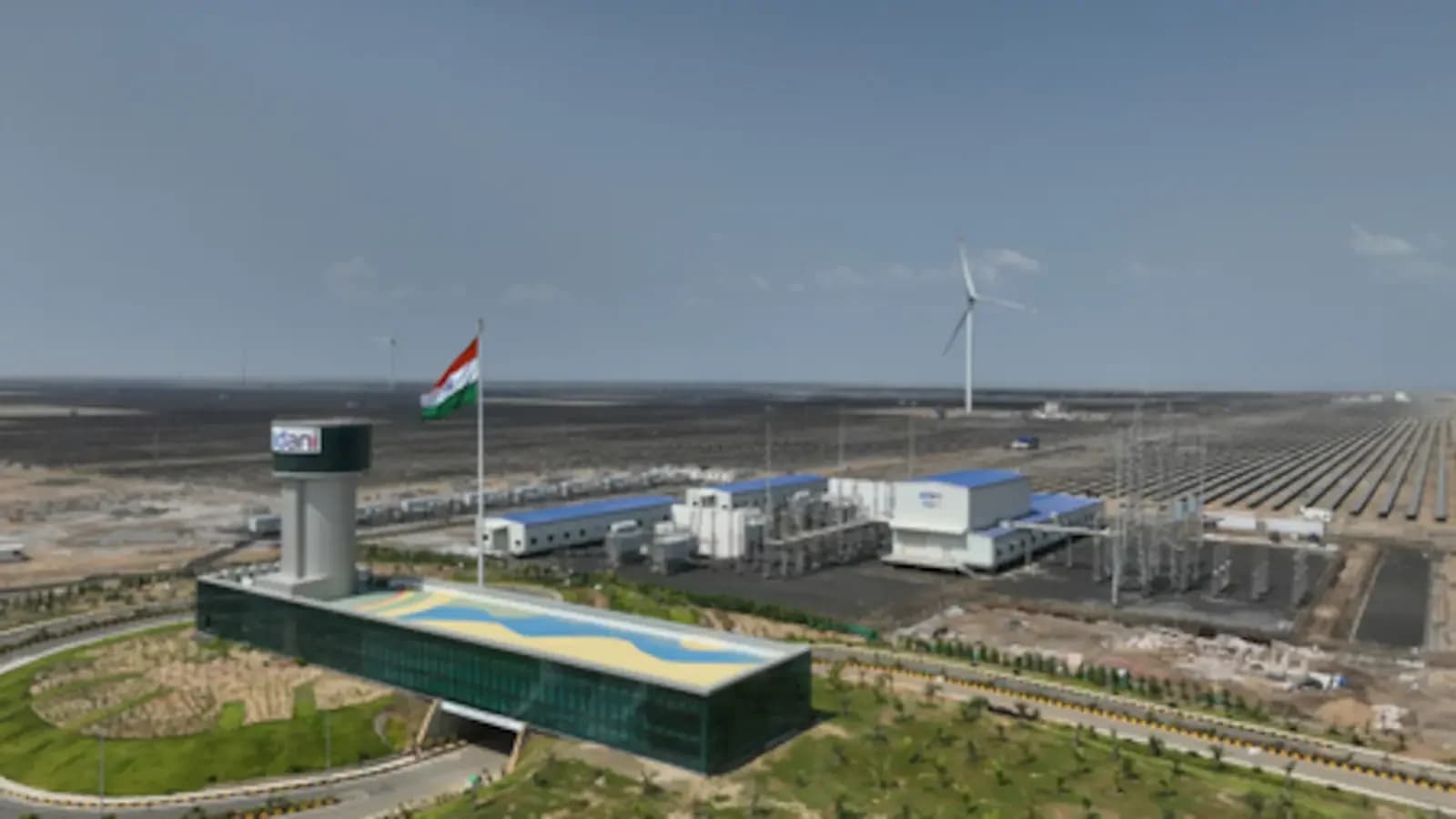
Adani Power Ltd. (APL), India's largest private sector thermal power generator, has demonstrated continued improvement in its Environmental, Social, and Governance (ESG) performance. According to the company's latest regulatory filing, APL achieved a score of 66 in FY26, representing an increase from the previous year's score of 65. The improved ESG score signals stronger confidence for shareholders and investors that APL is resilient to emerging risks and positioned for long-term value creation. The company attributes this improvement to its focus on sustainability initiatives and operational efficiency. APL continues to rank higher than all other major Indian thermal, mixed fuel, and integrated energy companies, as reported by NSE Sustainability, a SEBI-registered ESG Rating Provider and subsidiary of NSE Indices.

APL maintains its position in the 'Aspiring' category of NSE Sustainability's assessment framework. As reported by the company, this ranking reflects the company's unwavering ESG commitment and focus on sustainable growth with responsible business practices. NSE Sustainability evaluates 500 listed companies in India annually, providing investors and stakeholders with an independent assessment of companies' ESG credentials and long-term value creation potential. A high ESG score provides shareholders greater confidence that the company is well-governed, resilient to emerging risks, and positioned to create sustainable value over time. This recognition by a SEBI-registered ESG rating provider may enhance the company's appeal to ESG-focused capital, while also setting a benchmark for thermal power operators navigating the transition to more sustainable energy models.
According to the company's latest regulatory filing, APL has implemented advanced low emission technologies like Ultra-Supercritical Units alongside continuous emissions monitoring systems, energy-efficiency measures, water conservation programmes and waste-management initiatives. The company's continued focus on a broad range of ESG initiatives, along with operational excellence, is benchmarked against leading industry standards. These technological investments demonstrate the company's commitment to environmental responsibility while maintaining operational efficiency. The firm's adoption of ultra-supercritical power units, continuous environmental monitoring, water conservation, and responsible waste disposal, together with expanded community programs, reinforces its leadership standing in India's thermal power sector.
As reported by the company, APL has prioritised water conservation and responsible waste disposal during operations as part of its environmental focus. Socially, the company has expanded community development programmes, emphasising education, healthcare, and skill-building for communities. Initiatives such as scholarship programmes for underprivileged students, health camps, and livelihood enhancement projects reflect APL's commitment to inclusive growth and community development. These programmes are centred on education, healthcare and skill development which include scholarships for underprivileged students, health camps and livelihood enhancement projects in communities around its operations.
According to the company's release, APL surpasses regulatory requirements prescribed under the framework. The percentage of independent directors in the Nomination and Remuneration Committee is better than compliance requirements, as is the Audit Committee's independent director representation. Similarly, the composition of the Risk Management Committee is better than the required threshold of independent directors. The company has also adopted stringent supplier and contractor ESG standards, ensuring responsible practices throughout its value chain. Additionally, APL has adopted ESG standards for suppliers and contractors across its value chain. By surpassing statutory expectations in board committee independence and extending ESG requirements to suppliers and contractors, APL is embedding sustainability across its value chain.
The latest NSE Sustainability assessment adds to a series of sustainability ratings received by the company. According to the company, APL scored 71 out of 100 in S&P Global's Corporate Sustainability Assessment and received a rating of 4.3 out of 5 from FTSE Russell. The company also reported an ESG score of 80 out of 100 from CareEdge ESG Ratings for FY26, placing it in the agency's 'Leadership' category and above the industry median by 35%. These ratings reflect the company's ongoing commitment to integrating sustainability considerations into its business operations and long-term growth strategy. These multi-agency recognitions demonstrate APL's comprehensive approach to sustainability and its position as a leading thermal power operator in India's evolving energy landscape.