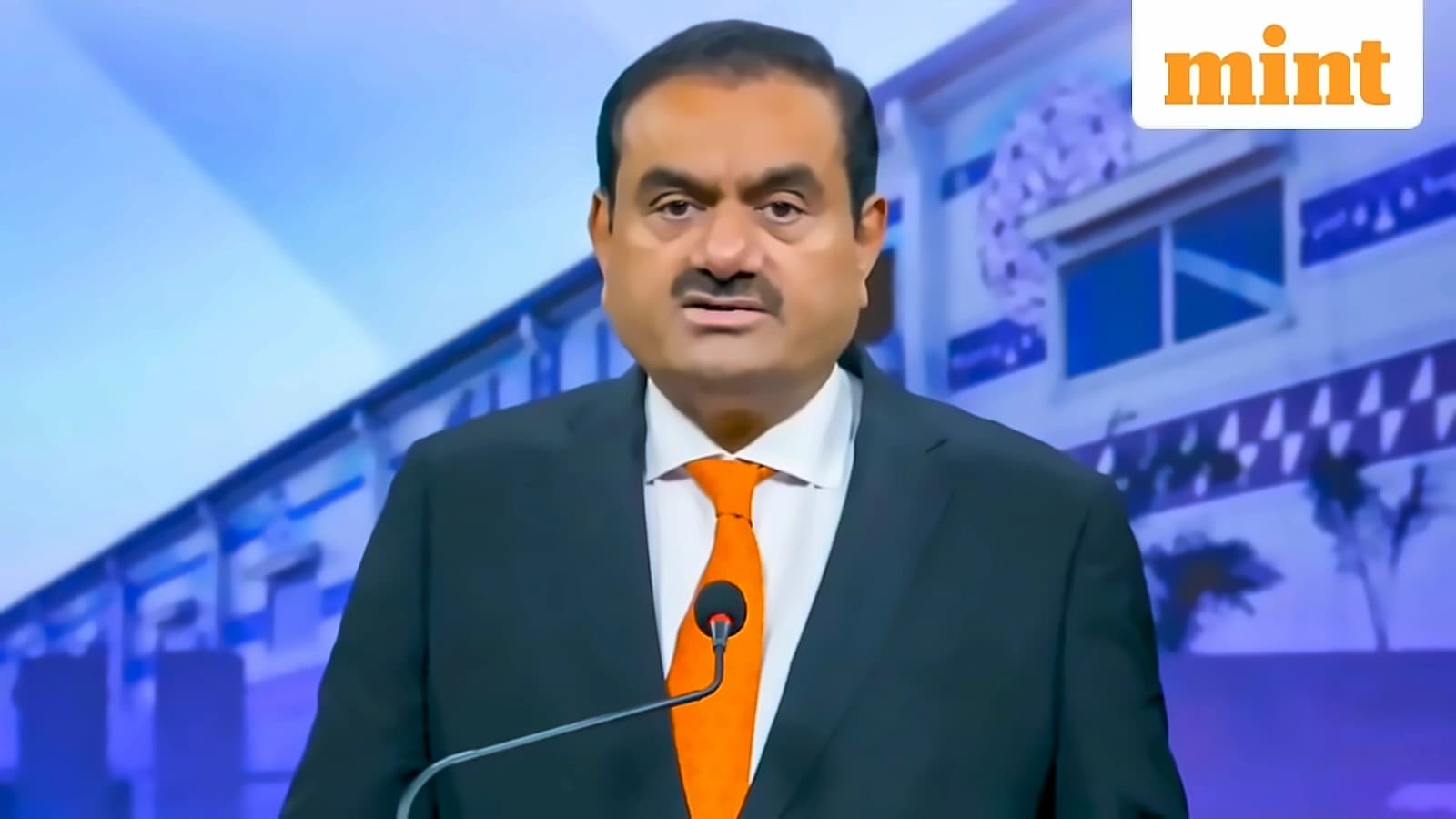
Adani Group stocks were trading lower on Monday, June 29, following fresh developments in the case involving founder Gautam Adani. Adani Enterprises shares were down 3% to an intraday low of ₹2,955.40 on the NSE, while Adani Ports and Special Economic Zone fell 1.3% to an intraday low of ₹1,772.50 per share. Adani Power shares declined 2.6% to ₹224.53, and Adani Green Energy stock was trading 4% lower at ₹1,469.30 apiece on the NSE. Adani Energy Solutions was trading at ₹1,465, down 3%, and Adani Total Gas shares lost 3% to today's low of ₹698.2 on the NSE. Shares of Ambuja Cements and ACC were trading flat during the session.
A New York district court has refused to dismiss the proceedings against billionaire Gautam Adani and his nephew, Sagar Adani, questioning the US government's change in stance. Brooklyn-based US District Judge Nicholas Garaufis had stated that federal prosecutors' May 18 announcement that they would no longer pursue the case did not sufficiently explain their decision. The court has given the US government until July 13 to respond with more detailed justification, as reported by PTI. However, a senior US lawyer familiar with federal criminal practice told PTI that the judge's request for additional information is a routine procedural requirement under Rule 48(a) and does not signal that dismissal is in jeopardy. The lawyer noted there is little precedent for a federal court compelling prosecutors to continue pursuing a criminal case once the Justice Department has decided it should be dismissed. According to NDTV, the judge's order is procedural and represents the court's obligation to consider a prosecutor's motion to dismiss an indictment.
According to PTI reports citing senior US lawyer Chris Man, the judge's decision to seek a fuller explanation from prosecutors is not unusual and represents the court's obligation to consider a prosecutor's motion to dismiss an indictment. "The judge's order is procedural," lawyer Chris Man said, explaining that "Under Rule 48(a), the Department of Justice must obtain leave of court to dismiss an indictment, and judges can ask questions or seek additional briefing before ruling. That, by itself, is not unusual," he added. The lawyer emphasized that "Judges have little discretion. There is effectively no modern precedent for a judge forcing the Department of Justice to prosecute a case that the executive branch has determined should be abandoned." Legal experts point to the recent corruption case involving New York City Mayor Eric Adams as an example, where the Justice Department sought dismissal and the presiding judge sought additional explanations before ultimately granting the motion, as reported by PTI. NDTV reports that judges have little discretion, with there being effectively no modern precedent for a judge forcing the Department of Justice to prosecute a case that the executive branch has determined should be abandoned.
In his June 24 letter to Garaufis, Adani's lawyer Robert Giuffra revealed that lawyers for Adani and his co-defendants had several meetings with Justice Department officials and submitted nearly 500 pages of materials to convince them the case was flawed. As reported by Reuters, Giuffra wrote that the Justice Department's decision to drop the indictment came after 'months of detailed and extensive communications and meetings with counsel' for Adani and his co-defendants. In their recent submission to the court, Adani's legal team pointed to fatal weaknesses in the government's case and argued the transactions were conducted solely by non-US-based issuers and lenders, with all offering documents drafted and approved outside the United States, placing the case outside the scope of US securities law under the Supreme Court's ruling in Morrison vs National. According to NDTV, Adani's had submitted to the DOJ nearly 500 pages of facts, law, expert testimony, and arguments between February and April 2026, including a 118-page letter accompanied by expert reports from a securities law professor at Harvard Law School, a former SEC Commissioner, among others.
Despite legal uncertainties, the Adani Group continues to expand its operations across multiple sectors. Adani Green Energy operationalised its 150 MW solar power project at Khavda, Gujarat, over the weekend, according to an exchange filing. With this capacity addition, Adani Green Energy's total operational renewable generation capacity hit 19,985.8 MW, or nearly 20 gigawatts (GW). The company also disclosed that the total operational Battery Energy Storage Systems (BESS) capacity was 3,366 megawatt hours (MWh). Adani Airport plans to invest more than ₹20,000 crore in the first phase of a large-scale airport city development programme spanning over 655 acres across six airports in five states. The development by Adani Airport City Ltd will cover airports in Mumbai, Navi Mumbai, Ahmedabad, Lucknow, Jaipur and Guwahati, with around 22 million square feet of mixed-use infrastructure planned in the initial phase. Nearly 70% of the investment will be concentrated in Mumbai and Navi Mumbai, where the company controls close to 440 acres of land. S&P Global Ratings upgraded Adani Ports and Special Economic Zone to investment-grade BBB from BBB- last week, citing robust cash generation and strengthening balance sheet. The rating agency assigned a stable outlook on APSEZ, reflecting expectations that the company will sustain strong operating performance over the next 12-24 months.
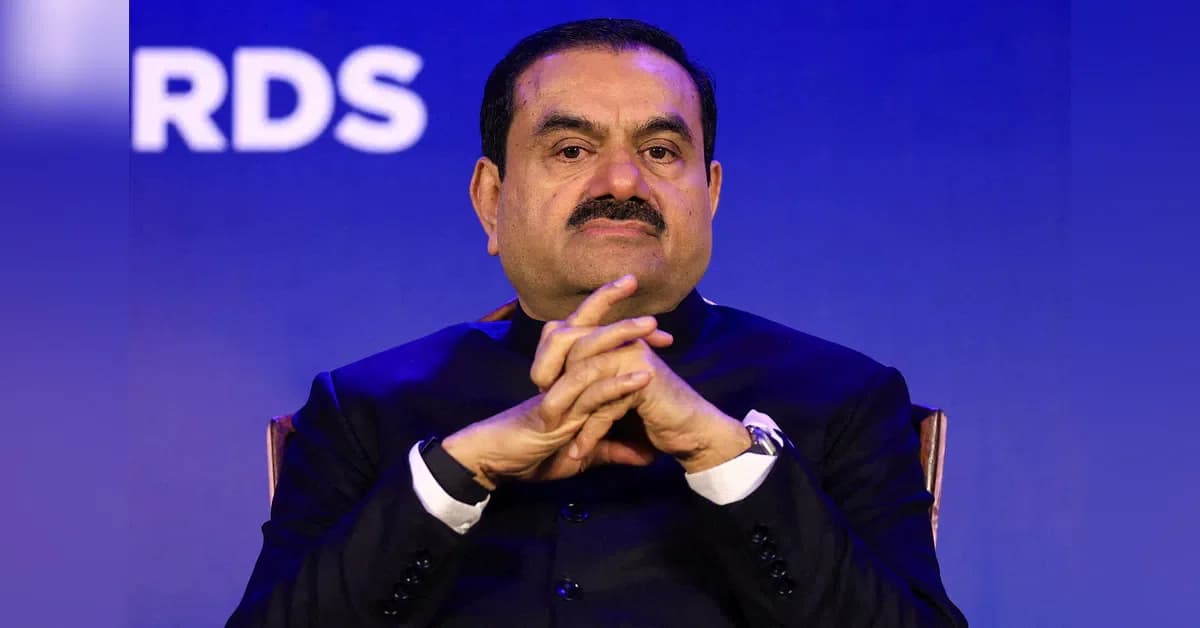
The Adani case was brought in 2024 at the end of Democratic President Joe Biden's term, marking the latest instance in which the Justice Department has sought to end a high-profile white collar criminal prosecution during Republican President Donald Trump's second term. Legal experts note that the conduct of criminal prosecutions is constitutionally an executive function, and courts have historically accorded substantial deference to prosecutorial charging and dismissal decisions. The decision by the district court has thrown a spanner in the works for Adani to settle all his ongoing legal disputes in the US, casting a regulatory overhang over the richest Indian and his conglomerate for the past 18 months. However, the group continues its strategic expansion with Chairman Gautam Adani targeting 10 gigawatts (GW) of nuclear power capacity by 2035, marking the conglomerate's entry into atomic energy as it expands an integrated power platform spanning thermal, renewable, hydro, gas and transmission assets. The nuclear venture, Adani Atomic Energy, has identified land for development and is described as a key part of the group's strategy to support India's long-term energy security amid growing geopolitical uncertainty and rising electricity demand.