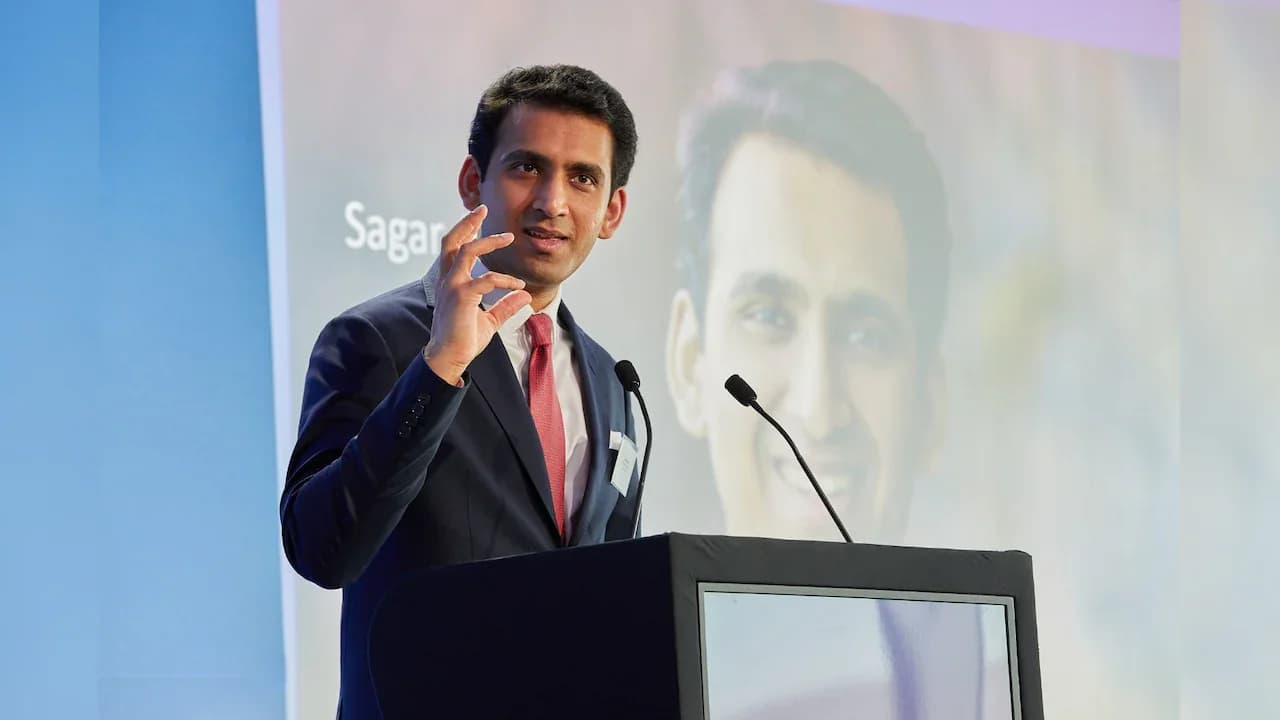
Adani Green Energy Ltd. Executive Director Sagar Adani has outlined India's critical energy transition challenge, emphasizing that the country must add nearly 2,000 gigawatts of new power generation capacity over the next two decades to meet rising electricity demand while ensuring energy remains affordable, accessible and increasingly clean. Speaking at the inaugural Adani Green Energy Dialogue at London's Science Museum during London Climate Action Week, Adani said India consumed about 10,000 terawatt-hours of energy across all fuel sources in 2024, compared with 32,810 terawatt-hours in China, highlighting the scale of India's future energy requirements as incomes and electricity consumption rise. The executive director argued that electrification offers the clearest pathway to energy security, stating that 'We must electrify everything, reducing structural dependence on imported energy. We must build an energy backbone anchored in resources that are available within the country.'
Adani Green Energy Ltd. Executive Director Sagar Adani has called for faster electrification of economies, emphasizing that renewable energy backed by large-scale storage will be critical to ensuring energy security, affordability and sustainability amid rising geopolitical uncertainty. Speaking at the inaugural Adani Green Energy Dialogue at London's Science Museum during London Climate Action Week, Adani argued that countries could no longer view electrification as optional if they wanted resilient economic growth and greater energy independence. The event, organised by Adani Green in partnership with the Energy Transitions Commission (ETC), brought together policymakers, investors, industry executives and climate experts to discuss the policy, financing and infrastructure needed to accelerate the global clean energy transition.
Addressing delegates, Adani said the world faces a 'trifecta' of challenges—energy security, affordability and sustainability—and argued that electrification offers one of the most effective solutions. He emphasized that renewable energy reaches its full potential only when integrated with storage technologies such as battery energy storage systems (BESS) and pumped storage projects, enabling reliable, affordable, round-the-clock clean power. The executive director highlighted that electrification offers a comprehensive solution to address the multiple energy challenges facing global economies. As per the latest reports, participants noted that resilient electricity systems will be essential to sustaining economic growth while reducing dependence on fossil fuels, with reliable access to clean electricity playing an even greater role in supporting sectors such as artificial intelligence, advanced manufacturing, data centres and digital infrastructure.
Highlighting India's role in the global energy transition, Adani said the country's electricity demand will require a structural expansion of nearly 2,000 GW of additional capacity over the next two decades while ensuring energy remains affordable and increasingly clean. He outlined that India must reduce dependence on imported fuels by accelerating electrification and building a diversified energy mix comprising renewables, hydro, efficient thermal and nuclear power, adding that 'without firm, scalable baseload power, the math simply does not work.' This strategic approach aligns with the country's broader energy security objectives and positions India as a key player in the global clean energy transition. Against the backdrop of intensifying heatwaves across Europe, Asia and North America, rising cooling demand and increasing pressure on power systems, participants agreed that meeting this demand sustainably will require long-term policy certainty, sustained investment and accelerated deployment of renewable energy, storage and transmission infrastructure.
Adani outlined the group's comprehensive energy transition strategy, noting that it is targeting 50 GW of renewable energy capacity by 2030, anchored by the Khavda renewable energy project in Gujarat. The group is simultaneously investing in grid infrastructure, utility-scale batteries, pumped hydro storage, green hydrogen and a planned 10 GW nuclear portfolio by 2035. He emphasized that the Adani Group's commitment of more than $100 billion towards energy transition projects reflects an integrated long-term strategy rather than isolated investments, demonstrating the group's commitment to sustainable energy solutions. At the Adani Group's Annual General Meeting (AGM), Chairman Gautam Adani reaffirmed the conglomerate's commitment to meeting India's growing energy needs through a diversified energy portfolio spanning renewable energy, green hydrogen, energy storage, transmission, digital infrastructure and nuclear energy, with plans to develop up to 10 GW of nuclear power capacity.
The dialogue concluded with a visit to the Energy Revolution: The Adani Green Energy Gallery at the Science Museum, London, which has welcomed more than one million visitors since opening in March 2024, reflecting growing public engagement with energy transition solutions. Speaking at the dialogue, Lord Turner emphasized that clean electrification is the most important lever for building zero emission economies, while Mr Topping noted that the real economic and climate benefits come from electrifying parts of the economy still largely powered by fossil fuels. The event, held during London Climate Action Week, one of the world's largest independent climate events, reflected the growing importance of international collaboration in advancing climate action and encouraging policy innovation. Discussions focused on two priorities: accelerating electrification and mobilising investment in renewable energy, storage and modern grid infrastructure, with participants agreeing that storage will play a critical role in delivering reliable, affordable and round-the-clock clean power while enabling higher penetration of renewable energy. As per Business Standard, the programme featured high-level sessions chaired by Adair Turner, co-chair, ETC; and Nigel Topping, co-founder, Ambition Loop and Chair of the UK Climate Change Committee, bringing together senior leaders from Octopus Energy, Schneider Electric, the Climate Bonds Initiative, the Green Finance Institute and the Adani Group.