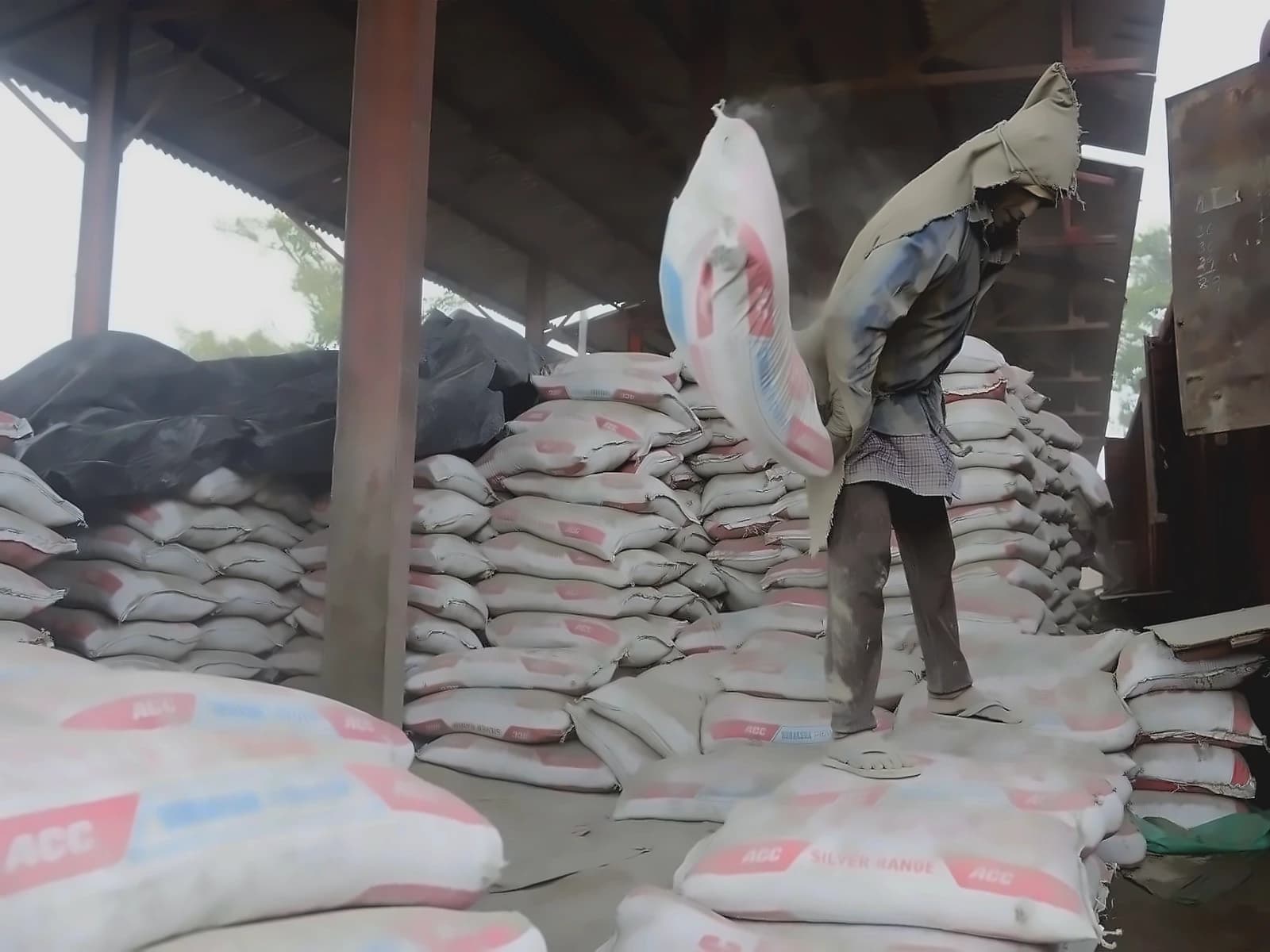
ACC Ltd, an Adani Group cement firm, reported a dramatic 92% fall in consolidated net profit to ₹93 crore for the September quarter FY27, according to a regulatory filing from the company. This compares to a profit of ₹1,119 crore in the same period last year. The previous year's profit included an income tax provision reversal of ₹659 crore and interest on income tax refund of ₹205 crore. The company attributed the decline to a Master Supply Agreement (MSA) with parent entity Ambuja Cements that resulted in higher MSA volume in Q2FY26. However, the year-ago profit comparison was also affected by tax-related gains, making the current performance more reflective of underlying business conditions. The sharp contraction in net profit follows a high base in the prior-year period which was boosted by tax adjustments, highlighting a normalization of earnings for ACC following one-off tax benefits realized in the previous year. As per The Economic Times, CEO Vinod Bahety noted that while the reported numbers are not strictly comparable due to MSA impact, the underlying business momentum remains encouraging, supported by trade partners.
Revenue from operations was down 5.24% year-on-year to ₹5,689 crore in Q2 FY27, while total expenses increased 2.46% to ₹5,602 crore. According to the company, operating EBITDA declined 53.3% to ₹401 crore from ₹810 crore in the previous year, with the EBITDA margin narrowing significantly to 7% from 14.1%. The cement sales volume stood at 9.7 million tonnes in the September quarter, down from 10 million tonnes a year earlier, including the impact of the Master Supply Agreement with Ambuja Cements. However, ACC's revenue from Ready Mix Concrete (RMC) showed strong growth, up 26.4% to ₹574 crore, with the company achieving quarterly volume of 1.07 million cubic metres registering 19% YoY growth in the segment. EBITDA per tonne stood at ₹414, supported by higher MSA volumes with Ambuja. Cement realisations and input cost headwinds continue to impact bottom-line performance, with operational efficiency and thermal cost management remaining critical for margin stabilization in coming quarters.
ACC shares hit their 52-week low of ₹1,115 on the BSE following the earnings announcement, before closing at ₹1,147.50, down 1.6% from the previous close. The stock's 52-week high stands at ₹1,987.00 and its 52-week low is ₹1,115.00. The market's sharp response reflects investor concerns over the significant profit decline and revenue contraction. The stock has a market capitalization of ₹21,548.59 crore and has delivered a return of -18.54% in the past 6 months. The company's ability to maintain EBITDA per tonne at previous levels, supported by higher MSA volumes, indicates underlying business resilience despite challenging market conditions, though the 7% EBITDA margin and ₹414 EBITDA per tonne provide some comfort.
During the quarter, ACC commissioned a 2.4 million tonnes per annum greenfield cement grinding unit at Salai Banwa in Uttar Pradesh, while its subsidiary Bulk Cement Corporation (India) commissioned additional capacity at Kalamboli in Maharashtra. These two projects added 3.4 million tonnes of cement capacity to the company's portfolio. The company's trade share increased by seven percentage points year-on-year to 78%, while blended cement accounted for 85% of sales, compared with 78% in Q2 FY26. Premium products accounted for 47% of trade sales, up three percentage points from the preceding quarter, indicating an improving sales mix and higher premium volumes. The company's share of green power consumption increased to 34.4% from 30.3% a year earlier, reflecting its commitment to sustainable operations.
In the first half of FY27, ACC's total consolidated revenue from operations stood at ₹11,456 crore, against ₹12,246 crore in the corresponding period last year. The company's H1 performance included ₹95 crore of VSS costs, while temporary facility suspensions and the proposed amalgamation remain key developments. The proposed merger with Ambuja Cements would now proceed to the National Company Law Tribunal for final sanction, following shareholder approval, with completion expected during FY27 subject to regulatory, statutory and tribunal approvals. CEO Vinod Bahety highlighted that industry demand remains supportive and is expected to strengthen post-monsoon, aided by housing, infrastructure and capital expenditure, while improving pricing momentum should moderate the impact of elevated fuel and energy costs. Capital expenditure by the central government increased 18% year-on-year to ₹5.1 lakh crore during April-August this year, compared with ₹4.3 lakh crore in the corresponding period last year, providing a supportive backdrop for cement demand.