The World Gold Council has unveiled a 21-year comprehensive plan to transform India's gold ecosystem, christened 'Swarnim Udaan', aligned with the government's Viksit Bharat 2047 vision. According to Sachin Jain, regional CEO, India, World Gold Council, the intent was to see how gold can truly contribute to making India a superpower. The plan aims to build on India's traditional strengths while creating new engines of growth for the future, as reported by The Times of India. The roadmap includes increasing the total mined gold from within India to 10-20% of the country's total demand and making the gold jewellery sector the world's leading manufacturer, similar to how the diamond industry has established itself globally.
The World Gold Council has urged the government to classify gold as a strategic mineral to boost domestic mining and reduce import dependence. According to Sachin Jain, regional CEO, India, World Gold Council, granting strategic mineral status would enable a single-window clearance mechanism, allowing mining companies to obtain approvals from the Centre instead of navigating multiple clearances involving state governments. As reported by PTI, Jain stated that if gold gets recognised under the strategic mineral list, investors and miners can obtain licences from the central ministry and mine in any part of the country under one window of clearance. The latest Swarnim Udaan 2047 report reveals that India can source up to 20% of its gold demand domestically by 2047, positioning the country to emerge as the 'Jeweller of the World' if policy reforms, investments and industry collaboration continue to gain momentum.
Recent market data reveals China's bar-and-coin demand reached an unprecedented 314 tonnes during the first half of the year, while India's investment demand stood at 113 tonnes, representing its strongest first-half performance since 2013. According to the World Gold Council, total global gold demand exceeded 5,000 tonnes in 2025, with central banks purchasing approximately 863 tonnes. During the first quarter of 2026 alone, official sector purchases were estimated at about 244 tonnes, with Poland, China, Uzbekistan, Kazakhstan and Singapore among countries expanding their reserves. China alone accounted for approximately 44 per cent of global bar-and-coin demand during the first quarter of 2026, while the People's Bank of China reportedly increased its gold reserves to about 2,346 tonnes during the first half of the year.
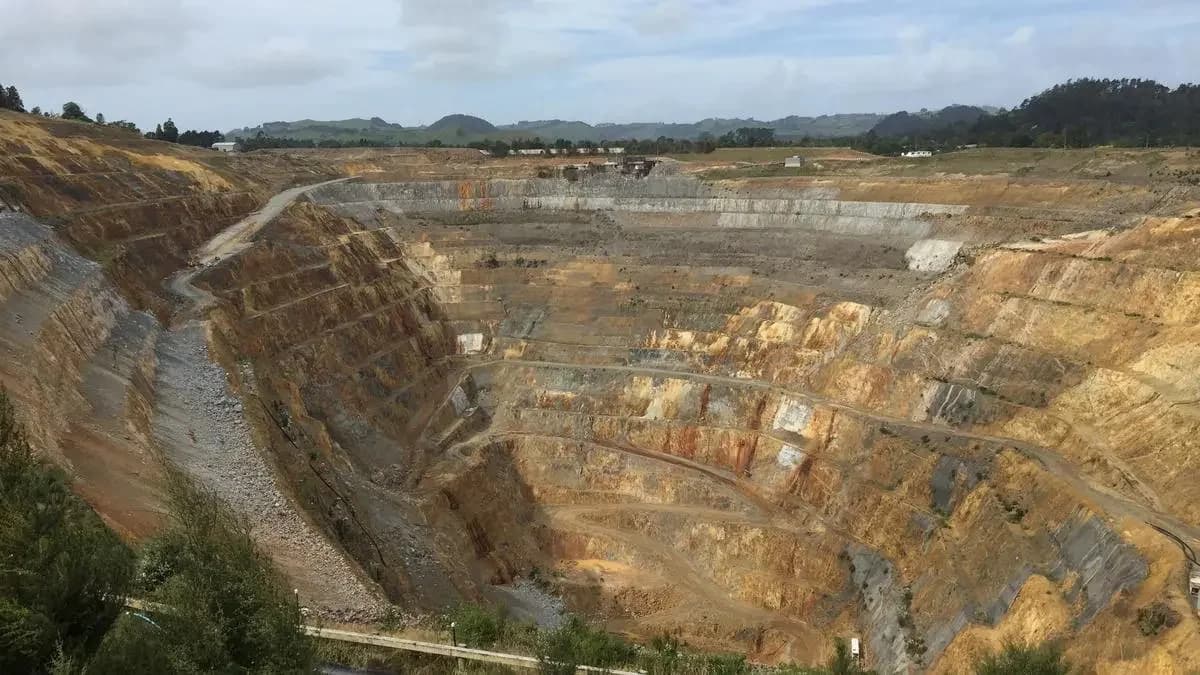
The strategic mineral classification is directly linked to the current account deficit and India's ambition of becoming self-reliant, according to Jain. Earlier this year, Prime Minister Narendra Modi had appealed to countrymen to not purchase any gold for one year to improve the external position affected by gold imports. In a report titled 'Swarnim Udaan 2047', WGC stated that 10-15 per cent of India's annual gold demand should be met through domestic mining by 2047. The latest data shows that India's annual gold demand stands at 800-850 tonnes, with the country currently producing only about 1.6 tonnes annually. However, over the past 10 years, the Government has issued 18 composite licences and six mining licences across eight States, covering 14,632 hectares and collectively representing about 146 tonnes of gold-bearing ore containing an estimated 270 tonnes of gold metal. The seminar highlighted that combined purchases by consumers in China and India represented approximately 37.7 per cent of global mine production during the first half of 2026.
The Swarnim Udaan 2047 plan aims at enhancing the usage of the yellow metal in industries like electronics, semiconductors, aerospace, healthcare and other advanced technologies, as reported by The Times of India. The plan also focuses on channelising household gold for productive use through financialisation and enhancing the demand for retail gold jewellery from Gen Z, expected to be the biggest consuming group in India in the next few years. According to WGC estimates, Indian households hold around 31,000 tonnes of gold, including about 20,000 tonnes in jewellery and nearly 6,000 tonnes in bars and coins. The value of this gold is approximately ₹314.9 lakh crore. Monetising even 1 per cent of this idle stock annually could substitute gold imports worth ₹3.1 lakh crore, reduce import dependence while unlocking significant domestic economic value, as reported in the Swarnim Udaan 2047 report. The report also notes that tokenisation and digital ownership are expected to play an increasingly significant role in the future gold ecosystem.
Building on recent developments, India's first large-scale private gold mine since Independence, the Jonnagiri gold project in Andhra Pradesh, commenced production in 2026. Developed by Geomysore Services with support from Deccan Gold Mines and Thriveni Earthmovers, the project has attracted investment exceeding ₹400 crore and is expected to produce up to one tonne of gold annually. To drive implementation of the Swarnim Udaan 2047 recommendations, the World Gold Council announced the formation of three task forces focused on gold financialisation, mining and manufacturing, and consumer development. The report also proposes the creation of a National Gold Board to bring policy coordination under a single institutional framework, drawing a parallel with the Tea Board of India. The Council has already launched the Indian Association for Gold Excellence and Standards and will establish a Global Gold Innovation Centre in India, positioning the gold sector as a key contributor to India's ambition of expanding its economy from approximately $5 trillion today to $30 trillion by 2047.