
Gold and silver prices witnessed a sharp reversal on Friday, with MCX gold April futures closing at ₹1,55,374 per 10 grams, representing a gain of over 2% from the previous close of ₹1,52,699 per 10 grams. Silver March futures climbed nearly 3% to ₹2,50,300 per kg, after slumping as much as ₹14,628 per kg, or 6%, to hit an intraday low of ₹2,29,015 per kg. The precious metals had rallied nearly 6% in early morning trade but were unable to hold on to those advances, triggering significant profit booking as the day progressed. The rally was supported by renewed bargain buying following the previous week's steep decline, with traders citing the bullion's historic 6% rally as the strongest daily gain since 2008. Silver for the March delivery dropped ₹576 to ₹2,43,239 per kg, while gold futures also registered modest gains, with the April contract appreciating ₹1,885 to ₹1,53,955 per 10 grams. However, silver extended losses for the second consecutive day as investors booked profits amid a firm US dollar and easing geopolitical tensions. According to The Times of India, silver prices dropped by ₹13,000, or 4.85%, to ₹2,55,000 per kilogram (inclusive of all taxes), compared with Thursday's closing price of ₹2,68,000 per kg. Gold of 99.9% purity also weakened, falling ₹3,400, or 2.12%, to ₹1,57,200 per 10 grams (inclusive of all taxes), down from ₹1,60,600 per 10 grams in the previous session.
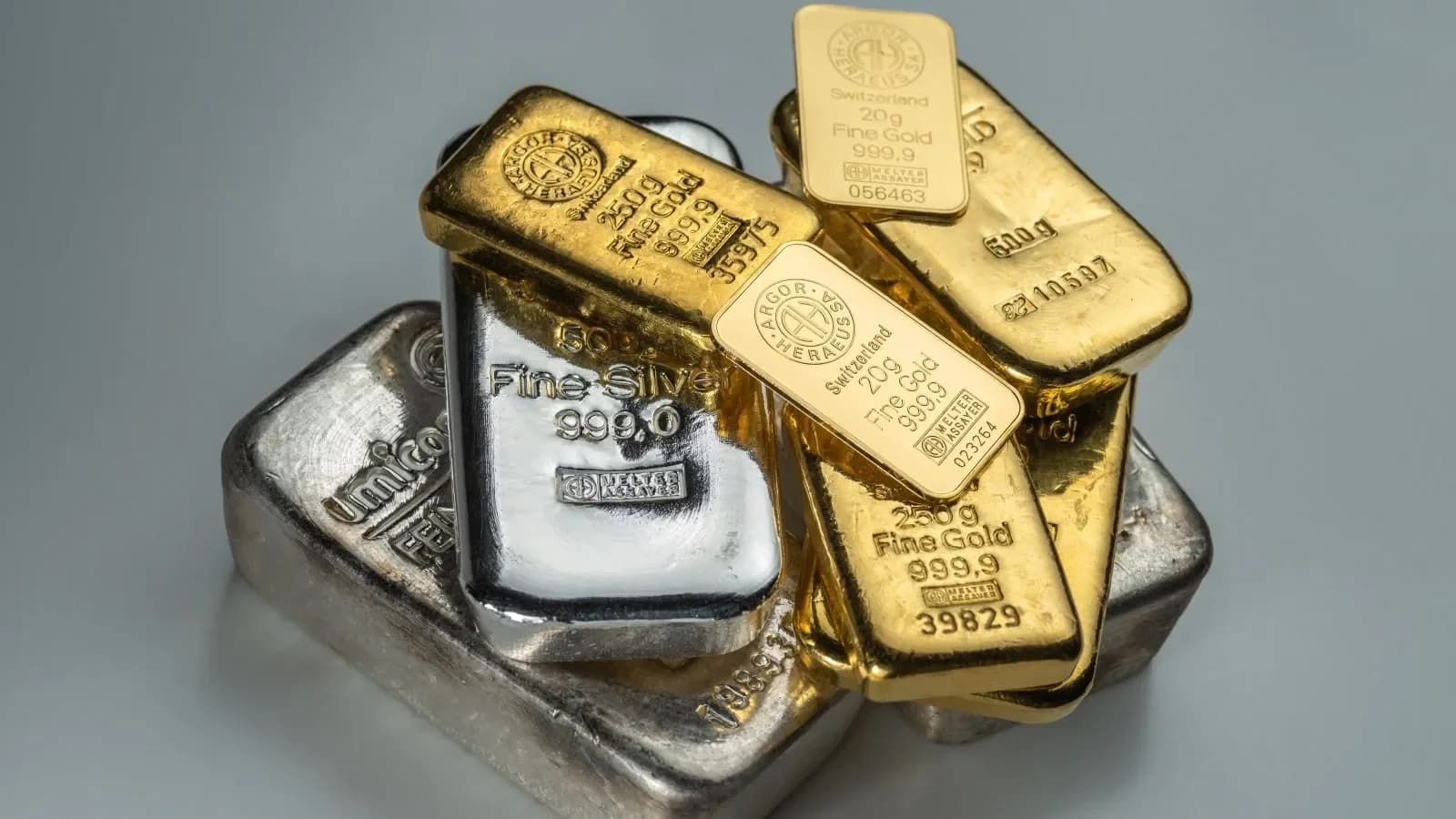
Globally, spot gold rose 3.9% to $4,954.92 per ounce by 2:18 p.m. ET (1918 GMT), recovering losses during a volatile Asia session following Thursday's 3.9% decline, as reported by Reuters. U.S. gold futures for April delivery settled 1.8% higher at $4,979.80 per ounce, with the yellow metal headed for a weekly gain of about 2%. The U.S. dollar index fell 0.2%, making greenback-priced bullion cheaper for overseas buyers. Silver March futures were quoted at $74.56, as reported by The Hindu BusinessLine. Silver has rebounded about 25%, as forced liquidations eased and dip buyers stepped in to capitalise on sharply lower prices, according to Augmont. The selloff tracks a broader shake-up across financial markets, with a global rout in technology stocks pushing MSCI's world equity index down more than 1% on Thursday as investors reassessed the ballooning costs of the artificial intelligence boom. This risk-off mood boosted demand for the US dollar, which climbed to a two-week high, making dollar-priced metals more expensive for non-U.S. buyers. The decline came as the US dollar moved towards its strongest weekly performance since November, hovering near a two-week high. A firmer dollar makes commodities priced in the US currency more expensive for holders of other currencies, thereby dampening demand. The dollar index has gained 0.66% so far this week, putting it on track for its best weekly performance since November 2025, following US President Donald Trump's nomination of Kevin Warsh as the next Federal Reserve chair, which markets view as more hawkish than other contenders.
Silver prices in the Chinese market dropped below $100 an ounce for the first time this year, though it continued to enjoy a premium of over $10 an ounce, as reported by The Hindu BusinessLine. On the Shanghai Futures Exchange, silver March futures dropped below 20,000 yuan to 19,999 a kg ($89.66 an ounce), still holding its premium over COMEX rates. In the Mumbai spot market, gold ended the week a tad lower at ₹1,52,078 per 10 gm (₹1,52,502 on Thursday), while silver ended below ₹2.5 lakh a kg at ₹2,44,929 (₹2,54,339). On MCX, gold was up marginally at ₹2,43,239 a kg, while silver was quoted at ₹2,43,239 per kg. CME increased the initial margin for the sixth time in a little over a month, with the margin for silver 5000 futures raised to 18% from 15%, while for gold it was increased to 9% from 8%. Traders said CME's intervention in the market has been strong during the current situation in the silver market, with Hareesh V, Head of Commodity Research at Geojit Investments Limited, noting that monitoring the dollar and upcoming Fed signals are crucial, while investors could keep positions balanced to navigate heightened volatility.
Gold prices in India declined significantly on Friday (Feb 6), with 24K gold rates across major cities ranging from ₹15,235 to ₹15,447 per gram, as reported by The Times of India. 22K gold rates were quoted between ₹13,965 to ₹14,170 per gram, while 18K gold prices ranged from ₹11,426 to ₹12,250 per gram across different metros. In Delhi, 24K gold was priced at ₹15,457 per gram, 22K at ₹14,170 per gram, and 18K at ₹11,597 per gram. Chennai recorded 24K gold at ₹15,622 per gram, 22K at ₹14,320 per gram, and 18K at ₹12,250 per gram. Bengaluru, Mumbai, Pune, and Kolkata all showed uniform pricing with 24K gold at ₹15,442 per gram, 22K at ₹14,155 per gram, and 18K at ₹11,582 per gram. Market experts described the fall in bullion as a technical correction rather than a structural reversal, with analysts noting that the broader uptrend in COMEX gold remains intact, with the current dip reflecting profit booking and consolidation after recent gains rather than a shift in trend. Investors are advised to adopt staggered allocations instead of lump-sum investments to mitigate entry risks in a volatile environment.
China's gold ETFs witnessed record daily outflows, with nearly $1 billion withdrawn from major bullion-backed funds after the sharp price correction unsettled investor confidence, as reported by The Hindu BusinessLine. Ponmudi R, CEO of Enrich Money, said precious metals' prices are trading below key moving averages, indicating short-term downward pressure and a corrective phase rather than a reversal of the broader trend. Renisha Chainani, head of research at Augmont, noted that gold and silver erased recent gains on renewed selling pressure and heightened volatility returned to precious-metal markets. The precious metals complex came under selling pressure despite bargain hunting seen early this week, as investors were swayed by the rise in the dollar and a hawkish signal from the US Fed over interest rates. Platinum declined by over 4% to $2,061 an ounce, while palladium dipped by over 1% to $1,720 an ounce, showing the same momentum that lifted them to record highs last week. Market participants said silver's sharp pullback has revived concerns over elevated valuations and heightened volatility following its strong rally. The CME Group raised margin requirements for gold and silver futures contracts on Thursday, marking its third hike in the past two weeks, as the exchange operator seeks to curb risks arising from heightened volatility in the precious metals market.
Easing geopolitical tensions, such as confirmed talks between Iranian and US officials in Oman, reduced safe-haven demand, according to CNBC TV18. Iran's top diplomat on Friday said that nuclear talks with the US mediated by Oman were off to a "good start" and set to continue, as reported by Reuters. The remarks could help allay concerns that failure to reach a deal might nudge the Middle East closer to war. Akshat Garg, Head of Research & Product at Choice Wealth, explained that silver has come off mainly because it had run up too fast in a short period, with overly optimistic positioning meaning that even small shifts in global cues prompted investors to cut exposure to volatile assets. Renisha Chainani, Head of Research at Augmont, said silver ended a short-lived two-day rebound as the recovery failed to sustain, with rising volatility across precious metals leading to broad deleveraging, with silver underperforming as hopes of dip-buying faded quickly. For silver, in the near term, it is expected to trade between $70–90 per ounce (₹2.25–2.85 lakh per kg), with a breakdown below $70 per ounce potentially triggering further downside towards $64 per ounce (around ₹2 lakh per kg), Chainani added. For gold, long-term fundamentals—including geopolitical tensions, central bank demand, and currency pressures—remain supportive, while investors are advised to remain patient and avoid overreacting to short-term swings.
According to LKP Securities VP Research Analyst Jateen Trivedi, "The focus now shifts to US non-farm payrolls and unemployment data, which could set the next directional tone. The short-term trend remains slightly weak, with resistance near $5,000 an ounce on Comex and ₹1.56 lakh per 10 grams on MCX." The latest JOLTS report showed US job openings fell by 386,000 to 6.542 million in December — the lowest level since September 2020, reinforcing expectations that the Federal Reserve may cut interest rates twice in 2026, with markets pricing in the first 25-basis-point cut as early as June. Prithviraj Kothari, Managing Director of RiddiSiddhi Bullions Ltd., expects a period of range-bound movement rather than a sharp reversal, noting that the recent US–India trade deal has reduced near-term uncertainty, which could limit safe-haven demand in the short run. However, he stressed that the medium- to long-term case for precious metals remains solid, pointing to expectations of a dovish US Federal Reserve, persistent geopolitical risks, rising fiscal stress in major economies, and steady buying from central banks and gold-backed ETFs as key pillars supporting prices. Experts stress that short-term volatility does not change the long-term relevance of precious metals, with Garg advising investors to focus on disciplined strategies: staggered buying, proper position sizing, and avoiding reactive trading. Despite the recent dip, demand for gold remains steady, especially with the wedding season and festive purchases supporting jewellery sales, with analysts believing gold and silver prices may continue to move cautiously in the coming weeks as global markets remain uncertain.