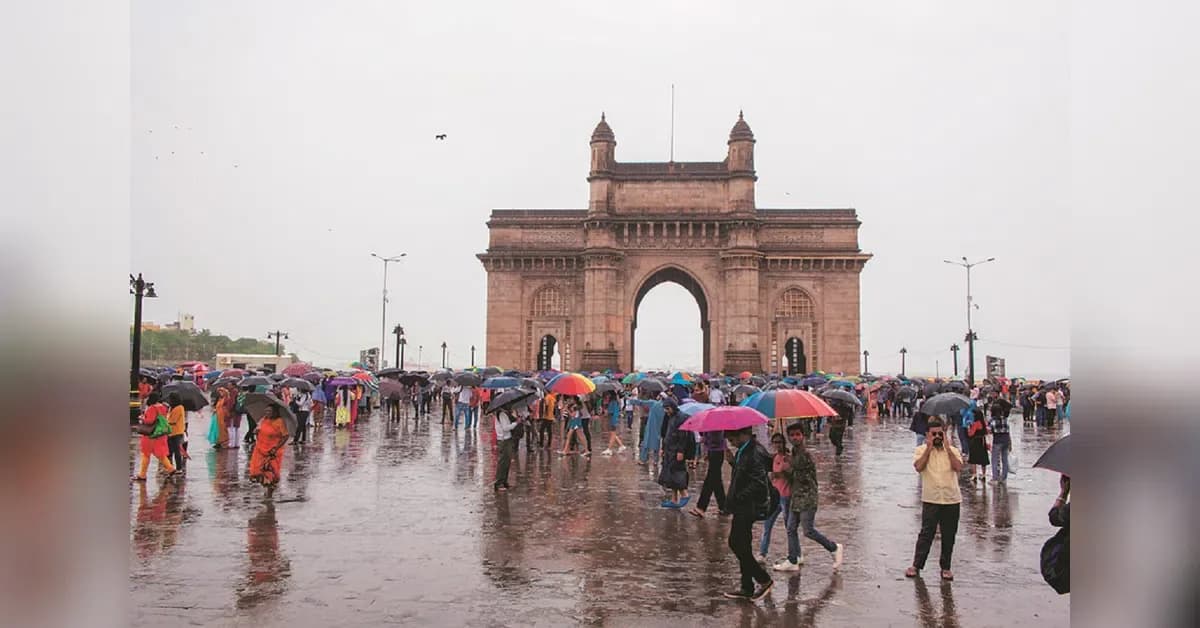
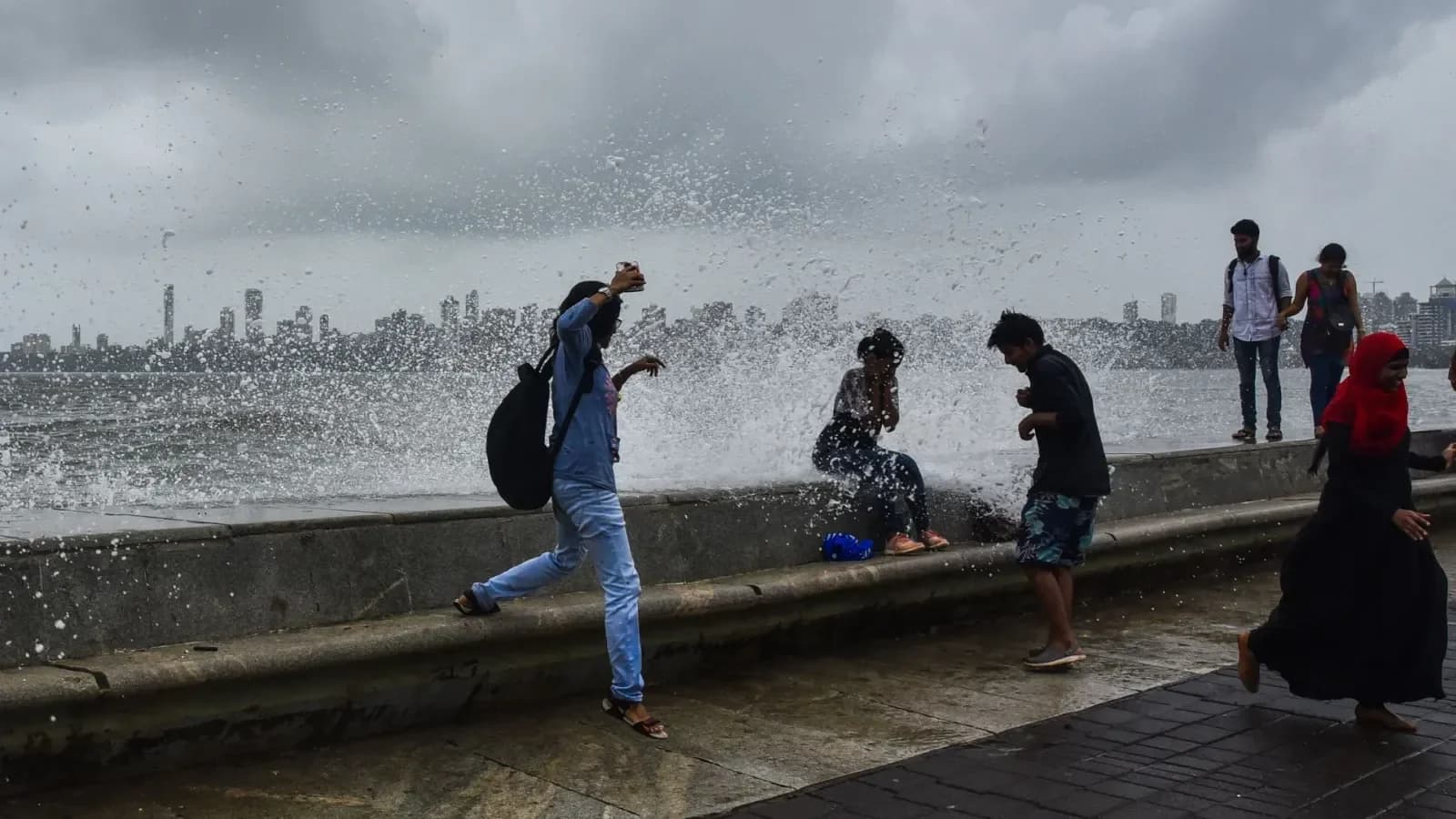
The National Commodity & Derivatives Exchange Limited (NCDEX) has launched India's first exchange-traded weather derivative, called RAINMUMBAI. According to reports from NCDEX, this contract allows businesses and traders to hedge against financial risks from Mumbai's monsoon rainfall, with payouts determined by actual India Meteorological Department (IMD) rainfall data. The derivative is based on the Monsoon Cumulative Deviation Rainfall (CDR), which tracks how far Mumbai's actual monsoon rainfall deviates from its 30-year historical average of 2,206.7 mm. Contracts run across the four monsoon months of June, July, August and September, with the contract becoming SEBI-approved and operational from May 29. RAINMUMBAI is designed to cater for a wide range of participants, mostly those who are directly affected by the situation of monsoon in India, from farmers, construction companies, power utilities, banks with agricultural loan portfolios, and logistic operators. This launch represents the first phase of NCDEX's weather derivatives initiative, with the exchange now expanding to include RAINCHENNAI for Chennai's Northeast Monsoon season.
The RAINCHENNAI contract was launched on Monday, August 31, expanding NCDEX's weather derivatives portfolio to cover Chennai's Northeast Monsoon season. According to CNBC TV18, The Economic Times, The Hindu BusinessLine, and Business Standard, this contract tracks cumulative deviation rainfall (CDR) for Chennai's September to December period, which accounts for nearly 70% of the city's annual rainfall. The contract uses a long-period average (LPA) calculated from the past 50 years of rainfall data as its benchmark, with payouts determined by observed rainfall recorded by IMD stations at Meenambakkam and Nungambakkam. Each contract carries a ₹50 multiplier per millimetre of rainfall deviation, meaning every 1 mm movement in the CDR spot value equates to ₹50 per lot. The contract features a tick size of 1mm, minimum initial margin of 10%, and maximum order size of 50 lots per trade, with all contracts being cash-settled on a T+2 basis. Trading operates Monday to Friday from 10 AM until 11:55 PM depending on the session, with the initial daily price limit (DPL) set at 6% and an enhanced slab of 3% for greater market stability. The last trading day will be the business day immediately preceding the final calendar day of the relevant contract month. As reported by Business Standard, September will be common for both 'RAINMUMBAI' and 'RAINCHNNAI' for continuity, ensuring no break in hedging, with RAINCHENNAI contracts covering the months of September, October, November and December.
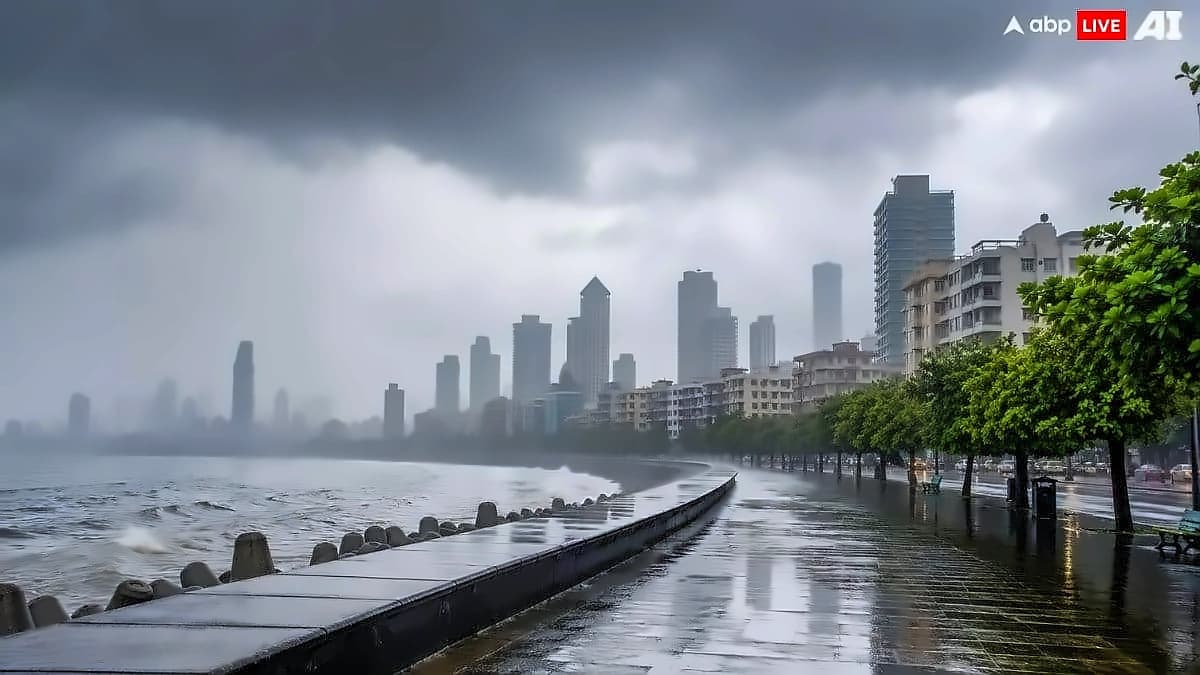
According to NCDEX, the contracts are designed for two distinct weather scenarios. In drought-like conditions, expected buyers include farmers facing yield losses, agri-processors worried about raw material shortages, banks with agricultural loan exposure, and power distributors facing higher procurement costs. Conversely, heavier-than-usual rainfall brings buyers such as construction firms dealing with project delays and cost overruns, beach resorts, outdoor tourism operators, and airlines facing operational disruptions or flight schedule changes. On the selling side, hydropower generators and water-intensive industries like cement and beverages are likely sellers in wetter years, while solar power producers and outdoor event organisers are expected to sell into rainfall deficit scenarios. The exchange emphasizes that RAINMUMBAI hedges against revenue and volume impact caused by rainfall deviation, even when there is no physical crop loss, making it exchange-traded, transparent, highly liquid, and requiring no government intervention for settlement. RAINCHENNAI specifically targets businesses whose revenues or costs are sensitive to rainfall in Chennai's Northeast Monsoon season, without requiring them to demonstrate that a specific weather event caused a specific monetary loss.
The exchange has emphasized 97-100% data availability from IMD's surface observation stations at Santacruz and Colaba for Mumbai contracts, with rainfall data recorded manually at these two rainfall weather stations. As reported by CNBC TV18, The Economic Times, The Hindu BusinessLine, and Business Standard, the methodology behind RAINMUMBAI was developed in collaboration with IIT Bombay and relies on official IMD rainfall observations. The contracts are cash-settled, meaning positions are ultimately settled in money based on the rainfall index, with the final settlement price determined using the CDR spot value on the expiry day. The RAINCHENNAI contract uses a scientifically structured Cumulative Deviation Rainfall model that tracks how actual rainfall at Chennai's Meenambakkam and Nungambakkam stations differs from the Long Period Average, based on decades of IMD data. The broader idea is to turn rainfall—a factor that businesses can't control but which can materially affect their finances—into a measurable risk that can potentially be hedged in the derivatives market. The concept borrows from international weather derivatives, with the Chicago Mercantile Exchange offering similar instruments since 1997, primarily tracking temperature deviations in major American cities. NCDEX describes RAINMUMBAI and RAINCHENNAI as adaptations of this model for Indian conditions, focusing on rainfall deviation rather than temperature for sectors where monsoon rainfall is the dominant economic factor.
According to NCDEX Chief Business Officer Kedar Deshpande, RAINMUMBAI provides India's first regulated tool to manage monsoon uncertainty driven by the Southwest Monsoon from June-September, while RAINCHENNAI extends this framework to the retreating Northeast Monsoon from September-December, which primarily impacts southern India and brings nearly 70% of Chennai's annual rainfall in just four months. As reported by The Economic Times, The Hindu BusinessLine, and Business Standard, together with RAINMUMBAI, it completes a monsoon risk management cycle that runs from June through December, covering both of India's major monsoon systems. The exchange emphasizes that unlike traditional insurance products, weather derivatives are settled purely on observed data, eliminating the need for loss assessment and enabling faster settlement cycles. This enables greater operational efficiency for participants and creates India's complete rainfall risk management ecosystem and building a new asset class for India's climate economy. The two contracts together cover India's two major monsoon patterns: RAINMUMBAI focuses on the June-September Southwest Monsoon, while RAINCHENNAI covers Chennai's September-December Northeast Monsoon season, providing comprehensive weather risk management solutions across India's monsoon regions.