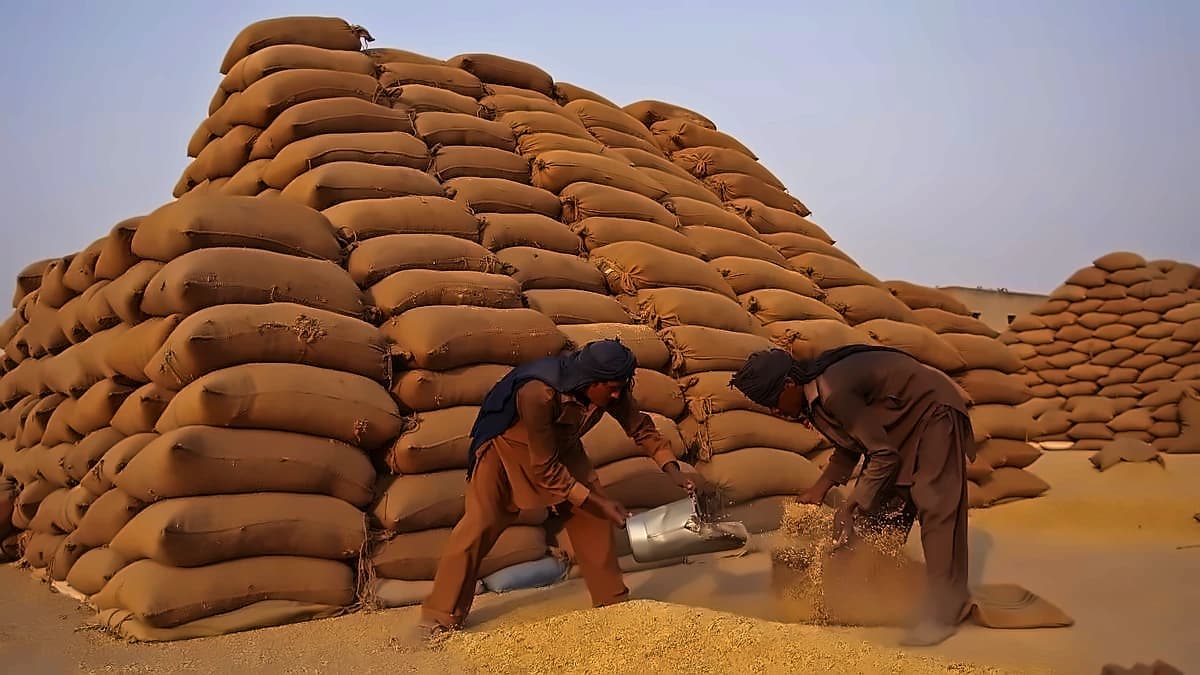
Kharif sowing has shown significant improvement, with the acreage gap between this year and last year narrowing to less than 3% as of the week ended July 31, 2026, down from 5% until July 24, according to the Agriculture Ministry. The total area under kharif crops has reached 894.22 lakh hectares as of July 31, 2026, compared with 920.72 lakh hectares during the corresponding period last year, representing a 2.9% year-on-year decrease. This substantial reduction represents 81% coverage of the season's normal area of 1,104.46 lakh hectares, with the current coverage 21.24 million hectares below normal levels. The higher sowing in the past week has been aided by a 23% surplus in rain from the previous week that created suitable soil conditions for sowing, as reported by The Hindu BusinessLine.

Paddy sowing has shown a notable decline of 2.2% to 301.49 lakh hectares compared to 308.39 lakh hectares a year ago, as reported by The Hindu BusinessLine. The government has set a production target of 123.15 million tonnes of rice for kharif 2026, and there may not be any significant shortfall even if acreage ends up slightly below 2025 levels due to higher area coverage in major growing states. Within pulses, arhar sowing reached 34.91 lakh hectares, down 9% from 38.44 lakh hectares last year, while moong (green gram) was at 29.22 lakh hectares from 32.23 lakh hectares, and urad (black gram) rose to 21.08 lakh hectares from 19.04 lakh hectares. The deficit in pulses has further reduced to 6.3% from 7.5% in the previous week, with the area under all pulses reaching 95.18 lakh hectares against 101.6 lakh hectares a year ago. Urad expanded by 2.03 lakh hectares to reach 2.1 million hectares.
In contrast to the declining trends in major crops, oilseeds acreage has shown encouraging progress with total acreage reaching 172.32 lakh hectares against 171.13 lakh hectares last year, as reported by The Hindu BusinessLine. This marks the first time this season that oilseeds acreage has exceeded the year-ago level, as it was 2% deficient until July 24. The improvement was driven mainly by groundnut (+1.16 lakh hectares) and sesamum (+1.10 lakh hectares), while soybean acreage remained broadly stable with only a marginal decline of 0.84 lakh hectares. Among the 28.92 million tonnes of oilseeds production target, soybean has been aimed at 14.85 million tonnes and groundnut at 11.35 million tonnes. Cotton cultivation has decreased to 103.54 lakh hectares, representing a 2% decline from 106.06 lakh hectares last year, while sugarcane sowing has been completed at 57.58 lakh hectares against 56.72 lakh hectares a year ago.

The sowing lag has narrowed significantly as the monsoon revived across key agricultural states, with India receiving 1% above-normal rainfall during July 1-31, according to The Hindu BusinessLine. The overall monsoon deficit, which was 35% in June, has now been reported at 12% during June 1-August 3, as per India Meteorological Department (IMD) data. The government has fixed a production target of 176.16 million tonnes of foodgrains, including 8.4 million tonnes of pulses, 31.04 million tonnes of maize and 13.56 million tonnes of nutri cereals during Kharif 2026. However, with the IMD predicting a below-normal monsoon even in August, all eyes will now be on the distribution of rainfall in the remaining weeks to see whether India gets a strong kharif harvest this year. Rating agency ICRA estimates that kharif sowing during the remainder of the season needs to grow by around 13% to match last year's final acreage level, which appears slightly high given the recent improvement.