The Indian Tea Association (ITA) has submitted comprehensive white papers to the West Bengal government outlining a roadmap for reviving the state's tea-growing regions. According to reports from Business Standard, the white papers were submitted to Industry Minister Tapas Roy, Finance Minister Swapan Dasgupta, and Subrata Gupta, adviser to the chief minister, by an ITA delegation. The detailed documents examine structural, financial, climatic, labour and market-related challenges confronting Darjeeling, Dooars and Terai tea regions and propose coordinated policy interventions to restore competitiveness and protect livelihoods.
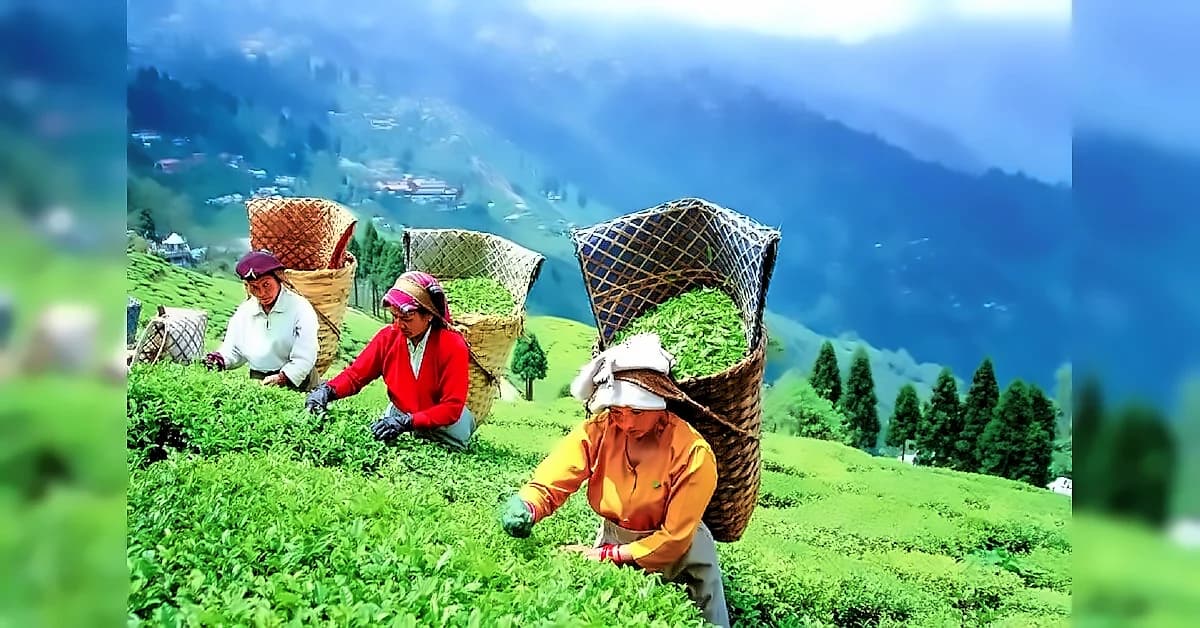
The Darjeeling white paper reveals a dramatic production decline from 14.5 million kg in 1990 to 5.6 million kg in 2025, as reported by Business Standard. The document calls for urgent, targeted intervention to safeguard the globally recognised geographical indication (GI) heritage of Darjeeling tea. The white paper proposes an indicative annual financial support package of approximately ₹113 crore, covering orthodox tea production, working-capital interest support, transport, mechanisation, social-security support, rejuvenation and factory modernisation. The proposed package also includes support for plantation rejuvenation and factory modernisation to address the challenges of ageing tea bushes and declining production capacity.
According to Business Standard, the white papers propose dedicated financial and revival packages, interest subvention, rejuvenation of ageing tea areas, modernisation of manufacturing infrastructure, integration of tea plantations with government welfare and development schemes, appropriate labour and regulatory reforms, support for tea tourism and diversification. The documents also seek granting seasonal-industry status to the Darjeeling tea industry. The ITA has proposed measures to reduce the financial burden on plantations and improve their ability to invest in ageing tea areas and production infrastructure. The association has argued that such measures could provide additional sources of revenue for tea estates while supporting employment and rural economies across North Bengal.
On the market front, the association has proposed a Minimum Sustainable Price for Made Tea to address the gap between production costs and realisations. It has also sought a Minimum Import Price for orthodox teas to protect domestic producers from lower-priced imports. The ITA has recommended rationalisation of GST on ready-to-drink tea products and an increase in RoDTEP support for tea exports to improve the competitiveness of Indian tea in overseas markets. The recommendations come as the tea industry in North Bengal faces pressure on multiple fronts, including rising input and labour costs, ageing tea bushes, climatic challenges, weak market conditions and the need for investment in estates and factories.
As reported by Business Standard, the ITA has presented the White Papers to the West Bengal government in a series of meetings. An ITA delegation met Industry, Commerce & Enterprises Minister Tapas Roy on July 28, Finance Minister Swapan Dasgupta on August 3 and Advisor to the Chief Minister Subrata Gupta on August 24. The association has said the proposed measures are aimed not only at supporting tea producers but also at protecting employment and rural livelihoods dependent on the industry. The ITA has sought continued dialogue with the state government and time-bound implementation of policy measures for the revival of the Darjeeling and Dooars-Terai tea sectors.