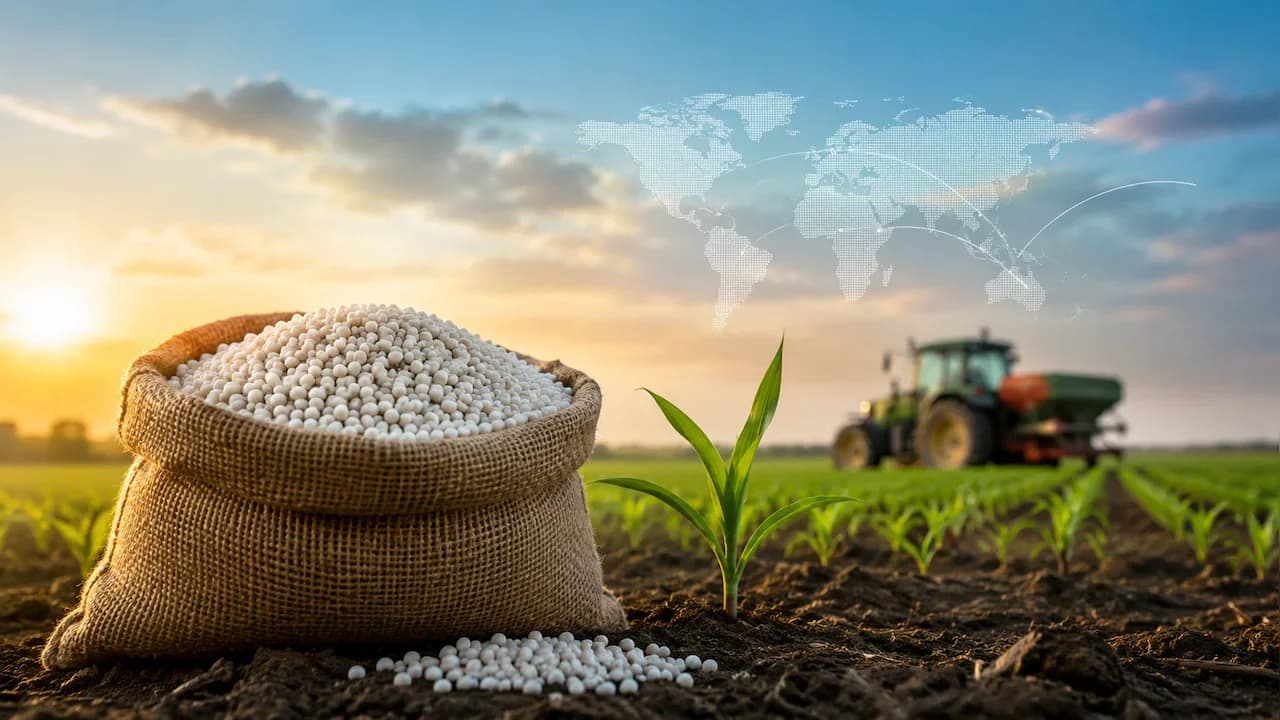
The interruption to fertiliser supplies due to the Iran war could cost up to 10 billion meals a week globally, according to Yara CEO Svein Tore Holsether. Speaking to the BBC, Holsether warned that "we're up to half a million tons of nitrogen fertiliser not being produced in the world right now because of the situation we are in." The fertiliser shortage is particularly severe as up to 50% of crop yields could be lost in the first season without proper fertiliser application. Holsether emphasized that "the main destinations would be Asia, South East Asia, Africa, Latin America where you would see the most immediate impact from this," with parts of sub-Saharan Africa facing "significant drops" in crop yields. The crisis is compounded by the fact that around a third of the world's fertilisers normally pass through the Strait of Hormuz, making the conflict's impact on global food production severe. Holsether has now expanded his warnings, stopping short of predicting actual food shortages in parts of Africa but drawing attention to the possibility of a "global auction on fertiliser that means it becomes unaffordable for those most vulnerable."
The conflict has disrupted supplies passing through the Strait of Hormuz, a key route for roughly a third of the world's fertiliser supply. As reported by ABP Live, Yara International has already reported an 80% increase in fertiliser prices since the conflict began. Analysts at S&P Global Market Intelligence note that restrictions on fuel and fertiliser are already placing pressure on global food supply chains. With 35% of the world's supply of urea, a key ingredient in fertiliser, coming from Gulf states, Yara has seen supplies choked and the price of urea up by between 60% and 70% since the US and Israel launched their war on Iran at the end of February. The Food and Agriculture Organisation (FAO) highlights that the hardest-hit regions include India, Bangladesh, Sri Lanka, Egypt, Sudan and various parts of Sub-Saharan Africa, which are seeing elevated costs, reduced availability, and looming food insecurity. The war that began on February 28th effectively shut down the Strait of Hormuz, with the price of urea, the world's most common nitrogen fertiliser, jumping more than 40% within weeks of the conflict starting.
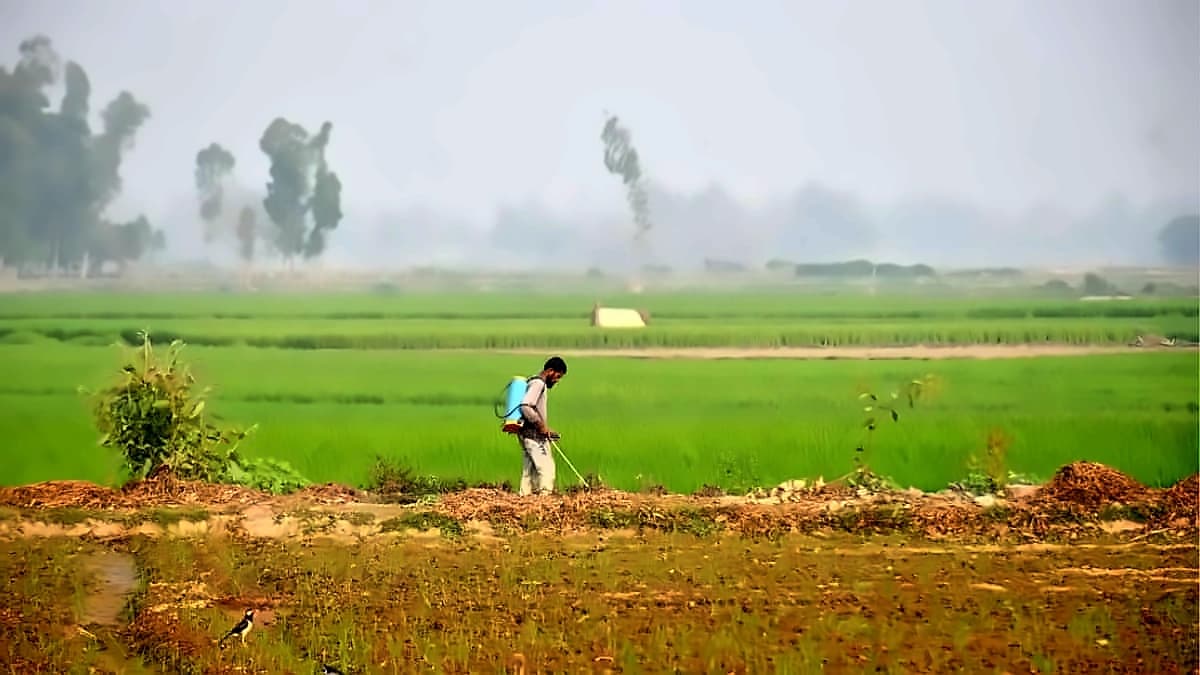
Across Asia, farmers are making difficult decisions as fertiliser shortages threaten the region's food security. In Thailand's rice belt, Suchart Piamsomboon, a 60-year-old farmer from Chachoengsao province, went to buy fertiliser but found it unavailable. "The fertiliser had not arrived. And, he was told, it might not arrive. Even if it did, it would cost over 1,100 baht a sack - a jump from the 800-900 baht it cost just over a month ago. By the time Piamsomboon got home, word was already circulating that prices could even hit 1,200 baht." He decided not to plant this season, choosing to work as a day labourer earning 100-200 baht daily. From Thailand's rice belt to Vietnam's Mekong Delta, farmers across Asia are making similar calculations. The planting season is here, but the fertiliser is not, with decisions in the next few weeks determining how much the world's rice bowl yields at the end of the year. As S&P Global reports, "Food supply chains face both direct and indirect challenges from fuel and fertiliser restrictions" with "the variability in Africa's dependence on Middle East nitrogenous fertilisers is high, with Ethiopia and Kenya heavily exposed in sub-Saharan Africa."
China's decision to halt fertiliser exports has created a cascading effect across Asia, as the country accounts for 25% of global fertiliser output and exported more than $13 billion worth in 2025. In the first quarter of 2026, China accounted for more than half of Vietnam's total fertiliser imports by volume: more than 480,000 tonnes. The Philippines faces an even more precarious position, depending on China for 75% of its fertiliser with almost no domestic production to fall back on. Making matters worse, the Philippines relies on Vietnam for nearly 80% of its rice imports, creating a straight line of dependencies where Filipino consumers rely on Vietnamese rice, and Vietnamese farmers rely on Chinese fertiliser. China's leadership has made grain self-sufficiency a domestic political cornerstone, with a national food security law passed in 2023 requiring local governments to embed food production targets directly into their economic plans. Between half and 80% of China's fertiliser exports are now restricted, with the only fertiliser still exported being ammonium sulfate, a lower-grade industrial byproduct that is a poor substitute for crucial food crop fertilisers.
Analysts warn that the Strait of Hormuz crisis could escalate into a prolonged disruption similar to the eight-year Suez Canal closure from 1967 to 1975. As Lars Jensen, CEO and partner at Vespucci Maritime, told Fox News Digital, "Best case, there is an agreement between the U.S. and Iran within the next few weeks, and the Strait reopens. And it has to be a deal where there is trust that Iran is sufficiently satisfied with the deal such that they do not suddenly close the strait again. Even in that case, it will still take months for the supply chains to revert back to normality." The crisis has already disrupted 30% of the world's seaborne fertiliser supply, with Jensen noting that "Fertilizer is the most important element. Thirty percent of the world's seaborne fertilizer comes from the Persian Gulf." In wealthy countries, it means more expensive food come harvest season, while in poor countries, farmers cannot afford fertiliser, leading to harvest shortfalls and rapid increases in food prices. The United Nations World Food Programme estimates that the combined fallout from the Middle East conflict could push 45 million additional people into acute hunger in 2026, with food insecurity expected to rise by 24% in Asia and the Pacific - the largest relative increase of any region on earth.