
The Middle East conflict has intensified significantly, with U.S. and Israeli strikes on March 2, 2026 killing Iran's Supreme Leader Ayatollah Ali Khamenei, prompting retaliatory attacks on Gulf cities. Brent crude oil prices have jumped by more than 15% this week to above $80 per barrel, representing a 30% gain so far this year. As reported by Reuters, the international benchmark has been driven higher by disruptions to oil supply and transit through the Strait of Hormuz, through which around 20% of global oil consumption passes. Analysts warn that a prolonged conflict could push oil prices to around $100 per barrel, potentially adding 0.6-0.7 percentage points to global inflation. The escalation has moved the conflict from a fringe risk to a top concern for investors, with markets currently pricing in a relatively contained scenario.
The ongoing Middle East conflict is expected to significantly impact pulse prices, with industry officials warning of immediate cost increases. According to The Times of India, Suresh Agarwal, president of the All India Dal Mill Association, stated that if the war continues beyond a week, pulse prices will increase substantially. India imports approximately 5-6 million tonnes of pulses annually, including tur, urad and lentils, primarily from Myanmar, Canada and Africa. The disruption of global trade routes is expected to push up retail prices, creating concerns about food inflation. The escalated conflict, particularly the closure of Iranian routes, is intensifying these supply chain disruptions and cost pressures.
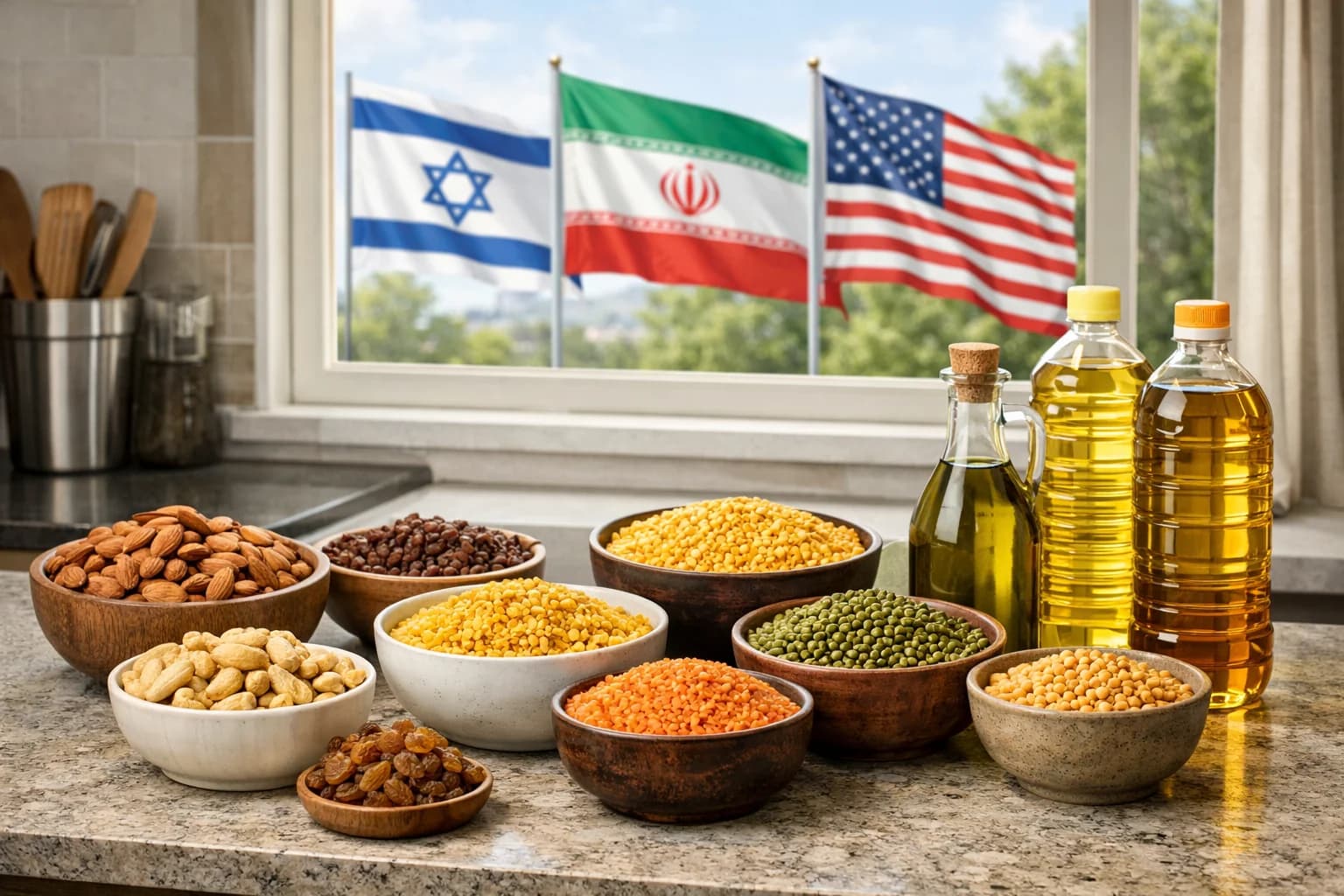
The conflict has created significant disruptions in the dried fruit market, with traders reporting substantial price increases. As reported by The Times of India, Baban Pawar of A-1 Dryfruit noted that Iranian imports like pista, apricot, mamra badam and saffron are costlier by 20-30% on average, with some cases seeing double the previous prices. Specific price increases include mamra almond rising from ₹1,800 to ₹2,800 per kg and iranian pista increasing from ₹840 to ₹1,300. The closure of Iranian routes has forced suppliers to route shipments through alternative channels, creating supply chain bottlenecks. The escalated conflict is expected to further intensify these disruptions and price increases.
While many food items face price pressures, rice prices may offer some relief to consumers. According to The Times of India, the Indian Rice Exporters Federation has advised members not to enter fresh CIF commitments for Iran and Gulf destinations, instead moving to FOB terms to shift freight and insurance costs to international buyers. This shift is expected to soften rice prices as exports to Iran and other Gulf countries face potential disruption, providing some relief for rice-dependent households. The escalated conflict may further strengthen this position as alternative shipping routes become more expensive and unreliable.
The conflict's impact extends beyond staples to processed foods and cooking oils, with cooking oil prices having risen by up to 5% following the rally in crude oil prices. Shankar Thakkar, secretary of the Confederation of All India Traders, noted a 3-5% increase in demand on Monday alone. Petrochemical inputs used in FMCG products and paints account for over 25% of input costs for FMCG companies and about 40% for paint makers. The escalated conflict is expected to exacerbate these inflationary pressures, with analysts warning of potential 0.6-0.7 percentage points to global inflation from prolonged oil price disruptions. The geopolitical uncertainty also poses risks to global trade and investment, potentially undermining the fragile post-pandemic recovery.