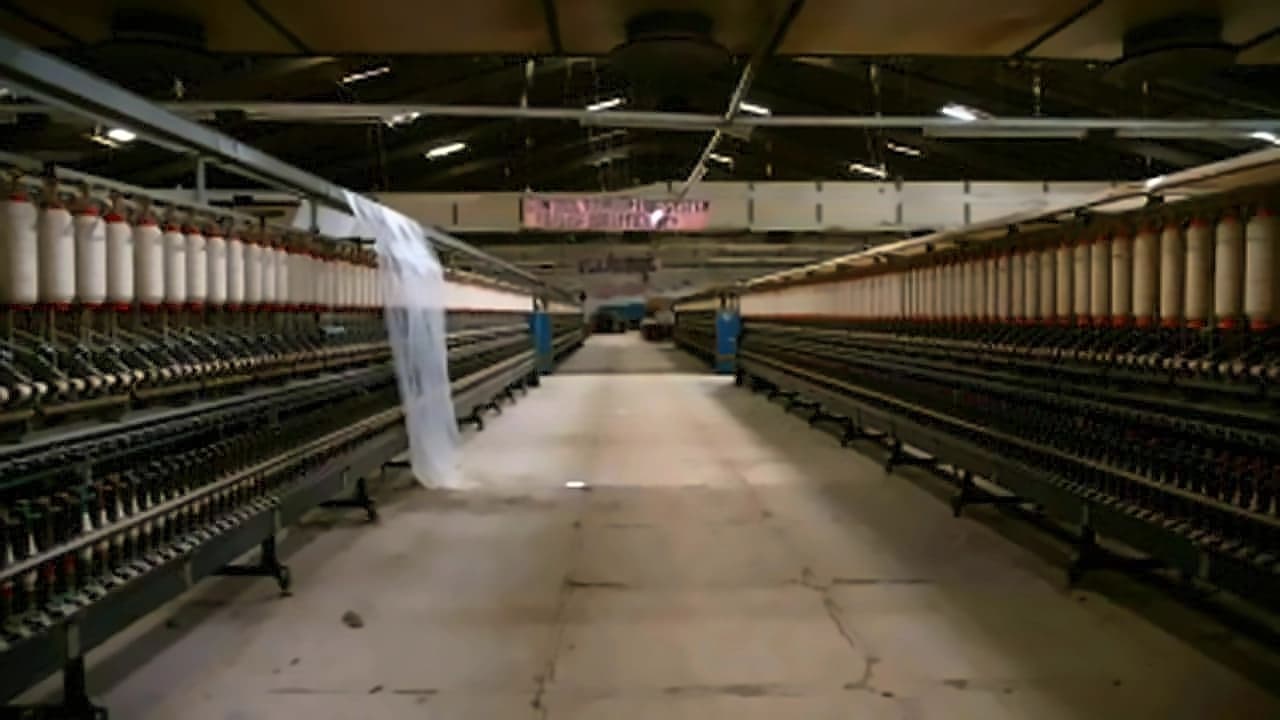
Textile stocks staged a strong recovery on Tuesday, with Raymond leading gains at 10% and briefly hitting a fresh 52-week high of ₹1,193.40 apiece, as per The Economic Times. Pearl Global Industries shares jumped 8%, while Gokaldas Exports gained around 3%, Arvind and Vardhman Textiles rose around 1% each. This marked a significant rebound from Monday's sharp selloff when textile exporters faced significant market pressure as shares of textile companies dropped up to 5% following President Trump's signing of the Russia sanctions bill into law. The US is the single-largest market for India's textile and apparel exporters, making them particularly vulnerable to any tariff escalation under the new legislation.
India faces a 100% tariff threat on its exports to the US following the US House of Representatives' passage of legislation giving President Trump broad powers to impose sanctions on Russia and tariffs on countries buying Russian oil and gas. The new 100% tariffs were approved when Trump signed off on the 'Lindsey O. Graham Sanctioning Russia and Iran Act of 2026'. The Confederation of Indian Textile Industry (CITI) has raised particular concerns about the impact on textile and apparel exports, as the US is the single-largest market for India's textile sector. "Any additional tariffs under this Act will be very difficult to absorb for the MSME-dominated Indian textile and apparel sector already under stress due to several factors, including the continuing turmoil in West Asia," said CITI Chairman Ashwin Chandran. The US imported approximately $104 billion of goods from India in 2025, with two-way US-India trade in goods and services reaching roughly $240 billion.
The textile industry faces severe competitiveness challenges as the 100% tariff threat could make Indian textiles uncompetitive in the US market. In US dollar terms, India's overall textile and apparel exports climbed 6.39% in August 2026 over the same period last year, with textile exports rising 13.03% and apparel exports declining 2.74%. For April-August 2026, India's textile exports rose 6.94% in USD terms, but apparel exports fell 9.10%, leaving cumulative textile and apparel exports marginally lower by 0.24% year-on-year. The CITI chairman emphasized that "We eagerly look forward to the Government of India engaging more closely with the United States to ensure that Indian exporters are not disadvantaged and rendered completely uncompetitive in the world's No. 1 economy."
India's trade deficit outlook has become more challenging as oil prices surged above $108 per barrel following Houthi attacks on Saudi Arabia's East-West pipeline last week, according to Business Standard. The escalating Middle East tensions have created a double whammy effect for emerging Asian currencies, with higher oil prices weighing on energy-importing economies by swelling import bills and worsening trade balances. This development comes as India's goods trade deficit had narrowed by $5.1 billion month-on-month to $26.9 billion in August, driven by improvements in the oil deficit and lower gold imports, as reported by Nuvama Research. The brokerage had expected the trade deficit to stabilise around current levels in the near term, but the latest oil price surge threatens to undermine this stabilisation.
Industry leaders are calling for urgent diplomatic intervention to protect Indian exporters. "We need a fair, balanced, and equitable bilateral trade deal (BTA) between India and the US," said CITI Chairman Ashwin Chandran, noting that India has been negotiating a BTA with the United States for some time now, and is said to be in the final stretches of the talks. The CITI chairman emphasized that "although the Free Trade Agreements (FTAs) signed by India will open new markets for Indian exporters, they cannot substitute for the importance of the US market for the sector." The India-EU FTA is likely to be operational next year, while the Comprehensive Economic and Trade Agreement (CETA) between India and the United Kingdom became effective on July 15, 2026. Looking ahead, Nuvama expects export and import momentum to remain firm in the near term, with strong FCNR inflows providing a cushion and limiting near-term pressure on the Indian rupee, though the brokerage flagged the elevated core trade deficit as an area that warrants close monitoring.