
India currently maintains a combined energy buffer of over 250 million barrels of crude oil and refined petroleum products, equivalent to approximately 4,000 crore litres, according to a government report cited by The Hindu BusinessLine and The Times of India. This stockpile provides seven to eight weeks of coverage across the full supply chain, countering earlier claims that the country holds only 25 days of reserves. The reserves are distributed across underground strategic caverns in Mangalore, Padur, and Visakhapatnam, as well as above-ground tanks, pipelines, and offshore vessels. The report emphasizes that India's energy procurement remains "anchored in national interest," with sourcing diversified across 40 countries compared to 27 a decade ago. While the Strait of Hormuz is a critical global chokepoint, only about 40% of India's crude imports pass through it, while 60% arrive via unaffected alternative routes from Russia, West Africa, the Americas, and Central Asia. As reported by The Times of India, the document states that "the days when India's energy security rose and fell with conditions in a single maritime chokepoint are over," with any disruption leading to a "managed sourcing adjustment, not a supply emergency."
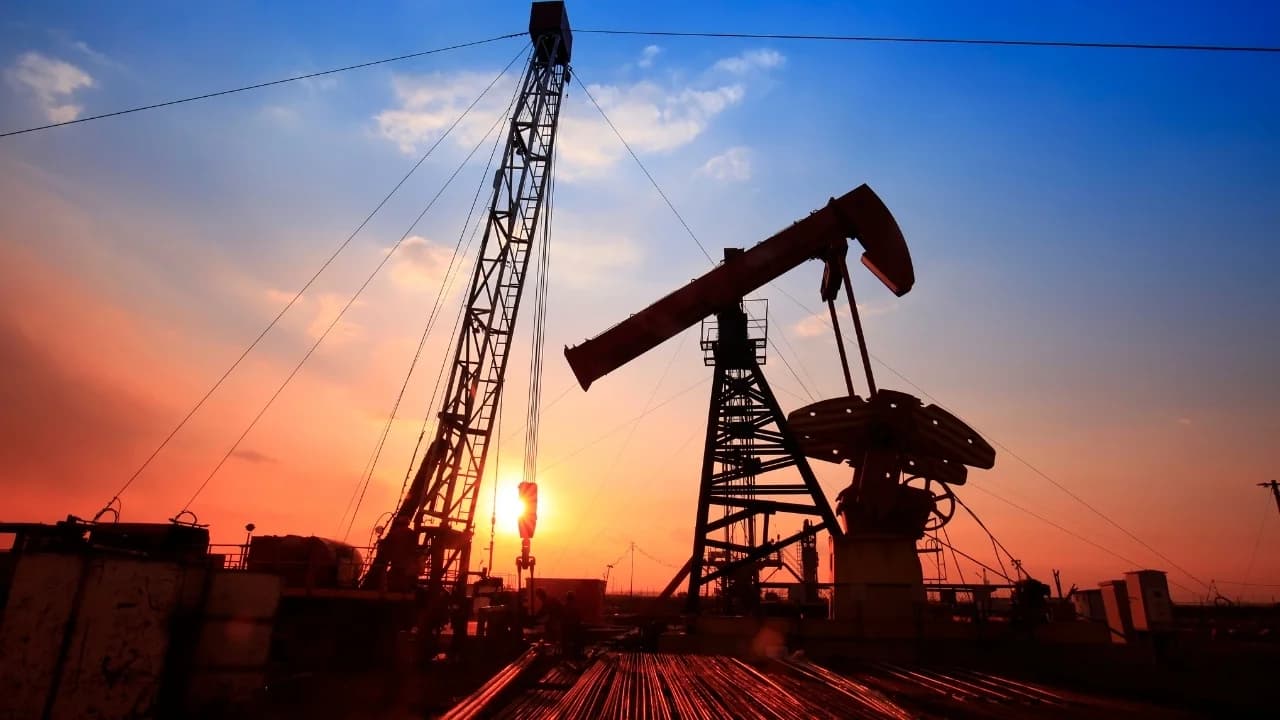
India continues to receive around 1.04 MBD of crude oil from Russia, as reported by CNBC-TV18 sources, with Russia remaining India's largest crude oil supplier as of February 2026. Despite international geopolitical pressure over the last three years, the report clarifies that "India has never depended on permission from any country to buy Russian oil. India is still importing Russian oil even in February 2026, and Russia is still India's largest crude oil supplier," and has complied with all G7 price cap rules. A recent 30-day waiver from the US Treasury permitting continued purchases removes friction that was never in anyone's interest to sustain and recognizes India's role in stabilizing global markets. The ongoing conflict has pushed up international gas prices, with QatarEnergy announcing an immediate halt in production at its major facilities in Ras Laffan and Mesaieed following regional drone strikes. As reported by The Times of India, the document notes that "despite geopolitical pressure in recent years, India has maintained purchases while complying with the G7 price cap rules," with the move "removing a friction that was never in anyone's interest to sustain" and acknowledging India's contribution to stabilizing global energy markets.
India is very comfortable with LNG for the next two to three weeks, according to government sources cited by CNBC-TV18. The country has diversified its LPG sourcing from Norway, US, and other markets. The LPG supply from the US has already started from January, with sources indicating they are already looking at alternative supplies for everything. The Indian government is comfortably placed with its LPG (Liquefied Petroleum Gas) supply chains, another source told Business Today, citing a diversified sourcing strategy. The sources said they do not think Qatar LNG will be off the market for too long; it is currently on a pause. India saw its imports growing by 10% during the same period as reported by BW LPG earnings call, driven by higher cargo flows from the US, increasing the ton-mile compared to the traditional sourcing of LPG from the Middle East. The US does not have enough production and export capacity to meet the shortfall of the Middle Eastern exports, raising concern for Asian hydrocarbon consumers if Middle East supply does not resume promptly, according to BW LPG management. As reported by The Times of India, the report highlights that LPG and LNG could prove more sensitive than crude oil, unlike crude which can be stored in large underground caverns, natural gas requires specialized high-pressure storage infrastructure, limiting the duration of available buffers.
On the domestic front, the 20% ethanol blending programme now displaces roughly 44 million barrels of crude oil annually, while domestic refining capacity has reached 258 million metric tonne per annum (mmtpa), exceeding the national consumption demand of 210 to 230 mmtpa. This infrastructure allowed Indian refiners to bridge fuel gaps in Europe following sanctions on Russian crude. The report emphasizes that "Indian refiners do not depend on a fixed slate from a fixed origin," citing this flexibility as a primary security asset. Citing data from the Petroleum Planning and Analysis Cell, the report shows that retail fuel prices in India remained stable for four consecutive years. Between February 2022 and February 2026, petrol prices in Delhi decreased by 0.67%, while they rose by 55% in Pakistan and 22% in Germany. To maintain these rates, public sector oil companies absorbed losses of ₹24,500 crore for petrol and diesel, and approximately ₹40,000 crore for LPG. As reported by The Times of India, the document concludes that "decisions in the sector are assessed on the basis of "affordability, availability, and sustainability," while also noting that "no fuel pump outlet in the country has run dry over the past twelve years."
As much as 40% of India's supplies are from the Strait of Hormuz, while 60% is from elsewhere, as reported by CNBC-TV18 sources. The tankers are currently anchored in the waters of Hormuz, though the problem lies in insurance. Sources indicated they will know more in a few days because of how the negotiations take place. India sources approximately 40% of its crude oil imports through the Strait of Hormuz, while the remaining 60% comes from alternative routes and suppliers, a senior government official told Business Today on condition of anonymity. While the government remains confident about its reserves and diversified supply chains, analysts tracking the energy sector caution that LPG and LNG could prove more sensitive than crude oil. Unlike crude, which can be stored in large underground caverns, natural gas requires specialized high-pressure storage infrastructure, limiting the duration of available buffers. The US Treasury yields moved higher as investors reassessed inflation risks, with elevated oil prices potentially complicating expectations for further Federal Reserve rate cuts.