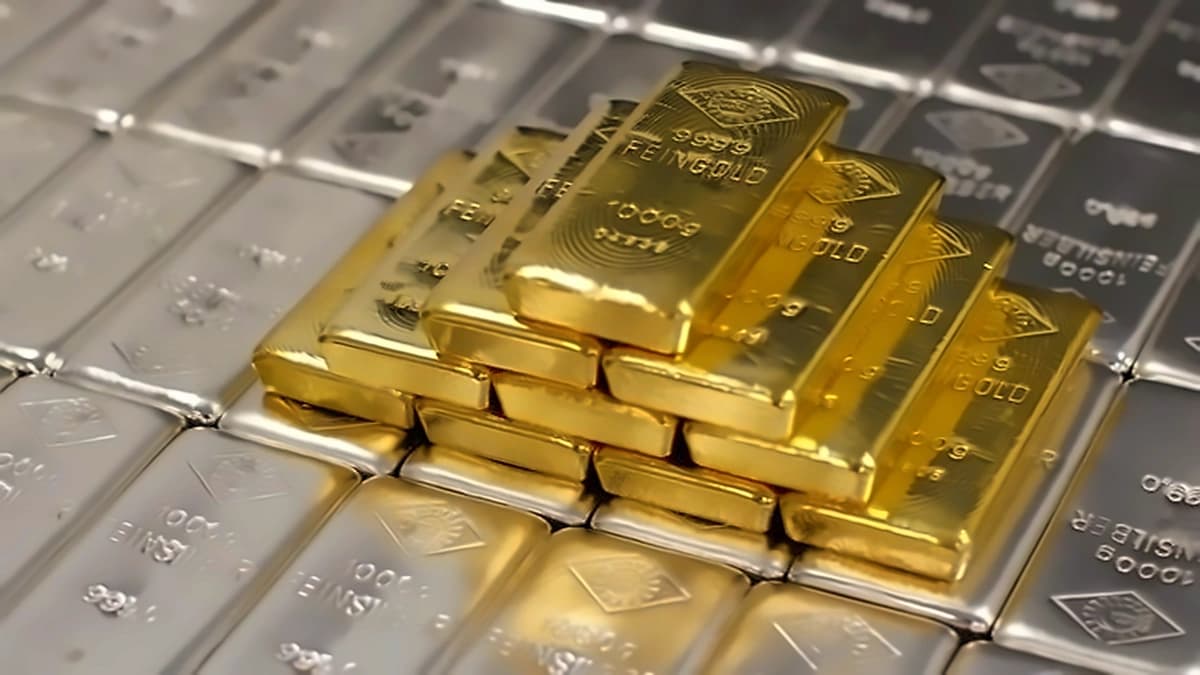
Silver prices surged to ₹2.95,805 per kg on May 13, hitting the 6% upper circuit limit as investors reacted to India's decision to sharply increase import duties on precious metals. Gold also reached ₹1.62,648 per 10 grams, marking a significant rally from previous levels. According to CNBC TV18, silver prices on the Multi Commodity Exchange (MCX) jumped to their 6% upper circuit limit of ₹2.95 lakh per kg, while gold prices also touched the 6% upper circuit at ₹1.62 lakh per 10 grams. In the international market, spot silver rose 1% to $87.40 per ounce, while spot gold traded near $4,713.39 per ounce. US gold futures for June delivery climbed 0.7% to $4,721.80 per ounce, reflecting strong global support amid inflation and geopolitical tensions. The surge comes as MCX gold and silver contracts have a maximum daily price limit of 9% in either direction, with the exchange able to relax circuit limits in additional 3% bands if international prices move beyond those levels.
Silver prices surged more than 6% to $85.5 an ounce on Monday, recovering from early-session losses to touch their highest level in nearly two months as escalating geopolitical tensions boosted demand for safe-haven assets. Investor sentiment turned cautious after US President Donald Trump rejected Iran's latest peace proposal as "totally unacceptable", raising fears of renewed conflict in West Asia. Fresh attacks over the weekend also threatened the fragile ceasefire reached in April, while the continued blockade of the Strait of Hormuz kept crude oil prices elevated and added to worries over global inflationary pressures. The rally in precious metals came as markets reassessed expectations for US monetary policy, with hopes of two Federal Reserve rate cuts this year having weakened significantly.
Shares of jewellery companies crashed by up to 10% on May 11 following Prime Minister Narendra Modi's appeal to citizens not to buy gold for one year, as reported by CNBC. Kalyan Jewellers and Senco Gold crashed by 10-10%, while Titan, the country's largest jewellery company, fell by 7%. Other major players including PN Gadgil fell 8% and Thangamayil Jewellery 6%, with smaller jewellery shares also witnessing significant weakness. According to CNBC TV18, Surendra Mehta, national secretary at the India Bullion and Jewellers Association, said the government has raised duties to curb the current account deficit. However, this could affect demand, as gold and silver prices were already elevated. Representatives of the Jewellery Association will meet with Prime Minister's Office officials on Tuesday to discuss the impact of these statements. Jewellery players expect the recent duty hike on gold to impact imports, with industry executives indicating a likely 10-15 per cent reduction in gold imports going ahead, as reported by The Indian Express.
The government has raised import duties on gold and silver to 15% from 6% as part of efforts to conserve foreign exchange amid a widening import bill triggered by the West Asia crisis. Under the revised structure, the government imposed a 10% basic customs duty along with a 5% Agriculture Infrastructure and Development Cess (AIDC) on imports of the two precious metals. As per CNBC TV18, the move is expected to cool demand in India, the world's second-largest consumer of gold, while helping narrow the trade deficit and support the rupee. India on average imports 700 tonnes of gold annually, putting pressure on the current account deficit at a time when the war has driven crude oil prices by 45% through $107 a barrel. According to Kotak Mahindra AMC fund manager Satish Dondapati, investors long hold and silver exchange traded funds will engage in profit booking which might result in prices rising by a little less than 9%. Naveen Mathur from Anand Rathi expects a spate of short covering and margin calls as derivatives prices move up to the extent of the duty hike, noting that bears will be severely impacted today as this is a permanent hike. Despite elevated duties, companies remain confident of achieving their FY27 value growth guidance of 20-25 per cent, while industry participants are preparing for at least a year of high import duties on gold.
The active June contract on MCX had 9,530 lots outstanding or open, while the active silver contract had 7,693 lots open. According to The Times of India, there is likely to be a reduction in open positions with price increases as the shorts cover their positions. Since for every buyer there has to be a seller, the open position means there are 9,530 longs and shorts each on gold in MCX. As hedgers, who are bullion dealers, refiners and jewellers, forward sell gold and silver, they are likely to cover some of the shorts, with losses on futures offset by price hikes in the spot market. Financial investors or speculators who have gone long bullion will benefit while those short will face losses. The sector is also witnessing a shift in consumer behaviour, with customers increasingly expected to exchange old gold for new jewellery purchases, as reported by The Indian Express.
Prime Minister Modi on Sunday emphasised the need to reduce expenditure on imported fuel, unnecessary international travel and gold purchases to help strengthen the country's economic position and conserve foreign exchange reserves, as reported by The Times of India. India imports over 85 per cent of its energy needs and remains one of the world's largest importers of gold, with imports of the precious metal often contributing significantly to the country's trade deficit. International travel and overseas spending have also seen a sharp recovery after the pandemic years, adding to foreign exchange outflows. According to Reuters, India's gold imports in April could reach their lowest level in three decades, with banks having halted shipments after suddenly being asked to pay 3% Integrated GST. India is the world's second-largest gold consumer, with fiscal year 2026 imports averaging 60 tons per month, costing approximately $6 billion, or around ₹57,000 crore, per month. Bullion dealers also warned that higher import taxes could revive gold smuggling, which had eased after tariff cuts in mid-2024, as reported by CNBC TV18. The duty changes also cover precious metal findings and recyclable waste, with gold and silver findings attracting 5% customs duty, platinum findings 5.4%, and spent catalysts, ash and residues containing precious metals meant for recycling attracting a concessional 4.35% duty.