
The government has invoked the Essential Commodities Act to ensure uninterrupted LPG supply following the ongoing US-Israel-Iran war that has disrupted global energy supplies. According to CNBC TV18, all oil refining companies and public sector oil marketing companies (OMCs) have been directed to prioritise the production and uninterrupted supply of Liquefied Petroleum Gas (LPG) for domestic consumers. In an order issued by the Petroleum Ministry, all oil refiners operating in India have been asked to maximise the utilisation of propane and butane streams for LPG production and ensure that the output is made available exclusively to the three public sector OMCs— Indian Oil Corporation (IOCL), Bharat Petroleum (BPCL) and Hindustan Petroleum (HPCL). The directive has come into force with immediate effect and will remain operational until further orders from the central government.
The government has mandated that refiners must utilise all propane and butane streams produced, recovered or fractionated at their facilities for LPG production and have been barred from diverting these streams for petrochemical manufacturing or other downstream derivatives. As per CNBC TV18, "All oil refining companies shall not divert, utilise, process, crack, convert or otherwise employ propane or butane streams for manufacture of petrochemical products or other such downstream derivatives," the order stated. Public sector OMCs have also been directed to ensure that the LPG procured under this mechanism is supplied solely to domestic LPG consumers, with the ministry warning that any violation of the order will attract action under the Essential Commodities Act, 1955, the Petroleum Products (Maintenance of Production, Storage and Supply) Order, 1999, and other applicable laws. More than 99% of the domestic LPG consumed in India is supplied to households by the three public sector OMCs, making this a critical supply chain protection measure.
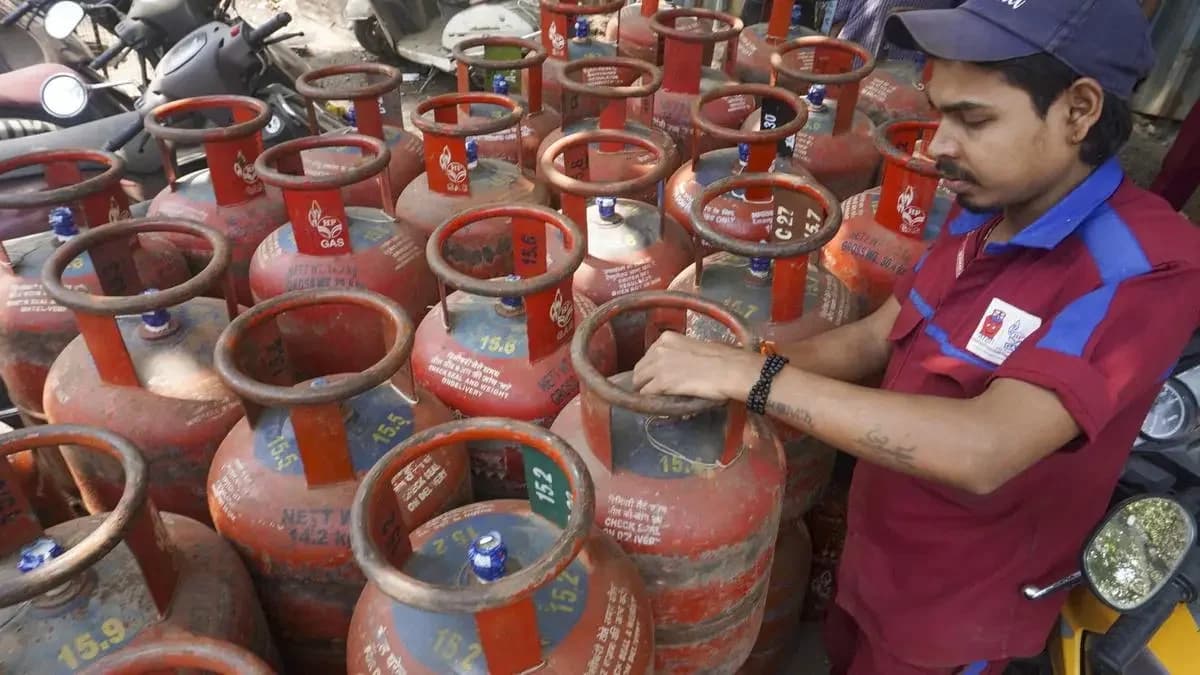
Indian families face the prospect of an acute cooking gas shortage in the coming weeks as war traps supplies of liquefied petroleum gas in the Persian Gulf. India's most immediate crunch will be in LPG — a niche fuel, but one where a shortfall will hit tens of millions of homes. The crisis can only be averted if cargoes that had been due in March start moving within days, according to people familiar with the matter. India may only have up to 10 days of LPG stocks to cover demand as the country scrambles for cargoes outside of the Mideast Gulf, with the Iran-US conflict effectively drying up exports from the region. Around 90% of LPG is consumed in households for cooking, with India having around 33.08 crore active domestic consumers, which includes around 10.51 crore beneficiaries under the PM Ujjwala Yojana (PMUY). The compulsory diversion of propane and butane toward LPG production is expected to reduce the output of alkylates, a component used in blending gasoline, particularly affecting production by Reliance Industries Ltd.
A senior government official said that even Washington does not want high energy prices with US midterm elections taking place this year, with President Donald Trump highly motivated to keep a lid on domestic gasoline prices. According to The Hindu BusinessLine, should MEG supply disruptions materialise on a more significant scale, India would likely be the first destination seeking prompt replacement barrels. Such replacement could likely come from the US Gulf Coast, where LPG exports reached a dataset high this January at 2.34 million barrels, with PADD 3 propane stocks continuing to sustain seasonal highs this year, tracing around 20 million barrels above last year's levels as of late February. The ballasting of vessels will create a short-term squeeze in vessel availability, triggering volatility in rates, though Drewry expects vessel availability to rise in the US Gulf, which, along with the sustained Hormuz blockade, would limit cargo availability and weaken rates. India has around 25 days of crude oil inventory and 25 days of petrol and diesel inventory at present, including strategic reserves, which could theoretically cover around 40-45 days of imports in a crude disruption scenario.
India has approached the United States to arrange maritime insurance protection for vessels transporting oil from the Middle East as the country seeks to maintain stable energy supplies beyond its existing reserves. According to The Times of India, the ministry is currently holding discussions with leading producers and trading firms to secure supplies of crude oil, LPG and liquefied natural gas (LNG). "We are in touch with US authorities for getting a cover from the International Development Finance Corporation for vessels to transit the Strait of Hormuz," an official said. However, the official noted that before the IDFC can offer such coverage, a fund worth several hundred million dollars must first be created to support the insurance mechanism, with the insurance premium to be borne by the parties involved in cargo contracts. The government is also negotiating with suppliers such as Sonatrach and Abu Dhabi National Oil Company, along with global trading houses including TotalEnergies, Vitol and Trafigura to secure additional oil and gas shipments. India has increased its imports of crude oil and LPG from the United States, with the country importing $13.9 billion worth of LPG from West Asia in 2025, which is 46.9% of its LPG imports.