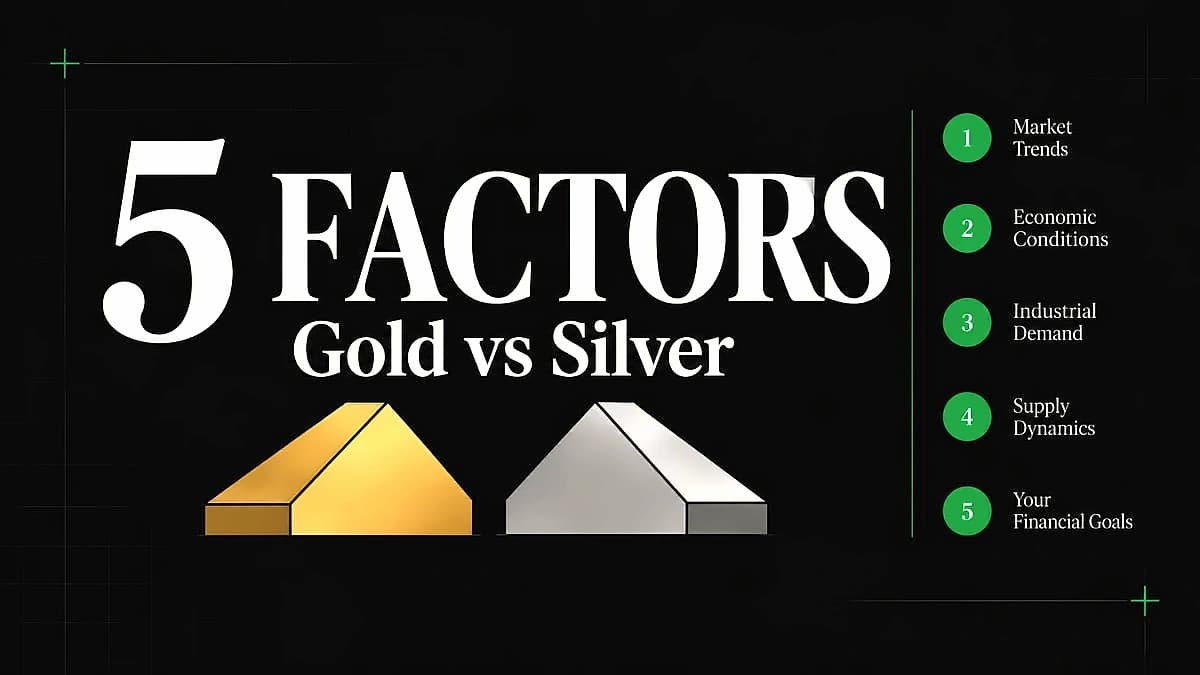
Silver prices tumbled 5% to $64.7 an ounce while gold fell nearly 2% to $4,247 per ounce in the latest trading session, according to Saxo Bank reports. The decline pushed silver below its closely watched 200-day moving average for the first time since April 2025, marking a significant technical breakdown. Silver futures for July 2026 deliveries tanked nearly 6% while gold futures for February 2026 fell 2.3%, showing even weaker momentum in derivatives markets. The gold-to-silver ratio reached its highest level in two months, with silver underperforming gold and adding to weakness across precious metals markets.
According to the HDFC Mutual Fund NFO presentation, gold delivered negative returns in only four of the 26 financial years from FY01 to FY26: FY01, FY14, FY15, and FY17. The precious metal's steepest decline was 10.8% in FY14. At the other end of the spectrum, gold delivered its highest return of 63.3% in FY26, followed by FY25 and FY06. The Nifty 50 TRI delivered negative returns in eight of the 26 financial years, with gold remaining in positive territory in most of these years. In FY09, when the Nifty 50 TRI recorded its steepest decline of 35.4%, gold gained 26.8%.
Silver has shown more frequent swings than gold, delivering negative returns in 11 of the 26 financial years, with its steepest decline of 23.2% in FY14, followed by FY15 and FY18. However, silver recorded some of the strongest gains among the three asset classes, with its return standing at 127.5% in FY26, the highest in the period, followed by 114.4% in FY11. According to Saxo Bank's Ole Hansen, the decline was driven by growing concerns over higher interest rates dampening investor appetite, with the failed rally suggesting sellers remain in control for now.
The latest technical breakdown shows silver's failed attempt to break above $64.7 as gold's rally above $4,350 was firmly rejected, reinforcing the bearish technical outlook. As per Commerzbank, if U.S. inflation data for May comes in higher than expected on Wednesday, gold prices could face further pressure. According to a Morningstar report, economists expect May inflation to remain elevated as higher energy costs continue to push up prices across several sectors. Despite the sharp decline, retail sentiment surrounding SPDR Gold Shares ETF (GLD) remained 'bullish' over the past 24 hours, while sentiment for iShares Silver Trust (SLV) trended in the 'bearish' territory. GLD has declined more than 3% so far this year, while SLV has fallen more than 10%.
The data shows that only one year in the period when both gold and the Nifty 50 TRI posted negative returns was FY01, when gold fell 1.2% compared with a 24.2% decline in the Nifty 50 TRI. This low correlation pattern suggests that both precious metals can serve as effective shields during market volatility and provide diversification benefits for investors' portfolios. The analysis covers the period from FY01 to FY26, capturing both bull and bear market cycles across different economic environments.