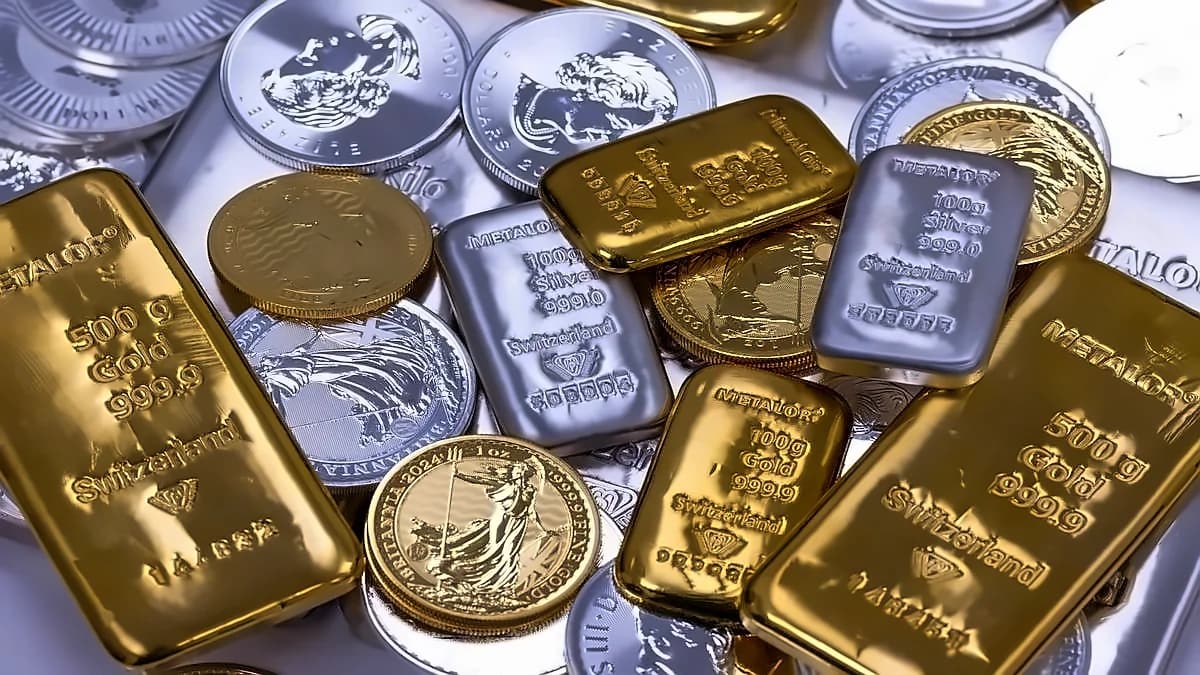
Gold prices remain above $4,350 per ounce following the latest US-Iran developments, with the precious metal showing resilience despite recent volatility. Gold sold off to a six-month low of $4,023 on June 11 before rebounding sharply above $4,350, demonstrating the metal's ability to recover from significant downswings. According to Business Standard, the divergence between international and domestic prices is notable, with spot gold down nearly 4% in June while MCX gold is down only 2%. On a year-to-date basis, the gap widens further as spot gold is roughly flat while MCX gold is up around 12%, largely explained by the rupee's nearly 5% depreciation and customs duty hikes cushioning domestic prices. Gold futures are currently trading in a consolidation phase above the key support zone near 149,500, with the long-term trend remaining constructive as prices continue to trade well above the 200-day moving average.
Markets have significantly pared back expectations for a Fed rate hike in December to 56-57% from around 70% last week following the US-Iran peace deal, according to the CME FedWatch tool as reported by Business Standard. December rate-hike expectations have already eased to around 56-57% from near 70% a week earlier as the Hormuz de-escalation works through the same transmission chain. The May CPI print confirmed the impact directly, with headline inflation accelerating to 4.2% year-on-year, the highest since April 2023, driven largely by Hormuz-linked energy costs. A dovish surprise or a dot plot pulling back from the rate-hike path would trigger a sharp pullback in the dollar and be unambiguously supportive for gold, potentially validating the recent recovery and reopening the path toward the $4,400-4,600 zone. A hawkish read, particularly if Warsh signals skepticism that the inflation backdrop is easing meaningfully, would reassert the headwind that drove gold toward $4,000 just last week.
The reversal from the war's impact on gold worked through the same mechanism in reverse, with oil reacting first and hardest as Washington and Tehran signalled an interim arrangement to halt hostilities. Brent and WTI crude lost nearly 15% in four sessions as markets priced in normalized flows through the Strait of Hormuz, with Brent crude futures dropping below $80 a barrel for the first time since early March, after sinking nearly 5% on Monday on the announcement of the interim deal. The dollar and Treasury yields softened in step, helping fuel a relief rally in precious metals, with swap markets following suit as December rate-cut odds swung from roughly 80% to 60% within days as easing energy prices took some of the edge off inflation expectations. The agreement would extend a tenuous ceasefire agreed upon in April by another 60 days and reopen the Strait of Hormuz, which Tehran has effectively blocked since the U.S. and Israel attacked Iran in February.
Spot silver rose 0.46% to $70.335 per ounce, showing continued strength amid the broader precious metals rally, according to CNBC TV18. Platinum gained 0.9% to $1,819.45, and palladium was up 0.6% to $1,360.32, with the precious metals complex benefiting from the reduced geopolitical tensions. "Gold continues to draw support from expectations of lower real interest rates, which enhance its appeal as a non-yielding asset," noted CNBC TV18. Silver, meanwhile, tracked gold's strength while also benefiting from improved sentiment across industrial-linked commodities. "A record 45% of the reserve managers surveyed by the World Gold Council expect to increase their own institutions' gold holdings over the next 12 months," according to the international organization, as reported by The Economic Times. "A World Gold Council survey showed that nearly half of global reserve managers expect to increase their gold holdings over the next 12 months, reinforcing the metal's role as a long-term strategic hedge," according to CNBC TV18. "China extended its streak of reserve accumulation to nineteen straight months in May," with structural support remaining intact regardless of immediate volatility.
Today's FOMC decision represents the most important data point on the calendar, as this is Fed Chair Kevin Warsh's first meeting at the helm, with markets parsing both the rate decision and accompanying economic projections for the clearest signal yet of policy direction. The Summary of Economic Projections will be decisive, as a median dot showing even one hike in 2026 would mark a meaningfully hawkish revision from March's outlook. If crude's slide persists, the same oil-to-inflation transmission that pressured bullion during escalation should flip to support gold and silver, as lower energy-driven inflation expectations reduce Fed tightening odds, compress real yields, and weaken the dollar. Underlying demand trends remain supportive, with the precious metals complex benefiting from the combination of reduced geopolitical tensions and expectations of continued monetary policy accommodation. The structural floor beneath gold remains intact, with China extending its streak of reserve accumulation to nineteen straight months and the World Gold Council reporting that 45% of global reserve managers intend to add to gold holdings over the next year.