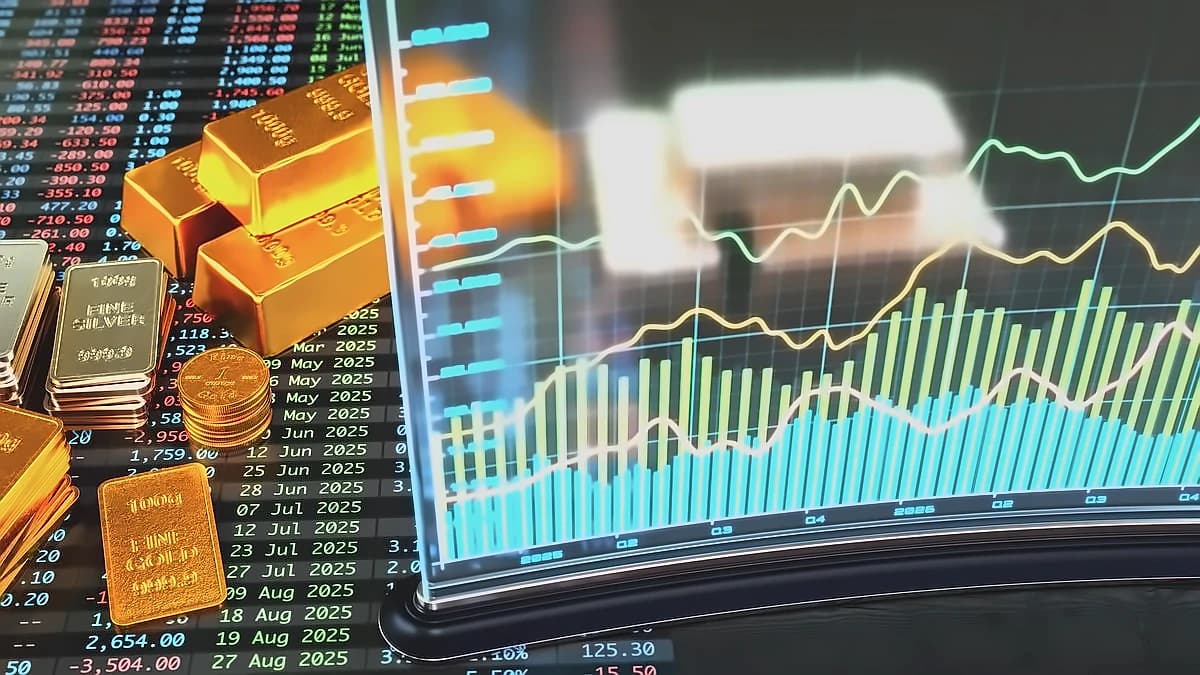
Gold prices tumbled more than 1.60% on Tuesday as the US Dollar strengthened following renewed military activity in southern Iran. According to latest reports, gold traded below the $4,500 mark after reaching a daily high of $4,580, marking a significant decline from the previous session's steady levels near $4,575. The precious metal's decline came as the US Dollar Index (DXY) rose 0.17% to 99.17, with the greenback benefiting from renewed haven demand following US strikes in southern Iran. US Secretary of State Marco Rubio poured cold water on risk appetite, saying that reaching a deal could 'take a few days', as military activity resumed with Tehran claiming the US broke the ceasefire deal while Washington argued they conducted defensive attacks aimed at destroying missile launchers and boats attempting to lay mines in the Strait of Hormuz.
Washington and Tehran reached a deal to extend the ongoing ceasefire for 60 days, as reported by Nikkei, with the agreement revealing that Iran would clear mines from the Strait of Hormuz within 30 days, restore passage for all ships, and end transit fees. The deal also includes nuclear talks to resume during the 60-day ceasefire, while Washington would gradually ease sanctions on Iranian assets. However, military activity resumed in southern Iran, as Tehran claimed that the US broke the ceasefire deal, potentially complicating efforts to bring the war to a close. Optimism over a possible reopening of the Strait of Hormuz pushed Brent crude sharply lower, easing fears of energy-led inflation and supporting precious metals, though the latest developments have created uncertainty in markets.
The Conference Board's Consumer Confidence Index fell to 93.1 in May, though it still beat economists' forecast of 92, according to Bloomberg's poll. The survey highlighted growing consumer anxiety, with two-thirds of respondents reporting reduced spending due to higher prices. US equities pared their gains as risk appetite turned sour, pushing investors towards the safety of the US Dollar. Easing inflation concerns were also reflected in US Treasury yields, with the policy-sensitive two-year note slipping nearly four basis points to 4.074%. Money markets had priced in a 58% chance of a Federal Reserve rate hike towards the end of the year, while for the June meeting, traders priced in a 99% chance for a hold on Kevin Warsh's first meeting as the Fed Chair.
Investors are awaiting the US Personal Consumption Expenditures (PCE) data for April due on Thursday, which will provide additional cues on U.S. monetary policy. A stronger than expected inflation reading would likely strengthen the dollar and could quickly send gold back towards the $4,500 support level. Gold fell under the $4,500 threshold, poised to test $4,453, the recent cycle low, which, if broken, could push the yellow metal towards the 200-day Simple Moving Average at $4,387. The Relative Strength Index (RSI) suggests further downside as it approaches oversold territory. For a bullish recovery, buyers must reclaim the $4,500 mark before testing the $4,550 psychological level, with a breach of the latter exposing the $4,600 figure and challenging the 50-day SMA at $4,647.

Central banks added 1,136 tonnes of gold worth around $70 billion to reserves in 2022, according to the World Gold Council, the largest annual purchase on record. Recent data confirms that central banks continued their aggressive purchasing in the first quarter of 2026, adding another 290 tonnes to global reserves. This consistent demand from official sources provides a solid floor under the market and limits the potential for a deep correction. Technically, the market witnessed short covering as open interest declined by 11.7% to 4,943 lots while prices gained ₹402, with gold currently holding support at ₹158,830. A break below this level could drag prices toward ₹158,585, while resistance is seen at ₹159,410. Given the current high price levels, market analysts are holding a small number of out-of-the-money puts as a low-cost hedge against core long positions, as the current high price makes gold vulnerable to sharp pullbacks on any negative news.