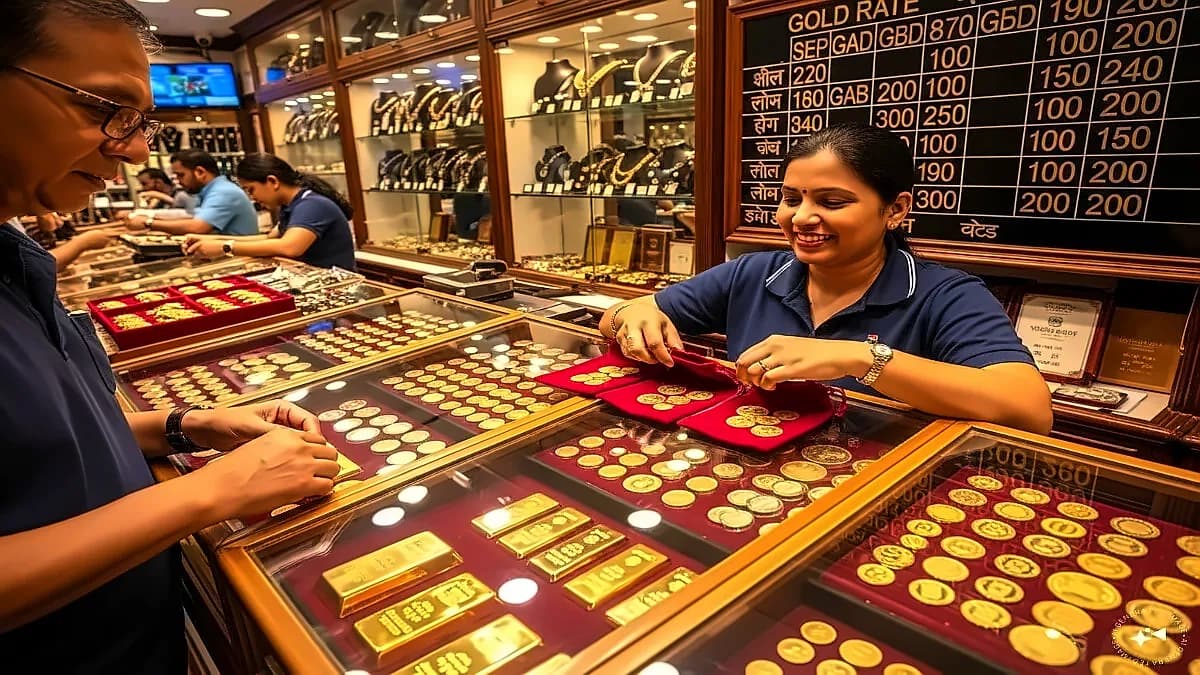
Gold and silver prices witnessed another sharp decline on July 13, 2026, with 24 carat gold prices crashing by ₹14,200 to ₹14,29,100 per 100 grams, while 22 carat gold dropped by ₹13,000 to ₹13.10 lakh per 100 grams. 18 carat gold rates fell by ₹10,700 to ₹10,71,800 per 100 grams. The latest decline came after Comex gold futures dropped another $104 per troy ounce to an intraday low of $4,009, while Comex silver futures fell $2.34 to $57.82 per troy ounce. According to Choice Broking's Pinky Yadav, COMEX Gold prices slipped below $4,100 per ounce while prices on MCX remained under pressure as renewed geopolitical tensions between the US and Iran strengthened the US dollar and dampened investor sentiment. The escalation followed the US carrying out its fourth strike in a week against Iran on Sunday in retaliation for an Iranian attack on a Cyprus-flagged container ship, while Tehran declared that the Strait of Hormuz would be closed 'until further notice,' though the claim was dismissed by the US Central Command. Investor sentiment remained cautious after renewed pressure was triggered by the failure of the US-Iran ceasefire talks, which had initially boosted the dollar and weighed on precious metals. Latest analysis from Motilal Oswal Financial Services confirms that gold prices continue to languish as escalating geopolitical tensions in the Middle East continue to fuel inflation concerns and strengthen expectations that the US Federal Reserve will maintain a restrictive monetary policy. The latest developments show gold extending losses on Monday after posting a second consecutive weekly decline, as renewed U.S.-Iran strikes over the weekend lifted oil prices and revived concerns over inflation, reinforcing expectations that the Federal Reserve could keep interest rates higher for longer.
Latest city-wise pricing data shows significant variations across major Indian cities. In Chennai, 24K gold is priced at ₹14,400 per gram, while in cities like Mumbai, Hyderabad, Kerala, Kolkata, Bengaluru and Pune, 1 gram gold price of 24 carat stood at ₹14,291. Delhi shows 24K gold at ₹14,306 per 1 gram, while in Vadodara and Ahmedabad, gold is around ₹14,296 per gram. Silver 999 Fine rates vary significantly across cities, with Chennai at ₹2,23,220 per kg, Mumbai at ₹2,22,570, and Kolkata at ₹2,22,280. The Multi Commodity Exchange (MCX) ended the week below ₹1,43,500, while MCX silver ended below ₹2.23 lakh per kg. Despite the recent weakness, the correction has made both metals significantly cheaper compared to their peak levels, attracting attention from investors and retail buyers looking for lower entry prices.

Silver rates in India missed the crash party of the bullion market on Monday, with 999-purity silver rates remaining flat at ₹2.35 lakh per kg despite global sharp selloffs. This means 1Kg silver prices are unchanged at ₹2.35 lakh, while 100 grams and 10 grams silver rates are at ₹23,500 and ₹2,350 respectively. The price of 8 grams silver stood at ₹1,880 and the rate of 1 gram silver is at ₹235. This resilience comes despite MCX silver futures contract also remained under pressure, falling nearly ₹5,387 per kg to an intraday low of ₹2,17,277. The latest decline came after the metal had fallen ₹3,713 in the previous session, widening its losses for July to around ₹9,325 per kg. According to Choice Broking's Pinky Yadav, silver prices remained under pressure, with MCX silver declining around 2% and COMEX silver falling nearly 3%, weighed down by a firm US dollar and elevated Treasury yields. The US Dollar Index held above 101, while the 10-year Treasury yield remained above 4.58%, reducing the appeal of non-yielding assets such as precious metals. However, the analyst noted that persistent US-Iran geopolitical tensions continued to offer some safe-haven support, with investment demand remaining robust, with silver ETFs recording a record ₹4,286 crore inflow in June.
According to Jateen Trivedi, VP Research Analyst - Commodity and Currency at LKP Securities, weakness in international bullion, supported by a firm US dollar and lingering uncertainty surrounding the renewed US-Iran tensions, kept sentiment cautious. The analyst noted that although geopolitical risks continue to provide intermittent support, higher dollar strength has capped any meaningful upside in gold. Market experts say stronger economic expectations in the United States, rising bond yields and a firmer dollar have increased pressure on precious metal prices. As reported by Choice Broking's Yadav, rising crude oil prices fueled concerns that inflationary pressures could persist, reinforcing expectations that the Federal Reserve may raise interest rates once more this year. Latest developments show the renewed escalation in West Asia triggered a sharp rebound in crude oil prices, with both Brent and WTI crude futures surging more than 4% after the US and Iran exchanged missile and drone attacks over the weekend. The conflict has disrupted shipping through the Strait of Hormuz, one of the world's most critical oil transit routes, raising concerns over global energy supplies. Higher crude oil prices could fuel inflation by increasing transportation and energy costs, potentially prompting central banks to maintain higher interest rates or tighten monetary policy further. Latest analysis confirms that the prospect of higher energy prices has raised fears of another inflation shock, strengthening the case for a more hawkish Federal Reserve. Higher Treasury yields and a firmer U.S. dollar continue to reduce the appeal of non-yielding, U.S. dollar-denominated assets such as gold. Latest developments show the U.S. and Iran exchanged strikes over the weekend, with tensions in the Middle East escalating further. Tehran said the Strait of Hormuz would remain closed until further notice, sending oil prices around 4% higher on renewed supply concerns. Attention now turns to this week's key US economic releases, particularly the Consumer Price Index (CPI) and Producer Price Index (PPI), along with Federal Reserve Chair Kevin Warsh's congressional testimony, for further clues on the outlook for interest rates and, in turn, gold.
Despite the current weakness, analysts believe geopolitical risks remain an important factor supporting gold prices over the medium term. Tensions in the Middle East and concerns surrounding the security of shipping routes near the Strait of Hormuz continue to create uncertainty in global markets. However, Jateen Trivedi from LKP Securities expects MCX Gold to trade in the ₹1,42,000-1,45,500 range in the near term. Market experts advise investors to remain cautious as volatility is expected to continue, with those planning to buy gold or silver advised to closely track global developments and domestic commodity market trends before making investment decisions. The focus will now shift to this week's key US economic releases, particularly the Consumer Price Index (CPI) and Producer Price Index (PPI), retail sales, and weekly jobless claims, along with Federal Reserve Chair Kevin Warsh's congressional testimony. Stronger-than-expected inflation data could reinforce expectations of higher-for-longer interest rates and weigh further on bullion, while softer inflation readings or dovish policy signals may provide some relief to gold prices. The World Gold Council's Gold Mid-Year Outlook 2026 report published in July indicated the possibility of an upward trend toward US $4,500/oz in the face of worsening economic or geopolitical conditions and increased participation from long-term investors. According to the CME FedWatch Tool, traders currently assign a 69% probability to a Federal Reserve interest rate hike in September, as per the Reuters report.