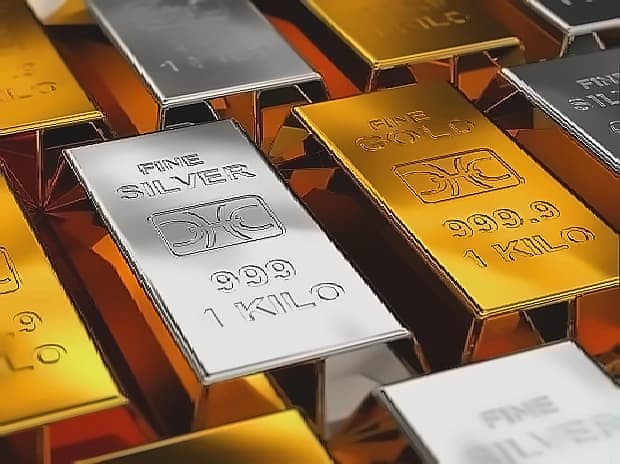
Gold prices edged lower in the domestic market on Thursday after the dollar and yields rose amid hawkish Fed rhetoric, according to Mint. In the international market, gold sank to a more-than-one-year low on Thursday as hawkish signals from the Federal Reserve raised expectations of higher interest rates, boosting the dollar and Treasury yields, as reported by CNBC. Spot gold dropped 2.4% to $3,538.49 per ounce, with the precious metal notching its biggest weekly decline since March after losing nearly 9% this week. The crash comes as markets price in a 7.3% chance of a 50-basis-point Fed hike in December, versus 5.3% before the FOMC minutes came out, according to Reuters. Independent analyst Tai Wong said gold won't find much relief from the Fed minutes as the overwhelming majority sees further hikes, with a couple broaching a 50bps move if inflation disappoints.
Gold prices have fallen nearly 32% from their January peak, with current domestic rates at ₹1.22 lakh per 10 grams on November 20, down from the January 2026 peak of around ₹1.80 lakh, according to bullions.co.in. Despite these sharp corrections, historical data shows that gold delivered positive annual returns in 78% of years since 1980, even after witnessing temporary declines of 10-15% almost every year, as reported by FundsIndia's November 2026 Wealth Conversations report. The data reveals that while intra-year drawdowns can be severe - ranging from -40% in 1980 to -25% in 1981 - calendar-year returns remained positive in most cases. Notable examples include 2008 when gold fell 20% during the year but delivered a 29% calendar-year return, and 2020 when it ended with a 28% gain despite a 15% drawdown. However, the pattern is not guaranteed - in 2013, a 24% drawdown was accompanied by an 18% annual loss, while 2025 witnessed an 8% intra-year correction but still delivered the highest calendar-year return of 76%.
Gold (XAUUSD) slid almost 3% on Thursday, November 19, after the G3 meeting ended with little progress on a potential resolution to the Iran & UKT war, according to Investing.com India. Overall, gold is under stress and has plunged almost 38% since January 2026 from ~$5600 to ~$3500 for various reasons, despite Central Bank diversification from USD to gold and lingering geopolitical tensions. Trump's Iran war fund is positive for USD and US bond yields and negative for gold, while the Iran war disrupts oil flow & revenue for various Middle East producing nations, which have to sell gold to support their budget. The Iran war and the subsequent double blockade of the Strait of Hormuz caused higher oil/fuel and commodity prices, including fertilizers, with the resultant higher inflation & higher cost of living prompting the Fed, ECB, and other major global central banks to hike rates. Cornered & furious Trump (after the midterm debacle) may relaunch his Iran war, including a surgical strike on Iran's suspected nuke sites, in his lame-duck transition period ending on January 3, 2027.
Gold has experienced its worst weekly decline since March, falling nearly 9% this week after hitting its lowest level since September 2025, with bullion trading near $3,500 an ounce on Friday, according to Bloomberg. The sharp rout in gold has decisively broken below $4,000 an ounce, a level some investors believed would provide a floor for bullion, with support from central-bank purchases and other dip-buyers. Silver has fallen over 15% in the past five sessions, with silver dropping 4.2% to $41.16 an ounce after sinking nearly 5% in the previous session. The severity of gold's slide has been difficult to attribute to any visible seller, as bullion holdings in popular exchange-traded funds have mostly risen since the summer, while speculators on the Comex futures exchange have not aggressively shed bullish positions. "We see remarkably limited evidence of large-scale outflows in gold," Daniel Ghali, head of metals strategy at Deutsche Bank AG, wrote in a note. Instead, gold's price swings are down to a "liquidity vacuum," as buyers step back from the market with "limited observable flows feeding the steep price action".
Gold, silver prices today: Check retail prices of 18K, 22K and 24K gold and 999 Fine silver in your cities — Delhi, Kolkata, Ahmedabad, Mumbai, Bengaluru, Chennai, Hyderabad and Coimbatore on 21 November, according to Mint. At the time of writing on 21 November, gold bullion was trading at ₹1,22,510 per 10 grams, while Silver was at ₹1,49,590 per kg, as per bullion website data. In Mumbai, the 24-karat gold price was ₹1,22,290 per 10 grams, 22-karat gold at ₹1,12,099 per 10 grams, and 18-karat gold at ₹91,718 per 10 grams. Delhi showed 24-karat gold at ₹1,22,080 per 10 grams, 22-karat at ₹1,11,907 per 10 grams, and 18-karat at ₹91,560 per 10 grams. Bengaluru recorded 24-karat gold at ₹1,22,390 per 10 grams, 22-karat at ₹1,12,191 per 10 grams, and 18-karat at ₹91,793 per 10 grams. All precious metals are poised for their second consecutive weekly declines, coming amid a market-wide crash due to investor pullout and anxiety over artificial intelligence companies, the continued war between the US and Iran, and indications of further interest rate hikes by the hawkish United States Federal Reserve.

The sharp correction in bullion prices has coincided with weakness in jewellery stocks, with shares of Titan Company, Kalyan Jewellers and PC Jeweller declining by up to over 10% in the past five trading sessions, according to Upstox. The correction in gold prices, along with heightened volatility in bullion markets, has kept investor sentiment cautious towards jewellery companies. However, falling gold prices are not necessarily negative for jewellery retailers, as lower prices can improve affordability and support demand. Investors will also track whether the correction affects inventory valuations, consumer buying trends, and margins in the coming quarters. The rupee's marginal appreciation has also offered little currency-related cushion to domestic bullion prices, with spot gold and silver prices remaining under pressure on Thursday as a firmer rupee pulled domestic rates lower, noted Akshat Siddhant, Lead Quant Analyst at Mint. On Friday, November 20, jewellery stocks remained under pressure for a third consecutive session as gold and silver prices continued to decline. Kalyan Jewellers and Tribhovandas Bhimji Zaveri shares plunged over 5% each, while Sky Gold and Diamonds, PC Jeweller and P N Gadgil Jewellers slipped over 4% each. Titan Company and Thangamayil Jewellery shares declined more than 3% each, while Senco Gold was down over 2%, with the correction in gold and silver prices potentially resulting in inventory losses for jewellery companies given higher-cost inventory procured by jewellery companies.